

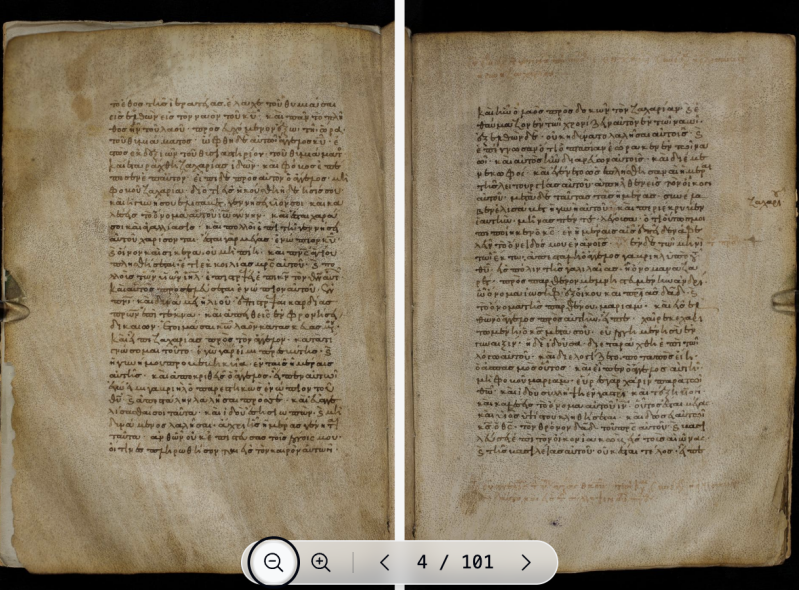
The Center for the Study of New Testament Manuscripts on Monday announced the launch of a new online Digital Manuscript Collection interface, expanding public access to ancient New Testament manuscripts and related scholarly materials beyond the scope of its previous database.
The Plano-based nonprofit said the new platform replaces its original digital archive, which for more than two decades has provided high-resolution images of Greek New Testament manuscripts cataloged with Gregory-Aland numbers. The updated interface is designed to host a broader range of materials in multiple ancient languages and formats, including non-Greek manuscripts, early printed editions and unpublished scholarly works.
According to CSNTM, the earlier database was limited to Greek manuscripts with assigned Gregory-Aland numbers, leaving out other textual witnesses and research resources. The new system allows the inclusion of manuscripts in languages such as Coptic, Syriac, Arabic and Latin, as well as printed New Testament editions and selected archival materials connected to past scholars.
The organization said the redesigned platform was developed over several years in consultation with researchers and reflects two decades of experience in digitizing and cataloging manuscripts. It is intended to function as a searchable repository bringing together manuscripts and related documents that have previously been dispersed across institutions or inaccessible online.
CSNTM stated that the new interface retains core features of the legacy database while adding expanded search and cataloging capabilities. Additional tools and content are expected to be introduced in the coming months.
Founded in 2002, CSNTM is a nonprofit organization dedicated to the preservation and digital documentation of New Testament manuscripts. The group conducts digitization expeditions, produces high-resolution images for research and preservation purposes, and collaborates with libraries and archives around the world.
The new Digital Manuscript Collection interface is accessible at collections.csntm.org.


