
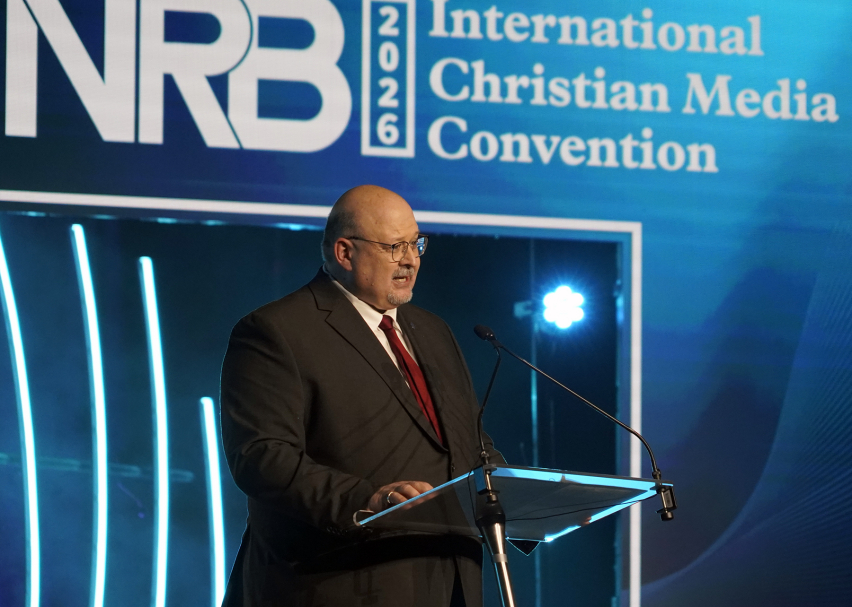
An expected 5,800-plus Christian communicators convened Tuesday as the NRB 2026 International Christian Media Convention opened in Nashville, with NRB President and CEO Troy Miller urging media leaders to address what he described as a widening gap between belief and obedience among self-identified Christians.
The four-day convention, held Feb. 17–20, brings together representatives from more than 250 media organizations working in radio, television, film, church media and digital platforms. Organizers describe it as the premier annual conference for Christian communicators.
In his opening address, Miller said research shows many Americans affirm core Christian doctrines — including the Trinity, the resurrection, the virgin birth and the presence of the Holy Spirit — but do not consistently engage Scripture or live out those beliefs in daily life.
“We have an orthodoxy gap,” Miller said. “We have doctrine being affirmed while daily obedience is being minimalized. In other words, we have a lot of fans in the stands and very few players on the field.”
Miller warned that when belief becomes detached from obedience, “Christianity becomes a brand, not a lived faith.” He said Christian communicators must move beyond content production to calling believers toward visible, public faith.
“This is the assignment of Christian communicators — not to merely create content, but to call the church to obedient public, visible faith,” he said, citing the New Testament book of James: “Be doers of the word, and not hearers only.”
Drawing from findings referenced from Ligonier Ministries’ State of Theology research, Miller also pointed to survey data suggesting some Christians believe their religious convictions should not influence their political decisions. While emphasizing that Christianity is not a partisan platform, he said faith should not be confined to private spaces.
“Our faith is not a partisan platform, but nor is it meant to be confined to the four walls of our churches or our homes,” Miller said. “It is a comprehensive worldview to be lived out.”
He argued that when believers withdraw their convictions from public life, “vacuums form,” which are then filled by alternative ideologies or state power. He cited concerns about policies affecting definitions of human identity, parental authority and religious conscience, as well as what he described as rising biblical illiteracy.
“When morality is decided by the creation and not the Creator, society will collapse,” Miller said, urging communicators to speak with clarity “into a culture that’s confused.”
At the same time, Miller pointed to what he described as encouraging trends, including increased Bible sales, rising church attendance and growing interest in Christian media. He said those developments place a heightened responsibility on Christian broadcasters, filmmakers, publishers and digital leaders.
“We have a great responsibility as Christian communicators to foster this growth and to foster this movement,” he said. “That’s what God has called us to do.”
Founded in 1944, NRB is a nonpartisan, international association of Christian communicators whose member organizations represent millions of listeners, viewers and readers worldwide. The organization advocates for the free speech rights of its members in governmental, corporate and media sectors and provides networking, educational and ministry opportunities to promote excellence and accountability in Christian communications.
The Nashville convention will feature plenary sessions, workshops, an exhibit hall and networking events designed to equip media professionals to navigate technological, cultural and legal challenges facing faith-based communication in the coming year.








