Suspected Fulani militias in Kaduna state, Nigeria raided three church worship services on Sunday (Jan. 18) in what local leaders said could be the largest mass kidnapping of Christian farmers in the area.
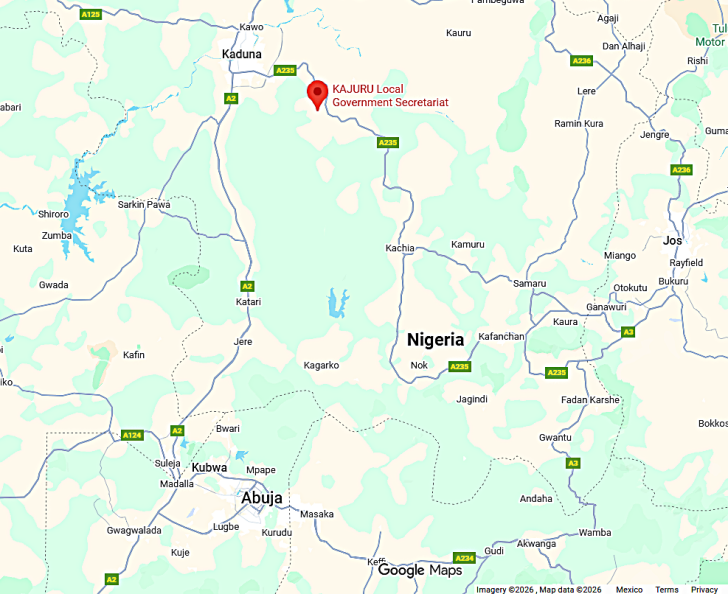
The number of those kidnapped varied from 100 to 177, with facts unclear as state authorities denied the abductions. Sources said the kidnappings took place simultaneously in Kurmin Wali village, Kajuru County in the southern part of Kaduna state.
While Usman Danlami Stingo, who represents the area in the state parliament, told The Associated Press that that 177 were kidnapped and 11 escaped, the representative of Kajuru/Chikun Federal Constituency in the House of Representatives, Felix Bagudu, after a briefing with the secretary of the Kajuru Local Government told Truth Nigeria that he doubted the number exceeded 100.
The Rev. Joseph John Hayab, chairman of the Christian Association of Nigeria (CAN), Northern Nigeria Chapter, told media on Monday (Jan. 19) that that 172 Christians were kidnapped from three churches, but that nine of them had escaped.
Hayab said he had received distress calls from church leaders in the affected community who said, “the terrorists invaded the churches while worship services were on. They held the worshippers hostage and marched them out into the bushes.”
Kurmin Wali’s Afago ward, where the abductions reportedly took place, is about eight miles south of the town of Maro, and west of Maro are camps that hold hundreds of captives, survivors told Truth Nigeria. Eyewitnesses described the assailants as armed Fulani ethnic militia, reported the outlet, operated by U.S.-based missions group Equipping the Persecuted.
An ECWA member who escaped Sunday’s attack told Truth Nigeria the gunmen arrived shooting at about 10 a.m., told everyone to lie down and then began marching them out.
Some of the assailants wore black robes with black head turbans, and others were outfitted with “shabby-looking Nigerian Army camouflage uniforms,” the anonymous source told Truth Nigeria, saying he and his 10-year-old son escaped through a window while the assailants were forcing the congregation out.
A Kaduna state pastor, Kenneth Ononeze, said the high number of abductions on a single Sunday morning was disturbing.
“What’s federal and state government doing to rescue them?” he said. “Are they still living in denial that Christian genocide is not going on?”
The Rev. Gideon Para-Malam of Kaduna state said the kidnappings targeted a Catholic, Evangelical Church Winning All (ECWA) church and a Pentecostal church, Cherubim-Seraphim.
“Large numbers of Muslim Fulani militias surrounded three Christian congregations simultaneously,” Pastor Para-Malam told Christian Daily International-Morning Star News.
Only senior citizens and physically handicapped were spared, he said.
Police in Kaduna state denied the kidnappings. Kaduna State Police Commissioner Alhaji Muhammad Rabiu said on Monday (Jan. 19) that officers hadn’t received any information about an incident from the area.
“The story is a mere falsehood,” Rabiu told journalists. “Anyone who claims people were kidnapped should come forward with names and particulars.”
Christian Solidarity Worldwide Nigeria (CSW) presented The New York Times a preliminary list of names of people abducted from the churches on Sunday, which CSW representatives said they would release after alerting family members, the newspaper reported.
When CSW workers and others went to Kurmin Wali to investigate, military and local government vehicles blocked the road and authorities turned them away, The Times reported. CSW Nigeria spokesman Reuben Buhari said team members were able to phone church members who spoke of the gunmen rounding up congregation members and forcing them into the wilderness, according to The Times.
The assailants later freed older women and young children, and another 11 people escaped, Buhari told The Times, which reported on Monday (Jan. 19) that local authorities and security officials emerged from a meeting at Kaduna state government offices and told media they had found the kidnapping claims to be false.
“The officials dismissed the reports of kidnappings as fear-mongering,” The Times reported.
The Associated Press reported the village head of Kurmin Wali, Ishaku Dan’azumi, as saying, “I am one of the people who escaped from the bandits. We all saw it happen, and anyone who says it didn’t happen is lying.”
An advocacy group, the Chikun/Kajuru Active Citizens Congress (CKACC), published a list of hostages, the AP reported, adding that it could not be independently verified and police did not respond to a request for comment on it.
CAN Nigeria also has a list of the hostages, a senior Christian leader in the state told The AP on condition of anonymity.
“This happened, and our job is to help them,” the source reportedly said. “These people came, attacked, and picked people from churches. But I think they prefer to play the politics of denying, and I don’t think that’s what we want.”
Nigeria has come under pressure from the U.S. government to halt violence against Christians.
On Dec. 25, U.S. President Trump ordered airstrikes on what his administration claimed were Islamic State militants in Sokoto state in northwest Nigeria, on the border of neighboring Niger. Several other militant Islamist groups are reported to be active in the area, including Lakurawa, Al-Qaeda, and Boko Haram. A Pentagon official said that the United States worked with the Nigerian government to carry out the strikes.
Fulani herdsmen and other “bandit” terrorists often allied with them killed more civilians in Nigeria over a four-year period than Islamic extremist groups Boko Haram and Islamic State West Africa Province (ISWAP), according Aug. 29, 2024 report by the Observatory of Religious Freedom in Africa (ORFA) on killings from October 2019 to September 2023. “Armed Fulani Herdsmen” killed 11,948 civilians, while “Other Terrorist Groups,” commonly called “Fulani bandits,” killed 12,039 civilians during the period. By contrast, Boko Haram and Islamic State West Africa Province (ISWAP) combined killed just 3,079 civilians.
The Fulani herdsmen form part of the Fulani Ethnic Militia (FEM), and it is believed that part of the “Other Terrorist Groups” known as “Fulani bandits” are connected to the FEM, according to the report.
“It implies that FEM is a much bigger factor in the Nigerian culture of violence than Boko Haram and ISWAP,” the ORFA report stated.
More Christians were killed in Nigeria than in any other country from Oct. 1, 2024 to Sept. 30, 2025, according to Open Doors’ 2026 World Watch List. Of the 4,849 Christians killed worldwide for their faith during that period, 3,490 – 72 percent – were Nigerians, an increase from 3,100 the prior year. Nigeria ranked No. 7 on the WWL list of the 50 countries where it is most difficult to be a Christian.
Numbering in the millions across Nigeria and the Sahel, predominantly Muslim Fulani comprise hundreds of clans of many different lineages who do not hold extremist views, but some Fulani do adhere to radical Islamist ideology, the United Kingdom’s All-Party Parliamentary Group for International Freedom or Belief (APPG) noted in a 2020 report.
“They adopt a comparable strategy to Boko Haram and ISWAP and demonstrate a clear intent to target Christians and potent symbols of Christian identity,” the APPG report states.
Christian leaders in Nigeria have said they believe herdsmen attacks on Christian communities in Nigeria’s Middle Belt are inspired by their desire to forcefully take over Christians’ lands and impose Islam as desertification has made it difficult for them to sustain their herds.
In the country’s North-Central zone, where Christians are more common than they are in the North-East and North-West, Islamic extremist Fulani militia attack farming communities, killing many hundreds, Christians above all, according to the report. Jihadist groups such as Boko Haram and the splinter group Islamic State in West Africa Province (ISWAP), among others, are also active in the country’s northern states, where federal government control is scant and Christians and their communities continue to be the targets of raids, sexual violence, and roadblock killings, according to the report. Abductions for ransom have increased considerably in recent years.
The violence has spread to southern states, and a new jihadist terror group, Lakurawa, has emerged in the northwest, armed with advanced weaponry and a radical Islamist agenda, the WWL noted. Lakurawa is affiliated with the expansionist Al-Qaeda insurgency Jama’a Nusrat ul-Islam wa al-Muslimin, or JNIM, originating in Mali.