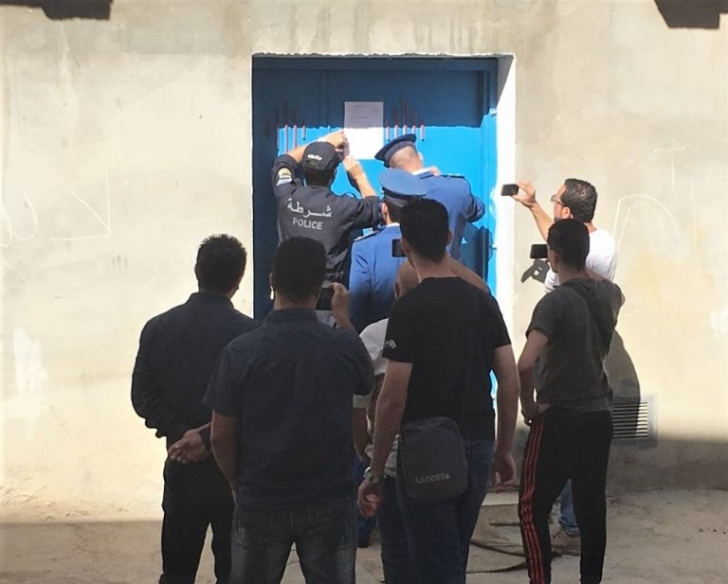
Following Algeria’s closure of nearly all evangelical churches in waves of repression that began in 2017, Christians have been forced underground in what they describe as an internal exile, sources said.
Christians in the 99-percent Muslim country gather discreetly in homes, garages or under olive trees, isolating many who are deprived of regular spiritual guidance. Some turn to the internet and social media, where heresies proliferate, thus fostering internal divisions, the spread of false teaching and the rise of conflicts.
Despite such challenges, some Christians express gratitude to God, viewing this period as a spiritual cleansing to build stronger and more mature churches.
“Believers maintain fraternal bonds within small family groups,” said one Christian community leader. “We celebrate Holy Communion and baptisms privately, and dedicate significant resources to charitable aid, in accordance with biblical commandments.”
One church leader continues to serve by visiting families in various villages to offer moral and spiritual support. Like all pastors mentioned in this story, his name cannot be published for security reasons.
“The situation is undeniably difficult because we are deprived of fellowship,” he said. “But God’s work must not stop. We desperately lack Bibles and Christian books, as customs officials systematically confiscate them even when friends bring them from the West.”
Along with blocked book imports, police searches and confiscated equipment, Christians have increasingly been shut out of regular fellowship since authorities effectively left the evangelical umbrella group, the Protestant Church of Algeria (EPA), without legal status. When the EPA re-applied for legal status in August 2014 and July 2015 following implementation of the 2012 Law on Associations No. 12-06, authorities withheld mandatory registration receipts, leaving the umbrella group in a legal limbo that provided the pretext for forced closures of most affiliated churches from 2017 to 2019.
Since Law 12-06 blocks the official registration of the EPA, security forces have sealed shut 46 of the group’s affiliated 47 churches, leaving only a church headquarters in Algiers operational thanks to the presence there of some foreigners and diplomats.
Despite the obstacles, EPA President Salah Chalah has remained in Algeria to represent the movement. In a recent interview on SAT-7 channel, he described the Protestant community as small and fragile but remaining faithful in the face of oppression.
“When one member suffers, the whole body suffers,” he said. “We continue to seek peaceful coexistence, tolerance, and freedom to serve our communities in all sincerity.”
The onset of the presidency of Abdelmadjid Tebboune in December 2019 marked a break with the era of the Abdelaziz Bouteflika administration, which had maintained a degree of practical flexibility despite Islamist intimidation. Displaying brazen indifference to the international community, the Tebboune administration relies on Islam’s status as the state religion to deny converts from Islam any right to public life.
Furthermore, the strong presence of Protestantism in the Kabylia Region leads security services to equate Christian activity with the Movement for the Self-Determination of Kabylia (MAK), classified as a terrorist organization since 2021. This politicization leads the regime to reframe freedom of religion and conscience as a supposed threat to national security.
Such policy has resulted in a wave of judicial attacks and material obstacles, with courts handing Christians a total of 58 to 64 criminal convictions since 2018. EPA Vice-President Youcef Ourahmane was sentenced on appeal in May 2024 to one year in prison simply for organizing a spiritual retreat; originally he had been sentenced to two years and a fine. Hamid Soudad, 45, was imprisoned from January 2021 to July 2023 as part of a five-year sentence for “insulting Islam” related to a Facebook caricature before receiving a presidential pardon.
Additionally, convert from Islam and rights advocate Slimane Bouhafs, forcibly returned from Tunisia despite his U.N. refugee status, was tortured and imprisoned from September 2021 to September 2024; he remains stripped of his civil rights and pension even after his release. Another Christian, unnamed for security reasons, awaits a Supreme Court ruling after receiving a two-month sentence and a fine for sharing Bibles courses online.
Legal pressure often comes from Ordinance 06-03, a 2006 regulation designed to limit the growth of Christianity and conversion among Algerian citizens. It restricts religious freedom by subjecting worship to vague concepts of “public order” (Article 2), requiring services be held exclusively in buildings approved by a commission that has virtually never met, creating administrative deadlock (Article 5) and punishing any act that could “shake the faith of a Muslim” with two to five years in prison – effectively criminalizing simple acts like possessing Bibles or private spiritual discussions (Article 11).
The number of Christians in Algeria is estimated at about 150,000 people, 0.3 percent of the total population of 48 million, according to Christian support organization Open Doors. There are 8,000 Catholics, while Methodists, Anglicans and Mennonites are made up mostly of foreigners, including diplomats.
Other churches independent of the EPA that were closed include an historical North Africa Mission (NAM) church in Ouadhia, the oldest in the region, founded in 1956 by NAM missionary Charles Marsh, and a church in Ouacif. Both had congregations of more than 200 members.
In this context, evangelicals found the visit of Pope Leo XIV to Algeria in April served as a diplomatic showcase and an international facade, without bringing concrete relief to local Christians. Despite extensive media coverage and the Algerian government expending significant resources to ensure an impeccable welcome, the pope’s visit left a bitter taste for persecuted Algerian Christians.
The president of the EPA, Pastor Chalah, was among the guests at a meeting with the pope in Notre-Dame d’Afrique Cathedral, but the deprivation of Protestants’ places of worship was largely overlooked. Without any mention of religious restrictions or any offer of a solution, the official visit ultimately seemed to prioritize rapprochement with Muslim authorities at the expense of the country’s Christians.
The EPA continues to petition the Ministry of the Interior to renew its official association registration and reopen its places of worship.
Algeria ranked 20th on Open Doors’ 2026 World Watch List of the 50 countries where it is most difficult to be a Christian.