
Catholic cardinals from Poland and Ukraine, joined by the head of the Ukrainian Greek Catholic Church, called for a "disarming of language" between the two countries after a diplomatic rift over a World War II massacre and a revoked state honor strained relations.
Their joint statement, "A common voice on Polish-Ukrainian relations," was published Monday (June 29) as the dispute over the wartime killings strained ties between the two countries. The cardinals said the rift touches "not only the relations between the two nations but also the credibility of our shared Christian witness."
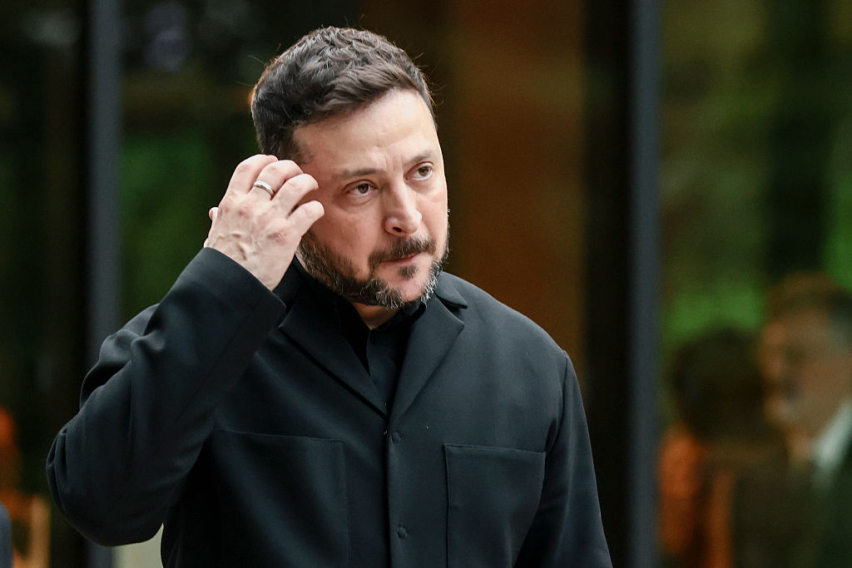
Tensions escalated after Polish President Karol Nawrocki stripped Ukrainian President Volodymyr Zelensky of Poland's highest honor, the Order of the White Eagle.
The fallout began in late May, when Zelensky named a military unit after the Ukrainian Insurgent Army, or UPA. The group is celebrated in Kyiv for fighting Soviet rule but condemned in Warsaw for the massacres in Volhynia, where an estimated 100,000 ethnic Poles were killed between 1943 and 1945. Poland officially recognizes the killings as genocide, while Ukraine remembers the UPA primarily as fighters who resisted Moscow-imposed Soviet rule.
After the honor was revoked, Zelensky canceled plans to attend a reconstruction conference in Poland.
Following Pope Leo XIV, the cardinals said the first step toward peace is the "disarmament of language on both sides."
"This applies not only to words, but also to gestures, signs, and symbols," they said. "These too can hurt, close the path to encounter, and arouse fear. The Holy Father reminds us that peace is 'disarmed and disarming,' and building the common good requires evangelical language: clear but not demeaning; courageous but not aggressive; truthful but not closing the path to forgiveness."
The statement echoed Pope Leo's call for "the common good" and his opposition to war "in all its dimensions."
The cardinals said they felt deep sadness over the renewed hostility.
"It is even more painful that this is happening at a time when Ukraine continues to experience the horrors of war, and Poland has shown great solidarity with millions of Ukrainian brothers and sisters in recent years," they said.
They recalled an appeal by the late Pope John Paul II on the 60th anniversary of the Volhynia massacres in 2003, when he urged Poles and Ukrainians to "not remain enslaved by their sad memories of the past" but to "look at each other with the eyes of reconciliation." The dispute comes 25 years after his visit to Ukraine.
The cardinals pointed to years of prayer, meetings and joint letters between the churches, along with cooperation in aiding refugees, as a legacy handed down by predecessors willing to speak the truth, ask for forgiveness and extend a hand of reconciliation despite unhealed wounds.
They closed by pledging to keep working for the common good rather than clinging to isolated historical narratives.
"Too much unites our nations to allow our common heritage to be squandered," they wrote. "The Gospel we believe in teaches us that the cure for sin is forgiveness, and the limit set by God against evil is mercy."
The statement was signed by Cardinal Mykola Bychok, bishop of the Ukrainian Catholic Eparchy of Saints Peter and Paul of Melbourne, Australia; Cardinal Konrad Krajewski, metropolitan archbishop of Lodz, Poland; Cardinal Kazimierz Nycz, metropolitan archbishop emeritus of Warsaw, Poland; Cardinal Grzegorz Rys, metropolitan archbishop of Krakow, Poland; and Major Archbishop Sviatoslav Shevchuk, head of the Ukrainian Greek Catholic Church in Kyiv, Ukraine.








