
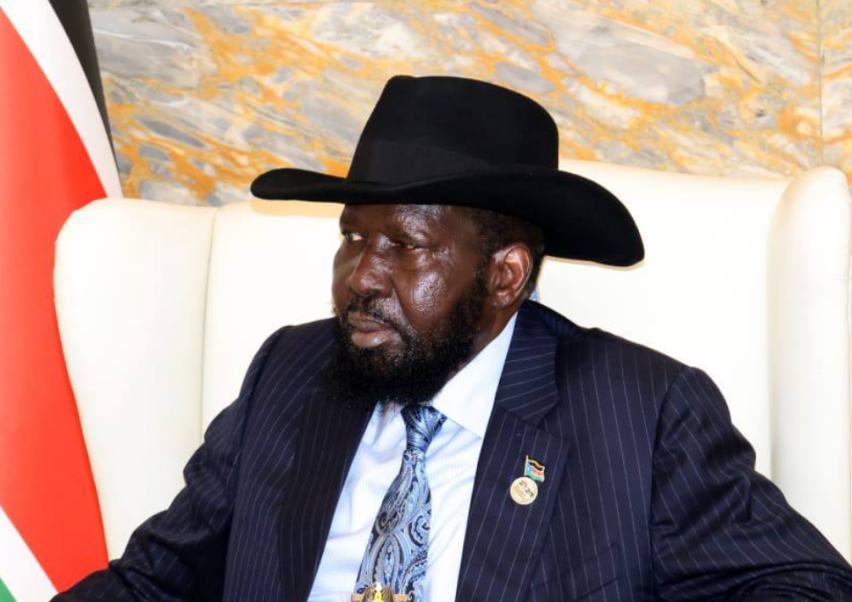
Religious leaders and international humanitarian organizations warn that rising violence in South Sudan could push the fragile nation closer to renewed civil war, urging political leaders to halt military operations and return to dialogue to prevent further civilian suffering.
Church leaders and aid groups say recent attacks on communities and aid operations point to a deteriorating security situation that threatens the country’s fragile 2018 peace agreement. The concerns come as humanitarian organizations report growing displacement and reduced access to aid in some of the worst-affected areas.
The South Sudan Council of Churches, an ecumenical body representing Catholic, Anglican, Presbyterian and evangelical churches, said that the country is approaching a dangerous moment. The council has long played a role in peace-building efforts in the country, facilitating reconciliation initiatives and community dialogues during and after the civil war.
Church leaders urged political leaders to prioritize dialogue over military action, saying the continued use of force could derail the peace process.
“The year 2025 was the worst, the year where our people lost trust due to the repeated failure in the implementation of genuine peace in our country by the political leaders and a few elites,” Stephen Ameyu Martin Mulla, the Archbishop of the Roman Catholic Archdiocese of Juba said at a recent press conference.
The World Communion of Reformed Churches, a global network representing more than 100 million Christians in Congregational, Presbyterian and other Reformed traditions, said the attacks demonstrate how quickly the country could slide back into widespread conflict.
“The escalating violence risks undermining the fragile peace that has been built over recent years,” the organization said in a public statement.
The group urged political leaders in South Sudan to recommit to the peace agreement and called on the international community to support efforts aimed at preventing a broader conflict.
Local church leaders have echoed those concerns.
Christian leaders say churches remain deeply concerned about the impact of renewed violence on ordinary families already struggling with poverty, displacement and food insecurity.
Regional Catholic leaders have also condemned the recent attacks.
Government acknowledges concerns, blames armed opposition
In a rejoinder, the government of South Sudan said it shares concerns raised by church leaders but defended ongoing military operations as necessary to maintain security and stability.
In a statement dated March 17, the Office of President Salva Kiir said authorities remain committed to peace and the full implementation of the revitalized peace agreement.
“The Government of the Republic of South Sudan shares the concerns raised by the South Sudan Council of Churches regarding political, security and humanitarian situation in the country,” the statement said.
However, officials said security operations across the country, including in Jonglei state, are part of the government’s constitutional responsibility to maintain law and order.
“These operations are not arbitrary; they are responses to security threats aimed at restoring stability and protecting civilians,” the statement said.
The government accused armed opposition elements linked to the Sudan People’s Liberation Movement/Army in Opposition (SPLM/A-IO) of launching attacks on government positions between December 2025 and January 2026.
It said those attacks targeted areas including Waat and Pajut and threatened to advance toward the capital, Juba, prompting a military response by government forces.
“The Government echoes that it did not initiate these hostilities and calls on the SPLM/A-IO and all armed actors to cease its military activities and prioritize dialogue,” the statement said.
At the same time, authorities acknowledged the impact of violence on civilians, particularly women, children and the elderly, and condemned attacks against noncombatants.
The government said individuals responsible for such acts would be held accountable under the law.
NGOs call for protection of civilians
Meanwhile, a coalition of nongovernmental organizations (NGOs) said that escalating clashes are putting civilians at severe risk and limiting humanitarian access.
“The protection of civilians must be prioritized, and all parties must fully comply with international humanitarian law,” the NGOs said in the statement published by ReliefWeb, a humanitarian information service run by the United Nations.
The groups called for an immediate de-escalation of violence and urged armed actors to allow safe passage for humanitarian aid. They warned that the continuation of hostilities could worsen an already dire humanitarian crisis in a country where millions depend on external assistance.
South Sudan, the world’s youngest nation, emerged from a brutal civil war in 2018 after five years of fighting between forces loyal to President Salva Kiir and those aligned with opposition leader and First Vice President Riek Machar. The conflict killed an estimated 400,000 people and displaced millions more.
Despite the peace agreement, sporadic violence has continued in parts of the country, often fuelled by political tensions, armed militias and disputes over resources and local power. Tensions reached a breaking point in early 2025, when the government placed Machar under house arrest and charged him with treason following a series of militia attacks.
Humanitarian organizations say recent attacks have highlighted the fragile security environment. According to reports cited by church groups and aid organizations, a deadly assault in early March in Abiemnom County near the border with Sudan left at least 169 people dead, including women and children. Thousands of residents fled the violence, with some seeking shelter at a United Nations base.
International Christian organizations have joined humanitarian groups in warning about the deteriorating situation.
'Dialogue is the only path forward'
Bishops from Sudan and South Sudan described the killings as evidence of a worsening security situation that could push the country toward further instability.
The bishops said the violence reflects “a fresh descent into the abyss of human depravity,” according to Catholic World Report, a news outlet covering global church affairs.
They urged political leaders to pursue peace and protect civilians, warning that continued violence would deepen humanitarian suffering.
Humanitarian groups say the crisis is already affecting aid operations with several organizations reporting that insecurity in some regions has forced temporary suspensions of humanitarian activities, leaving communities without essential services such as medical care and food assistance.
Aid agencies say access to vulnerable populations is becoming increasingly difficult as armed clashes disrupt transportation routes and create unsafe conditions for humanitarian workers.
The NGO coalition warned that the situation could deteriorate further if hostilities continue.
“Escalating violence is placing civilians at grave risk,” the organizations said, calling on all parties to respect international humanitarian law and protect humanitarian personnel and facilities.
The United Nations has also expressed concern about the broader implications of the violence.
UN peacekeepers remain deployed across parts of the country to help protect civilians and support the peace process, though the mission has faced challenges in responding to localized outbreaks of fighting.
Analysts say South Sudan’s stability remains closely tied to the cooperation between Kiir and Machar, whose political rivalry fueled the earlier civil war.
Any breakdown in the relationship between the two leaders could destabilize the national unity government created under the 2018 peace deal.
Religious leaders have played a visible role in peace efforts in the past, including participating in reconciliation initiatives and encouraging national unity.
For now, humanitarian organizations and church leaders say preventing further escalation is essential.
Without swift action, they warn, the violence could deepen an already severe humanitarian crisis and threaten the fragile stability the country has struggled to maintain since the civil war.
“Dialogue is the only path forward,” church leaders say, urging South Sudan’s political leaders to put the interests of the country’s people above political disputes.








