
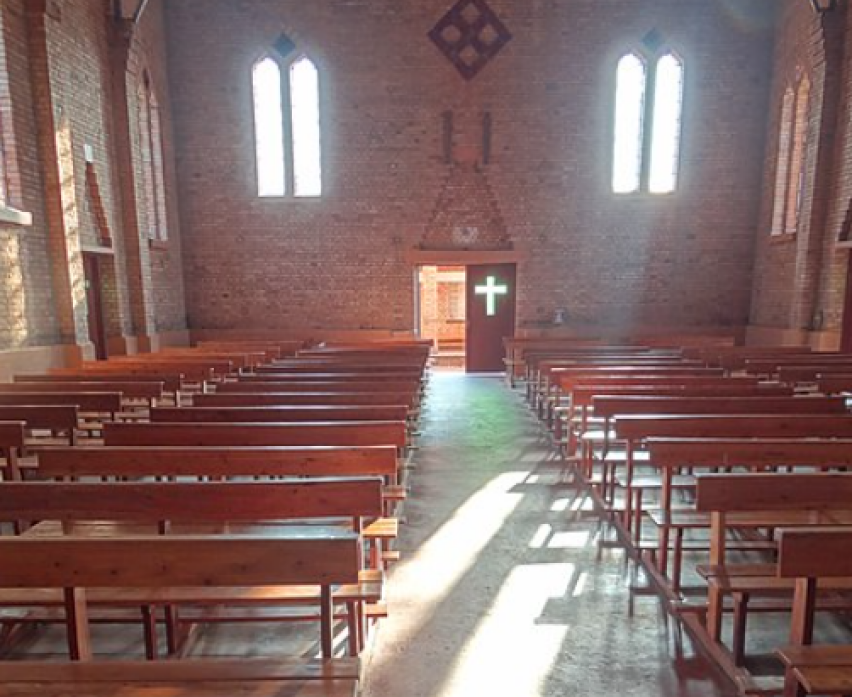
Rwanda’s sweeping regulation of churches has continued to reshape Christian worship years after thousands of places of worship were closed for failing to meet government requirements, with some congregations moving online while others remain unable to reopen.
A report published Sept. 26 by the Worldwide Evangelical Seminary’s Connexion highlighted the continuing effects of Rwanda's Law 72/2018, which governs faith-based organizations and provided the legal framework for the government's inspections and subsequent closures. The report said the measures have changed how many churches operate and have particularly affected smaller congregations.
According to the report, the main enforcement campaign came in late July 2024, when Rwanda Governance Board teams and local officials inspected more than 13,000 places of worship in about two weeks.
Places that failed to meet the requirements were closed. The number of closures reported during that campaign varied considerably depending on the date and source. The Connexion report said one account in mid-August 2024 counted more than 4,000 closures, including about 700 in Kigali.
Pastors and legal representatives were required to hold a recognized university degree in theology or another degree combined with at least 1,200 hours of certified theological study. Churches were also expected to meet building and safety requirements covering soundproofing, lightning protection, fire safety, water storage, sanitation and parking.
Those requirements did not affect every congregation in the same way. According to the Connexion report, large centralized churches with titled land, seminaries and administrative structures were generally better positioned to absorb the changes, while smaller Pentecostal and independent congregations were more vulnerable because many met in rented rooms, tents or homes and were led by lay pastors.
Pastor Kabagambe Nziza of New Life Bible Church argued that the requirements should take account of differences between rural and urban settings. He questioned the relevance of requirements such as soundproofing and parking for village churches where many worshippers walk to services.
The effects have also been reported among established denominations. According to the African Pastors Fellowship, only 23 of 239 Anglican churches in the Kigeme Diocese remained open after the enforcement of the regulations. Anglican Bishop Assiel Musabyimana warned that when congregations cannot meet for Sunday worship, their ability to support their ministries is also affected.
The government says the measures are intended to protect worshippers and bring greater accountability to religious organizations. On its website, the Rwandan government says more than 14,000 prayer houses were inspected and that more than 8,000 were found to be non-compliant. It cites problems including missing registration documents, inadequate buildings, poor sanitation, lack of soundproofing, safety concerns and the absence of required qualifications among church leaders.
The government has also continued working on ways for churches to comply. The Connexion report said the Rwanda Governance Board has partnered with Re-Forma, a global organization collaborating with the World Evangelical Alliance that trains African church leaders, and certificates from Re-Forma now count as evidence of suitable theological training under the arrangement.
The African Pastors Fellowship has also discussed making Re-Forma materials available to pastors through its digital library.
The development is significant because it provides a route for pastors who cannot afford or attend a traditional university theology program. At the same time, the Connexion report noted that theological education only solves the problem if the government recognizes the institution providing it.
That has become an important issue for pastors seeking alternative forms of theological education, particularly through online programs, because a qualification from an institution that is not recognized by the authorities may not enable a pastor to meet the regulatory requirements.
From in-person to online churches
The closures have also changed how some Christians worship. A May 2026 report by Rwanda's KT Press described a growing move toward online worship following the closures. It reported that some congregations had turned to Zoom, YouTube, Google Meet and other platforms after losing access to their physical meeting places.
One Rwandan believer quoted in the Connexion report described the change after their congregation moved online following the closure of its building. “This is not the way church should be done,” the believer said. “Fellowship happens best in person.”
Pastor Dany Mutangana told KT Press that the transition had allowed Christians to continue worshipping but had also reduced participation. He said his physical meetings could attract about 200 people, while online gatherings sometimes drew about 70.
“For those who truly wanted to worship, nothing was interrupted,” Mutangana said, according to KT Press. But he added that not everyone had access to smartphones or reliable internet and that trust had declined as the religious landscape moved online.
The shift toward online ministry had already become visible by early 2025. In February 2025, Rwanda’s New Times reported that churches and faith-based groups were increasingly using TikTok, YouTube, Facebook, Instagram and other platforms to reach worshippers. The report said the closure of thousands of churches had contributed to more preachers turning to social media to build online congregations.
The Connexion report raises a further concern. If churches move into online Bible studies and home fellowships after losing access to physical buildings, regulation may become more difficult rather than easier. The report said there have also been reports that authorities later moved to restrict some of these alternatives, although it cautioned that those reports require further verification.
In November 2025, Rwanda Governance Board Chief Executive Doris Uwicyeza Picard told Parliament that 9,171 worship buildings, including churches and mosques, had been closed for failing to comply with legal requirements. She said the closures followed an audit of faith-based organizations during the 2024-25 financial year.
The audit identified concerns including misleading or exploitative teachings, financial mismanagement, internal conflicts and buildings that did not meet safety requirements. The figure includes both churches and mosques.
The government says closing a prayer house does not necessarily mean that the church itself has been dissolved. According to its guidance, organizations can apply to reopen once they have addressed the problems identified during inspections.
In June 2025, Rwanda Governance Board announced an online system through the Irembo platform that would allow faith-based organizations, including previously closed churches, to submit documents needed for reopening. Officials said the system was intended to reduce delays caused by submitting paperwork through local government offices.








