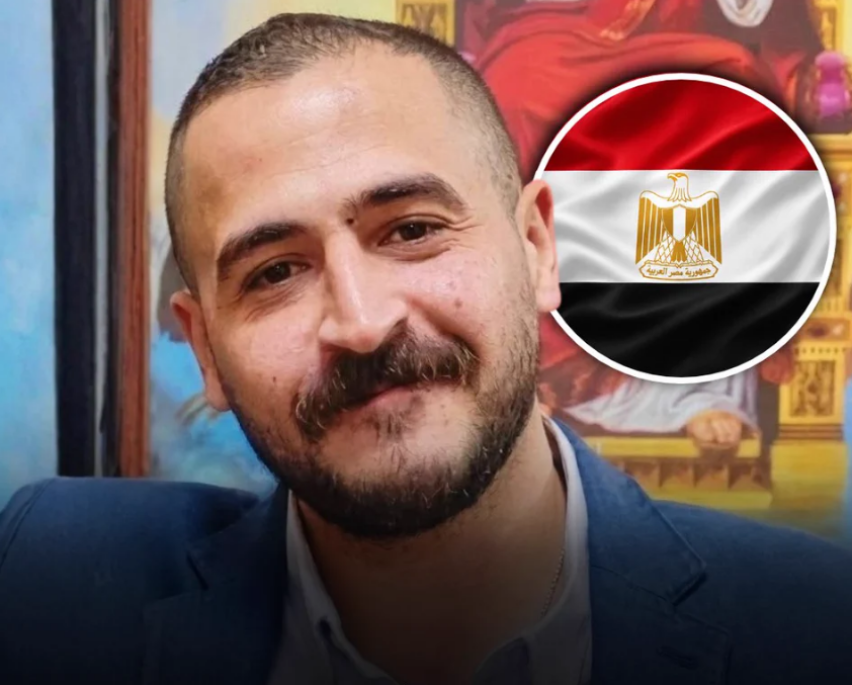
Egyptian prosecutors have asked a terrorism court to impose the maximum penalty against a Christian convert accused of contempt for Islam and membership in a banned terrorist organization, raising renewed concerns among religious freedom advocates over his treatment and the fairness of his trial.
Said Mansour Rezk Abdelrazek, who converted from Islam to Christianity, faces the possibility of execution or a 25-year prison sentence, according to reports by Coptic Solidarity and The Jerusalem Post. Prosecutors made the request during a hearing on Nov. 3, with the court adjourning proceedings until Dec. 8, when his defense team is expected to present its arguments.
The latest development comes after Abdelrazek spent more than a year in detention following his arrest in July 2025. His case has attracted attention from international human rights organizations, including Amnesty International and the U.S. Commission on International Religious Freedom (USCIRF), which have raised concerns about his detention and alleged mistreatment.
Coptic Solidarity reported that accounts of the Nov. 3 hearing also raised questions about the conduct of the proceedings. According to accounts cited by the organization, the prosecutor argued that although a person could leave Islam, Abdelrazek had no right to express hatred towards it.
The prosecutor reportedly accused him of disrespecting Prophet Muhammad, his wife Aisha and his companions, as well as causing divisions within Egyptian society. He also allegedly described people who were allegedly followers of a terrorist organization who referred to Abdelrazek as “Mawlana” (leader) and concluded by declaring that Egypt is, and will remain, an Islamic state.
The organization also reported that the presiding judge interrupted proceedings during the hearing to cite a hadith discouraging drinking water while standing. The judge reportedly encouraged those present to love Prophet Muhammad.
Coptic Solidarity noted that these accounts had not been independently verified through an official courtroom transcript. If accurate, the exchanges could raise questions about the appearance of judicial impartiality in a case involving a Christian convert.
The prosecution’s request for the maximum penalty comes as Abdelrazek faces charges including contempt for Islam, joining a banned terrorist organization, inciting unrest and disseminating false information. The charges were brought by Egypt’s Supreme State Security Prosecution on July 22, 2025, according to USCIRF.
His lawyer, Saeed Fayez, has disputed the allegations, saying the organization Abdelrazek is accused of joining does not exist. His legal office has also argued that the case is connected to his client’s refusal to renounce Christianity.
Years of difficulties over conversion
Abdelrazek’s difficulties with Egyptian authorities began several years before his current detention.
In an April 22 report, Christian Daily International reported his conversion from Islam and attempts to change his religious designation on official identity documents had exposed him to legal and social difficulties in Egypt.
He left Egypt for Russia in 2019, where he sought asylum on religious grounds. Russian authorities arrested him in 2023 over his connection to a privately filmed video that was considered offensive to Islam. He subsequently served a one-year prison sentence before being deported to Egypt in 2024.
According to USCIRF, Egyptian authorities detained him upon his return and held him incommunicado for approximately 10 days. During questioning, officials reportedly pressured him to reconsider his religious beliefs, monitor other converts and delete his social media accounts. He was eventually released with instructions not to speak publicly about his faith or engage in proselytizing.
The Christian Post, in a June 29 report, said Abdelrazek remained free following his return until he attempted to obtain identification documents reflecting his conversion.
Egyptian authorities arrested him again on July 15, 2025, shortly after he sought assistance from a lawyer to change the religious designation on his official documents. He has remained in detention since then.
The case was brought before Egypt’s First Criminal Terrorism Circuit in Badr, where his trial opened on April 21. His defense team initially requested additional time to prepare its case, and the court adjourned proceedings.
Concerns over alleged mistreatment
Beyond the criminal charges, Abdelrazek’s detention has drawn concern over allegations of physical and psychological abuse.
Amnesty International, in a May 7 statement, said he had been subjected to arbitrary pretrial detention and faced charges stemming from his conversion and religious beliefs. The organization called for his immediate and unconditional release, arguing that he was being detained solely for exercising his right to freedom of religion and belief.
USCIRF has also listed Abdelrazek as a religious prisoner of conscience in its database, recording reports of torture and identifying his current location as 10th of Ramadan Prison.
The commission asserts authorities and fellow inmates physically and psychologically abused him because of his conversion. His reported mistreatment includes pressure to abandon Christianity and restrictions on his ability to speak publicly about his faith.
His fiancée has also raised concerns about his treatment and access to basic necessities while in detention. Earlier reporting by The Jerusalem Post included allegations that prison authorities had subjected him to a crucifixion-like position and denied him adequate medical care.
Abdelrazek’s case has also attracted international diplomatic attention. In October, British parliamentarian Lord David Alton submitted a written question to the U.K. government asking what representations had been made to Egyptian authorities concerning his detention and whether his treatment was compatible with international protections for freedom of religion.
The next hearing, scheduled for Dec. 8, will give Abdelrazek’s defense team an opportunity to respond to the prosecution’s closing arguments and challenge the evidence presented against him.