On July 5, 2021, Father Stanislaus Lourduswamy— n 83-year-old Jesuit priest and tribal rights activist—died in pre-trial custody in Mumbai, India. Frail from Parkinson’s disease and a COVID-19 infection, he had spent nine months behind bars under India’s anti-terror laws, denied bail despite his deteriorating health. His alleged crime was implausible: authorities accused him of sedition and links to Maoist insurgents—charges widely derided as baseless.
To many, his imprisonment and death became a symbol of a constitutional democracy being quietly hollowed out. Ramachandra Guha, one of India’s most widely read historians and public intellectuals, bluntly called it “a case of judicial murder.” A UN human rights expert said Father Stan’s ordeal would “forever remain a stain on India’s human rights record,” condemning how a priest came to be branded a terrorist and left to die without trial.
Culture wars become legal wars
An emboldened ecosystem of vigilantes and ideological enforcers has emerged alongside the state.
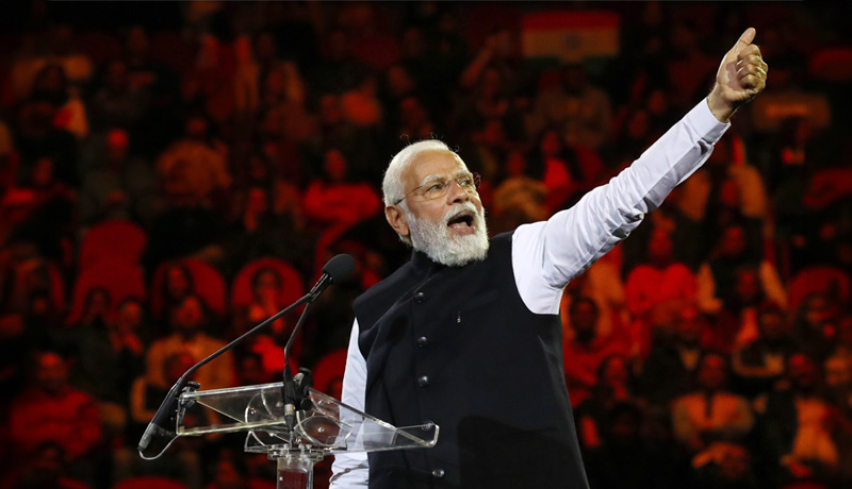
Under Prime Minister Narendra Modi’s Bharatiya Janata Party (BJP), India’s culture wars have morphed from rhetoric into policy. Energy once spent on political posturing—debates over beef consumption, religious conversions, or textbook content—now finds expression in police raids, criminal cases, and new legislation. An emboldened ecosystem of vigilantes and ideological enforcers has emerged alongside the state, advancing a vision of an uncompromisingly Hindu India.
Father Stan (also known as Swamy) was one of thousands ensnared by the Unlawful Activities (Prevention) Act (UAPA). In its expanded form, the law allows authorities to arrest individuals for alleged “unlawful,” or “terrorist” activity based not on acts of violence but on intent, speech, or association, and to detain them for up to 180 days without filing charges.
In recent years, fewer than 2% of those arrested under the law have been convicted, while thousands endure prolonged pre-trial incarceration. In Father Stan’s case, independent forensic investigations in the wider Bhima Koregaon prosecution later found strong indications that incriminating digital files may have been remotely planted on the devices of several accused. By the time these findings emerged, Swamy was already dead.
Across India, state assemblies have passed sweeping anti-conversion bills in response to a narrative that Christians and Muslims are forcibly converting Hindus. In practice, these laws have created an enabling environment in which vigilantes and officials harass churches, charities, and religious gatherings. The cumulative effect is systemic: an attack from within on the pluralistic principles enshrined in India’s constitution.
Large parts of the administrative and legal state have abandoned secular neutrality.
India’s culture-war trajectory has diverged sharply from that of the United States. Where American culture wars remain largely online and judicial institutions still function as buffers, India’s have taken on a ruthless, sectarian character. Large parts of the administrative and legal state have abandoned secular neutrality, turning a blind eye to—if not actively facilitating—the violence and abuse that follow.
Christmas under siege
India’s tiny Christian minority—just 2% of the population—now finds itself the focus of this state-enabled culture war. In late 2021, vigilantes vandalized a Jesus statue in Haryana and burned a Santa Claus effigy in Varanasi amid anti-Christian chants. Since then, Hindu nationalist groups have increasingly raided churches, disrupted prayer services, and assaulted clergy.
One widely circulated video from December 2025 showed the BJP’s district vice-president in Jabalpur, Madhya Pradesh, barging into a church gathering. In the footage, she grabs a visually impaired Christian woman and twists her arm, accusing those present of illicit conversions. She sneers that the woman will “be blind in her next birth too,” as police officers look on.
Days later in Ghaziabad, near Delhi, another mob stormed a church during a service. A local extremist, flanked by supporters, confronted the pastor with taunts about Christianity, even grabbing the priest’s collar. “The Christian Bible, a foreign book, will not be accepted in our India… We have only Ram as our God!” he shouted. Police detained the pastor and his wife for questioning under forced-conversion charges, while allowing the assailants to walk free.
The Christmas season has become a gauntlet of intimidation.
Church leaders say the Christmas season has become a gauntlet of intimidation. The Catholic Bishops’ Conference of India recently expressed anguish at the “alarming rise” in mob attacks on carol singers and congregations, acts that “gravely undermine India’s constitutional guarantees of freedom of religion and the right to live and worship without fear.”
The data support this claim. At least 834 attacks on Christians were recorded in 2024 alone, averaging roughly 70 incidents per month, with hundreds more the following year. These ranged from church vandalism and public harassment to, representing the majority of cases, false police reports of “forced conversion.”
The vigilante state
BJP-ruled states such as Uttar Pradesh and Madhya Pradesh have enacted especially stringent versions of anti-conversion laws, inviting abuse. India’s Supreme Court itself has noted concerns that these laws are being misused to falsely prosecute Christians. Uttar Pradesh alone has arrested well over a thousand people under its anti-conversion statute in recent years.
Muslims, though far more numerous, face even broader forms of state-sanctioned intimidation and legal exclusion. The Citizenship Amendment Act and the proposed National Register of Citizens explicitly exclude Muslim refugees and threaten to render large numbers of Indian Muslims legally precarious.
Police readily jail minorities based on complaints from Hindu nationalist groups, yet are slow to charge the mobs who attack them. Administrative harassment compounds the pressure. Missionary visas have been cancelled, and church-run charities have faced sudden government crackdowns. On one Christmas Eve, the government froze the bank accounts of Mother Teresa’s Missionaries of Charity.
This climate of impunity encourages violence and embeds it within governance.
When vigilantes tear down Christmas decorations or harass a priest, the only police action is often against the victims themselves. Only a fraction of hate crimes are formally recorded by law enforcement. This climate of impunity encourages violence and embeds it within governance.
The end of Indian secularism
India’s slide toward majoritarian authoritarianism has been gradual enough to escape sustained international condemnation. But Father Stan Swamy’s death exposes what that gradualism has produced: a state in which law no longer restrains authorities’ ability to persecute those it believes are cultural enemies.
The BJP’s most seductive claim... that Hinduism is civilizational, not religious, and therefore that it is intrinsic to Indian identity.
The philosophical basis of this persecution rests on the BJP’s most seductive claim. That Hinduism is civilizational, not religious, and therefore that it is intrinsic to Indian identity and compatible with other private religious beliefs.
Outside its Judeo-Christian cultural context, the liberal ideals of the French Revolution, within which secularism finds its meaning for Western civilization, are ultimately foreign. In other faith contexts, like that of Hinduism or Islam, secularism sits uncomfortably. A concerted and whole-of-society effort would be necessary to reconcile India to the kind of secularism it needs to secure freedom of religion for beliefs other than Hindu.
If this effort fails, India is inviting atrocities against its many minorities. India’s allies around the world—and Indian Hindus themselves—must reckon with this reality. While the law insists that everything is still working, India has quietly abandoned secularism—the surest guarantee of stability and pluralism in the largest and most diverse democracy on earth.
Originally published by Christian Post. Republished with permission.
Azeem Ibrahim is the Chief Strategy Officer at the New Lines Institute for Strategy and Policy and a columnist at Foreign Policy magazine. He has written extensively on the persecution of religious minorities, including essays for Foreign Policy on the targeting of Christian communities in Myanmar and China. See Azeem's website for more information: https://www.azeemibrahim.com/.