Governments in East Africa are increasingly turning to churches and religious institutions as partners in promoting morality, social stability and economic development, even as faith leaders continue to challenge state power on governance and human rights concerns.
Recent statements from leaders in Tanzania and Uganda highlighted the close relationship between governments and the church, reflecting a long-standing dynamic in the region where religious institutions often serve both as allies of the state and critics of political authority.
In Tanzania, Prime Minister Mwigulu Nchemba said religious organizations play a key role in strengthening moral values and social cohesion, which he described as necessary for national development.
Speaking during a church service organized by the Evangelical Lutheran Church of Tanzania in Iringa Region, Nchemba praised churches for helping preserve peace, discipline and unity in society.
“Religious institutions continue to be pillars of morality and national unity,” he said. He warned that growing competition for resources and outside influence could divide communities if citizens fail to remain united.
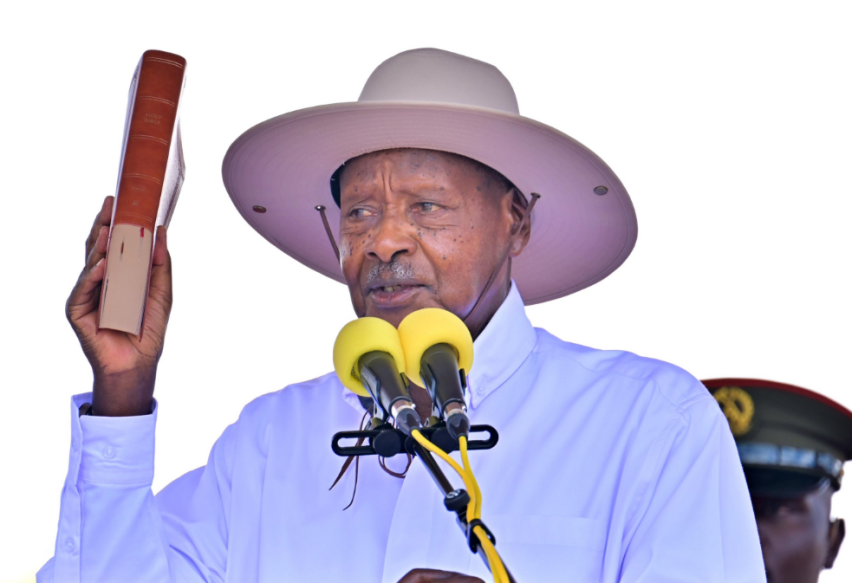
The statement echoed similar remarks made in Uganda by President Yoweri Museveni, who recently acknowledged the long-standing partnership between the government and the church in transforming Ugandan society.
Speaking during a church gathering, Museveni said religious institutions had contributed to education, health care and economic development alongside spiritual guidance. He urged churches to encourage productivity and economic self-reliance among their followers.
“The church has not only preached the Gospel but has also helped communities move out of poverty,” Museveni said in remarks published by Uganda State House.
The comments come at a time when governments across East Africa continue to rely on religious institutions for social influence. Churches remain among the most trusted public institutions in many African countries, especially where political polarization and economic hardship have weakened confidence in political systems.
But the relationship between church and state has often been complicated.
In both Uganda and Tanzania, Anglican, Pentecostal and Catholic leaders have at times openly challenged governments over democracy, human rights and political freedoms.
In Uganda, retired Anglican Bishop Zac Niringiye became one of the country’s most outspoken religious critics of Museveni’s administration during periods of political unrest and contested elections. Niringiye defended the role of clergy in political debates after government officials accused church leaders of interfering in politics.
Other Anglican bishops have also publicly criticized the treatment of opposition politicians and political detainees. Earlier this year, bishops in Uganda called on the government to release political rivals and warned against criminalizing political competition.
Religious leaders in Uganda have repeatedly spoken out against election violence and restrictions on civil liberties. During previous election cycles, church leaders questioned security crackdowns on opposition supporters and warned against attempts to silence dissent.
At the same time, some critics argue that parts of the church establishment have grown too close to political power. Donations and speeches from politicians in church services have fueled debate about whether some religious leaders have become reluctant to criticize authorities.
In Tanzania, tensions between the government and religious leaders became more visible during the administration of former President John Magufuli and have continued in different forms under President Samia Suluhu Hassan.
Last year, Tanzanian authorities deregistered a church linked to Pentecostal preacher and politician Josephat Gwajima after he criticized alleged human rights abuses and enforced disappearances. Officials said the church had violated regulations governing religious organizations, while critics described the move as politically motivated.
Researchers and political observers say churches in East Africa continue to occupy a delicate position, balancing cooperation with governments while also attempting to preserve their role as moral voices in society.
In Kenya, church leaders have also sought to redefine the relationship between religion and politics amid growing concerns over political polarization. The National Council of Churches of Kenya recently announced that politicians will no longer be allowed to use church altars to advance political agendas during worship services.
The council said the decision followed increasing cases of political leaders using church gatherings to trade accusations and deepen divisions among congregants. Church leaders said the restriction is intended to preserve the sanctity of worship spaces, lower political tensions within churches and restore respect for the altar as a place of prayer rather than partisan debate.
A 2025 study published by Cambridge University Press noted that churches in several African countries have played major roles in defending democratic institutions, though their influence and willingness to confront governments vary from country to country.
Despite periodic tensions, governments across the region continue to publicly embrace religious institutions as important partners in maintaining peace and shaping national identity.
For millions of East Africans, the church remains more than a place of worship. It is also a center of political conversation, community organization and public accountability, a role that continues to place religious leaders at the center of national debates about power, morality and the future of democracy.