I value the impetus behind church planting movements (CPMs, also commonly described as disciple-making movements or DMMs) for various reasons, but the most basic one is its radicalism. Not only do CPM practitioners take evangelism and discipleship very seriously, but they are also willing to challenge established assumptions about church structure along the way.
A somewhat domesticated form of Christianity.
Throughout my Christian life, I’ve felt that most churches, though they do excellent ministry in many ways, also tend to normalize and reinforce a somewhat domesticated form of Christianity.
Because of the variation in depth of commitment among their members and the wide range of demands those members place on the church, few congregations are good at developing laypeople into fervent disciples and disciple makers. In the West, busy schedules and geographic dispersion make it even harder to foster highly committed groups of believers.
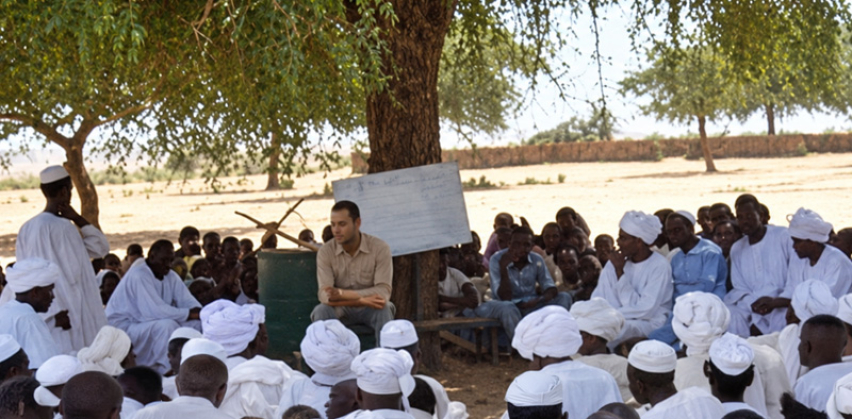
One year ago, while in Burundi, I wrote about a CPM that was spreading across the city of Cibitoke, inspiring joy, hope, and generosity in house churches of about 20 people each. In Cibitoke, people live in tightly packed small homes and don’t travel much, so their simple, relatively impoverished lifestyle encourages community building and mutual dependence.
CPM methodology faces more obstacles in the West, but I believe Western Christianity needs the emphasis on intensive disciple making that CPMs offer. So I was intrigued to find a pair of podcast interviews on London-based CPM author Emanuel Prinz’s Substack entitled “What Blocks Movements in the West—and How They Happen Anyway,” featuring U.S. researcher and practitioner Rodger Shull.
Exponential growth in a local area over a short period of time.
Shull defines a “movement” in terms of exponential growth in a local area over a short period of time. In the Majority World, the best-known movements have spawned hundreds of house churches with thousands of believers.
In the United States, Shull treats a network of house churches as a movement if 1,000 people have come to know Christ and been baptized. He claims he has identified hundreds of U.S. churches connected to CPMs. Generally, you have to go looking for them to find them, because they meet in homes or coffee shops.
Where people live together in close proximity are often the most fruitful ministry fields.
In his podcast interviews with Prinz, Shull addresses common objections raised by those who think CPMs can’t work in the West. I was not surprised to learn that contexts where people live together in close proximity are often the most fruitful ministry fields. Shull named three particular settings: university campuses, military bases, and prisons.
BLT: build relationships with lots of people and then tell them the gospel.
If a neighborhood is not communal, Shull recommended seeking a core of inquirers at a workplace or recreational group. He told of some friends who attempted to reach people at apartment complexes with little success, but who found better results by building relationships among players at nearby pickleball courts. Shull describes the essential steps as BLT: build relationships with lots of people and then tell them the gospel.
When Prinz suggested people who are economically vulnerable tend to acknowledge their need for God’s help more willingly, Shull noted that social and psychological needs are often prominent in more individualistic Western societies. He said that his family attracted 100 people to their home by hosting a weekly game night, resulting in a house church of 15 people within a few months.
I had more questions after listening to the interviews, and Shull was happy to answer them candidly.
Question and answer time with Rodger Shull
Does a DMM have to happen in a house-church context? Or can the method be transplanted into a more traditional church setting?
Theoretically, yes, a DMM can happen in existing churches. The book T4T: Training for Trainers describes a movement that started by training existing churches and became one of the largest movements in the world.
DMMs currently happening in America are through churches in homes.
But practically, this rarely happens. The DMMs currently happening in America are through churches in homes, not traditional churches, even though hundreds of traditional churches have been trained in DMM principles. There are several reasons for this.
First, it may sound harsh, but the top reason is probably money. Pretty much every church that has implemented movement principles, even partially, has seen an immediate and significant drop in attendance. Pastors know this will happen, and as a result they are too scared to move forward. Some fear being fired if they try.
A consumer culture.
A second reason why American Christians push back against basic movement principles is that their culture is a consumer culture. One basic principle that faces especially strong resistance is accountability.
Third, there are fundamental differences in ecclesiology, or how the church should function, between movements and traditional paradigms. Movements support and release the priesthood of all believers; American Christian culture places control with the pastors and staff of a church. Church pastors tend to criticize our teaching, the way we start churches, how we define a church, and of course our sacramental practices.
Can you identify any exceptions?
Hundreds of traditional churches trained, two... have borne fruit of multiplication.
Of the hundreds of traditional churches trained, I am aware of two that have fully adopted movement principles and have borne fruit of multiplication. The pastors involved in these efforts have told their stories on a 2024 podcast.
They can get around the money issues because neither of them receives a salary from the church and their churches have a fairly low budget. Both of them initially lost members when implementing DMM principles, but they have both gotten to the point of multiplication.
How do you feel about people who like your approach but who still want to be in an established church for various reasons?
In my network, around half of our new believers start attending a traditional church. We stay committed to discipling them as much as they want. I’m not concerned about them going to a bigger church, if they are being discipled by someone there. But that is a big if.
In my personal experience, many new believers who go to a traditional church quickly become stagnant in their faith, whereas about 80 percent of new believers who join one of our churches continue to grow in their faith.
Often, people want to attend a traditional church because of connections with family and friends, or young people think they have a better chance of finding a spouse if they fish in a bigger pond.
A lot of them are fleeing accountability.
Unfortunately, a lot of them are fleeing accountability. They don’t want to be a part of a church that asks, “How did you apply what we read in the Bible last week?” They would rather be in a church where no one asks them a question.
I noted that your house churches practice baptism, which could create a barrier to collaboration with some established churches that view baptism as a sacrament or believe it should be administered only by pastors. Is preserving the right to baptism essential for such movements?
Releasing the priesthood of all believers is absolutely essential.
Releasing the priesthood of all believers is absolutely essential to movements taking off around the world. We collaborate with churches that are fine with what we do. Because we are starting churches and not just small groups, others are generally not threatened by how we do baptism; they simply view it as a part of our church practice.
As an overall principle, the more DMM practitioners change what they do to conform to the American church culture, the less fruitful they become; the more they conform to the New Testament church, the more fruitful they become.
One option for traditional churches
Start sharing the gospel yourself.
The vast majority of committed Christians in the West, including me, are involved in a traditional church and not likely to exit it for a church planting movement. But that doesn’t stop us from letting CPMs challenge our seriousness about evangelism and discipleship. As Shull said, “One thing you can do is start sharing the gospel yourself and train everyone you know to share the gospel. I don’t think any of your pastors would get mad at this.”
This month, my own congregation has asked all of its approximately 200 small groups, instead of discussing the previous Sunday message as usual, to complete a three-lesson curriculum called “The Art of Spiritual Conversations,” which covers ways to engage with people outside the church and communicate the gospel to them. Our group has had fruitful discussions that wouldn’t have happened if the church leadership hadn’t given us this expectation.
Originally published on Bruce Barron's "Gently Provocative Thoughts" Substack. Republished with permission.
Bruce Barron has had a varied career that included investigating the charismatic movement, dominion theology, political campaigning and public policy in the USA. From 2015-2024 he volunteered for the World Evangelical Alliance as a communications aide and was executive editor of the WEA's theological journal from 2018-2024. Among other activities, he directs editorial services for the Society of Christian Scholars. Bruce writes a regular Substack blog, which can be subscribed to here: https://brucebarron.substack.com.