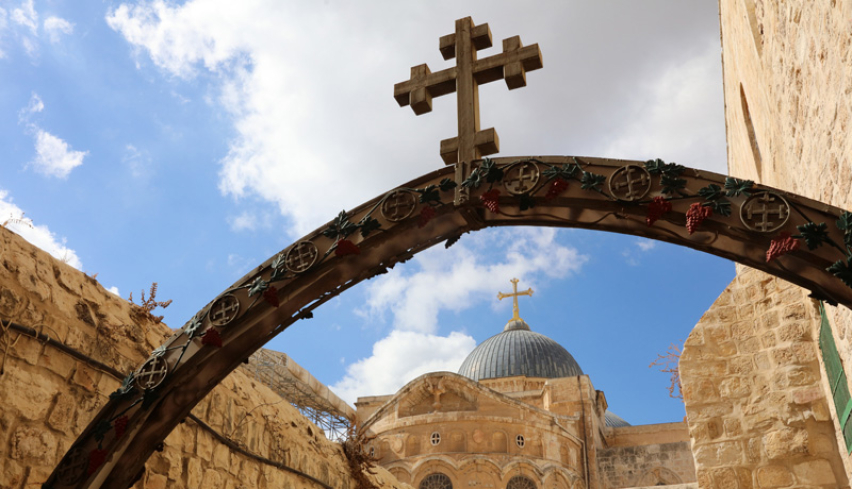
The Middle East is the birthplace of Christianity. It is where Jesus lived, taught, died and rose again; where the early Church took root; and where the first missionaries began carrying the good news to the world.
Sharing the gospel (is) difficult, dangerous, and sometimes deadly.
Yet nearly 2,000 years later, Christians remain a minority in many Middle Eastern countries. At the same time, war, Islamic extremism, and political instability have made sharing the gospel difficult, dangerous, and sometimes deadly.
Despite these challenges, Jesus' mandate in Matthew 28:18-20 and other Gospel references, compels us to share the gospel with people throughout the Middle East, including the youngest generation. We cannot overlook the children growing up there, many of whom have limited opportunities to hear about Jesus and learn what it means to follow him.
Introduce God’s word and its life-changing message.
According to a Pew Research Report, Muslims are one of the least likely groups to change their religion in adulthood, making childhood an essential opportunity to introduce God’s word and its life-changing message.
It’s a season when children are beginning to form their beliefs and ask some of life’s biggest questions, such as, "Who is God?" and "Why am I here?" Introducing children to biblical truth during these formative years can provide a crucial foundation for a strong faith. Encouraging them to become disciples of Christ as they grow older.
Doing so, however, requires an understanding of the unique circumstances facing these children. With 94% of the Middle East’s population identifying as Muslim, converting from Islam can carry severe consequences, including the loss of civil rights, imprisonment and even death. These difficulties must inform how we approach children and their families with the Gospel.
100,000 children without a classroom.
Religious differences are not the only challenges ministry workers must consider. Conflict and instability can profoundly affect children’s daily lives. In Lebanon, for example, 436 schools have been damaged or destroyed, leaving roughly 100,000 children without a classroom as clashes between Israeli forces and Hezbollah intensify.
For families facing displacement and economic hardship, concerns about safety and stability understandably take priority. Christians seeking to share the gospel must remain sensitive to those realities.
Historic Middle Eastern embrace of the gospel.
All of these challenges underscore the importance of equipping believers with strategies for the communities they serve. Recent research shows this missional strategy is leading to historic Middle Eastern embrace of the gospel despite the tremendous risk.
The five factors that have contributed to this awakening include social upheaval, exposure to the gospel, engagement with loving Christians, humility and repentance, and belonging in community.
Continuity is especially important.
Training local missionaries equips these believers to communicate the gospel clearly, teach the scriptures and disciple children in ways that account for local cultures and customs. It also helps establish ministry that can continue over time, rather than depend entirely on traveling missionaries or occasional outreach efforts. That continuity is especially important where instability and religious restrictions can complicate outside ministry efforts.
Reaching the next generation in the Middle East means more than introducing children to the gospel; it means teaching them how to understand, embrace, and live out biblical truth. Effective teaching requires patience, preparation, and an understanding of a child’s developmental stage. Local missionaries also need reliable teaching materials, encouragement, and ongoing support as they serve in circumstances that can change unexpectedly.
Children come to Bible teaching with different levels of understanding and experience.
That preparation matters, because children come to Bible teaching with different levels of understanding and experience. For a child in the Middle East who has never heard the gospel, a lesson may be the first time they learn who Jesus is and what it means to trust him as Savior.
For another, continued teaching can deepen an understanding of the Bible and encourage further growth in faith as Christ’s disciple. Both experiences are essential to building a generation grounded in biblical truth.
Sharing the gospel is only the beginning.
Ultimately, sharing the gospel is only the beginning. Children need continued instruction and opportunities to connect with a local church or community, where they can grow in their faith.
Christians outside the Middle East have an important part to play. While we may not be the ones teaching these children, we can pray for those who do, encourage their work, and help provide the training and resources they need.
Nearly 2,000 years after the gospel first spread from the Middle East, the responsibility to share it there remains. We cannot change the circumstances facing these children, but we can help equip the believers who are committed to reaching them. And through their work, more children can have the opportunity to know Jesus Christ and follow him throughout their lives.
Fred Pry is the Vice President of Administration at Child Evangelism Fellowship® (CEF®), the most impactful child evangelism ministry in the world, reaching over 27.4 million children with its face-to-face ministry in 2024. Fred joined CEF in 2003 as director of a local chapter in Pennsylvania before being appointed state director of Virginia. Later, he was invited to lead USA Ministries, and since 2024, he has been serving in the role of Vice President of Administration and providing further leadership to the organization as one of CEF’s executive staff.
CEF® has wonderful devotionals for children, including the “Every Day with God” series and the “Wonder Devotional Books.” To learn more, visit cefpress.com.