Christian in Pakistan wins faith change on national ID card
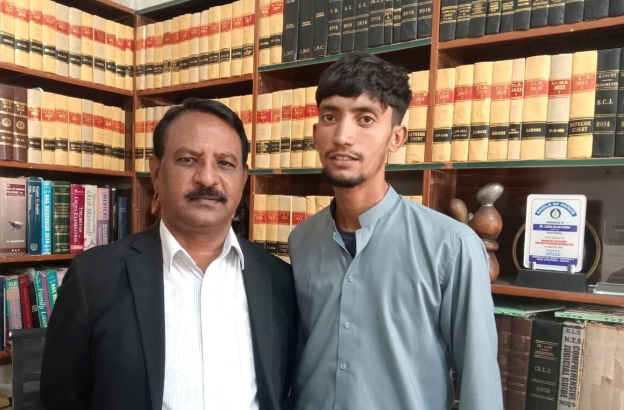
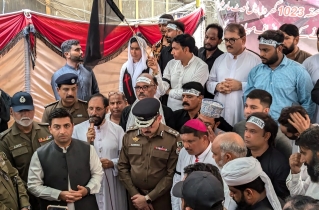
A 22-year-old Christian man in Pakistan has won a seven month legal battle to have his religious designation corrected on his national identity card.


A 22-year-old Christian man in Pakistan has won a seven month legal battle to have his religious designation corrected on his national identity card.
A devastating wave is crashing over South Asia, wreaking havoc on those who choose to follow a faith other than the majority. It is a wave of anti-Christian sentiment. So-called “Freedom of Religion” and “Anti-Blasphemy” laws fuel it, generating a powerful undercurrent of distrust and disdain toward Christians.
The recent flood from the Himalayas through Nepal to India, shared via social media, stunned the world. Relief organizations mobilized to capitalize on the catastrophe and the Nepali government collected a great deal of financial aid to assist but relief action was slow. Whereas, NGOs and churches competed for the donor dollar while families grieved.
For a followers of folk religion in Taiwan, who understand religion as transactional with individual spirits, forgiveness of sins may not immediately sound like an answer to the practical fears that emerge during Taiwan's Ghost Month. Yet the gospel can reframe the human problem without ignoring the fear that brought the person to the conversation. Our deepest problem is not that we have failed to satisfy every unseen power. It is that we are sinners before a holy God.
Disciples are made to need one another, and in their interdependence they reveal God's glory. Collaboration with those who follow Christ from other backgrounds is a powerful witness in this regard. By living and ministering well together the lives of those who don't know Jesus will be impacted by a community of spiritually transformed, self-giving people who demonstrate a love that is not of this world.
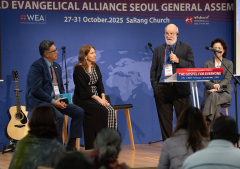
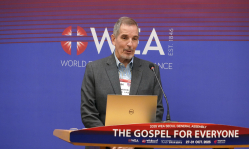
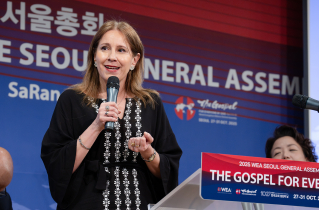
The second panel discussion of the World Evangelical Alliance (WEA) General Assembly on Monday morning, Oct. 27, turned its focus to the world’s growing urban centers and the challenge of living out the gospel amid pluralistic cultures.
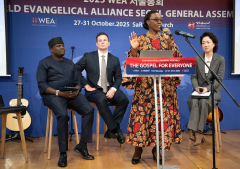
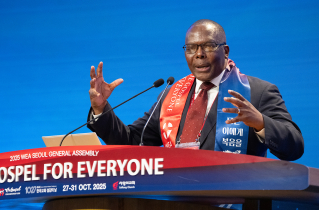
The first panel discussion of the World Evangelical Alliance (WEA) General Assembly, held Monday morning, Oct. 27, at Sarang Church in Seoul, explored the rapid growth and shifting demographics of global evangelicalism, with a particular focus on the African context.

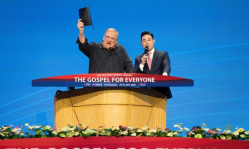
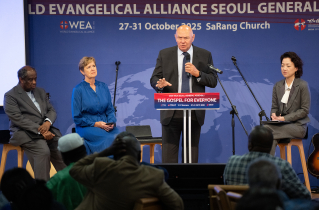
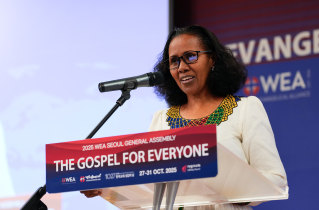
The World Evangelical Alliance (WEA) opened its 14th General Assembly on Monday morning, Oct. 27, at Sarang Church in Seoul, South Korea, bringing together hundreds of leaders from every continent under the theme “The Gospel for Everyone by 2033.”

The Philippine Council of Evangelical Churches (PCEC), together with allied groups, has called for a national week of repentance, prayer, and fasting to “heal corruption” in the Philippines — a move that builds on recent church-led actions against large-scale graft in infrastructure and flood-control projects.
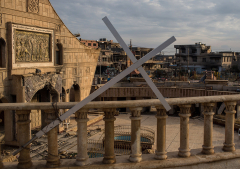
Amid rising concerns over global violations of religious freedom, former World Evangelical Alliance (WEA) Secretary General Bishop Dr. Thomas Schirrmacher has warned that major Christian networks are retreating from advocacy for the persecuted church.
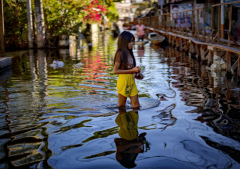
The Philippines remains one of the world’s most disaster-prone countries, with floods posing the gravest and most frequent threat, according to the recently published WorldRiskReport 2025. The findings come as the country has seen nationwide protests against corruption and church-led calls for transparency in the government’s flood-control projects.
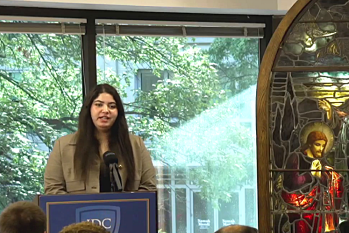
The daughter of a Christian detained in Syria without charges since February 2025 on Tuesday (Sept. 15) called on the U.S. administration to use its influence to secure his release.