Latin America
-
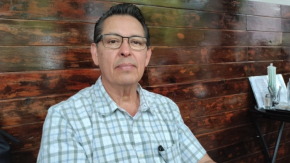
President of evangelical network of Veracruz laments Mexico's failure to address violence, 'ask God for new government to do better'
“We were told that insecurity would end in two years. Official data, hard data from the government itself, speak of almost two thousand murders throughout the country with an average of 80 to 90 daily. High-impact crimes. So I think it is a failure. The daily cases of kidnapping, of extortion, do not end. Criminal groups have become empowered and this should worry us all. And even more so the incoming government,” said Guillermo Trujillo Álvarez, president of the evangelical network of Veracruz -
Outsize number of migrants globally are Christians, with Mexico top country of origin
-
Christians in Mexico face expulsion after losing property, church building
-
Christian leaders raise voices as more than half of Guatemala's population lives in poverty
-
[Book review] Christian Worldview & Transformation: Spirituality, Reason & Social Order
-
Evangelical voices at the G20 Interfaith Forum in Brazil: 'faith communities as promoters of social cohesion'
Latest Updates
-
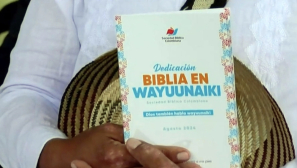
First Bible translation for indigenous ethnic people groups completed in Colombia
The Colombian Bible Society has unveiled the first complete translation of the Bible into an indigenous language: Wayuunaiki, which will serve two indigenous ethnic groups in Colombia. The Wayú ethnic community constitutes 20% of the indigenous population. The Nasa people, another native group, represent approximately 12.8%, according to data from the National Administrative Department of Statistics (DANE) in 2019. -
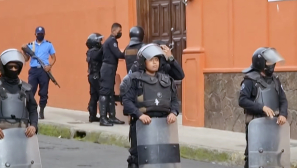
Nicaragua detains more priests, shuts down more ministries
Authorities in Nicaragua detained two priests over the weekend of Aug. 10-11 after arresting 11 others a few weeks before, and on Monday (Aug. 12) the government closed a chapter of the Caritas charity, Catholic and evangelical sources reported. -
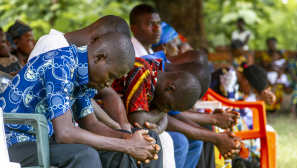
Global survey reveals religion, prayer most important in sub-Saharan Africa and Latin America, least important in Western countries
Europeans are least likely to say that religion is very important in their lives, compared to other parts of the world, and only 42 percent of Americans claim that religion is personally crucial to them. Other parts of the world responded more affirmingly on the importance of religion, specifically within sub-Saharan Africa and Latin America. The picture was less clear in South and Southeast Asia, compared to the polarized views in Europe and sub-Saharan Africa. -

Avance 2024 International Leadership Summit in Bogotá discusses use of AI in churches
The Iglesia de Dios Pentecostal Movimiento Internacional (Pentecostal Church of God International Movement, or IDPMI) recently held its second International Leadership Summit “Avance 2024” in Bogotá, Colombia. Focus of the event was on the issue how churches can best use Artificial Intelligence (AI) with integrity, and how they can be at the forefront of the AI technology and interpret it in accordance with the Gospel. -
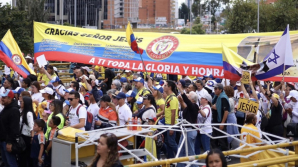
Thousands of people march for Jesus in Colombia, pray for peace in the nation
Thousands of people participated in the March for Jesus in Bogota, Colombia with the slogan 'With Jesus Christ Colombia in peace'. Organized jointly by the Colombian Evangelical Confederation (CEDECOL) and the Catholic Church, the event mobilized Christians to pray to God for the nation. -
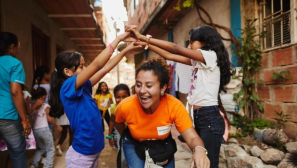
City of Medellin and World Vision join forces to protect migrant children in Colombia
Dangerous migration in Latin America due to poverty, insecurity and political conflicts continues to increase, especially among children and adolescents. According to data provided by UNICEF, it is estimated that in the Darien jungle alone, on the border between Colombia and Panama, 800,000 people will cross in 2024, 160,000 of which will be under 18 years of age. Based on the regional context and the trends observed in the first four months of 2024, the majority of these minors will likely requ -
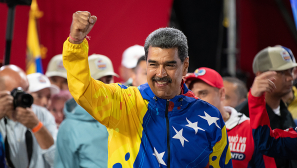
Venezuela's Nicolás Maduro claims victory amid widespread criticism of intransparent presidential election
After more than six hours of waiting following the closing of the polling stations, the National Electoral Council of Venezuela (CNE) announced the results for Sunday's presidential election. According to the CNE, with 80% of the tables counted, the official leader Nicolás Maduro would have obtained 51.20% of the votes, while the opposition candidate Edmundo González received 44.2%. The results were widely criticized as very unlikely and lacking transparency.
Most Read
-
In Cairo, Christian women leaders explore what it means to lead in the 'wilderness'
-
The Church remains the greatest challenge to China's communism
-
'Un-dark': New initiative trains Christians to share their faith in online gaming communities
-
Death penalty for church attack killers in Jordan faces obstacles
-
Cases of abduction/forced conversion unabated in Pakistan