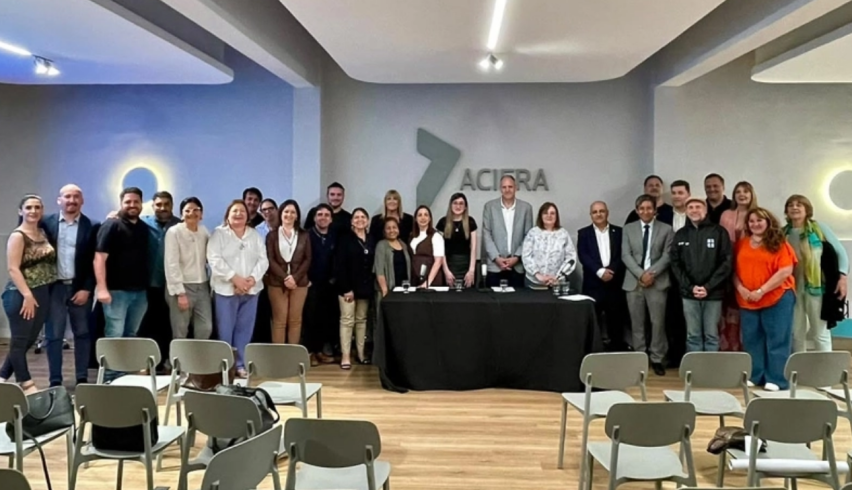
On Tuesday, Nov. 17, the Christian Alliance of Evangelical Churches of the Argentine Republic (ACIERA) launched its Artificial Intelligence Observatory. The interdisciplinary initiative will research, discuss and share findings on how this technology is affecting education, work, communication and human relationships.
The observatory's director, attorney Ayelén Caffarena, told Diario Cristiano, Christian Daily International's Spanish-language edition, that the initiative grew out of a need to understand these changes and to promote the responsible development and use of AI. Human dignity, human rights and the common good are its guiding principles.
One of its main areas of study will be AI's impact on children and teens. With screen use widespread and generative AI now part of everyday life, the observatory will look at how these technologies affect young people's learning, relationships and development.
A prophetic voice on technology?
At the launch, the Rev. Christian Hooft, ACIERA's president, said civil society organizations have a responsibility to respond to technological change. "As part of the fabric of society, we have a responsibility not to leave this duty of care to the government alone," he said.
Hooft acknowledged the speed and efficiency AI brings to science and medicine. However, he raised questions about technology replacing human abilities and what that could mean down the road. He also voiced concern about children's social lives, and about technology taking the place of real interaction between people.
"As Christians, God gives us a responsibility and a voice," he said. "We want to be a prophetic voice, not an apocalyptic one. We want to speak to the care that's needed and the dangers ahead, to help prevent them and to wake people up to a model that, without our realizing it, is leading us toward something we can't control."
Caffarena said the observatory will bring together law, technology, neuroscience, anthropology, education, psychology, theology, ethics and communication. Its research and activities will be organized around each topic and how much depth it requires.
The questions guiding the work include how AI affects attention, independence, decision-making and relationships. The team will also look at how AI systems are designed and put into use, and what that means for people.
The observatory plans to work with universities, civil society groups and policymakers. It hopes to become a go-to resource in Argentina and other countries.
An interdisciplinary, people-first approach
Caffarena said the goal is to help build a future in which AI expands human potential, improves quality of life and creates opportunities for communities that don't have them today.
For churches, the observatory will offer training and outreach on responsible ways to use AI in communication, education and community life. It will also address privacy, misinformation, child protection and healthy relationships.
"This isn't about handing out recipes. It's about creating space for discussion, reflection and dialogue," Caffarena said. The gatherings will bring together different perspectives, research and expertise. The aim is to help communities make informed decisions without falling into what she called "technophobia or tech solutionism."
Hooft told Diario Cristiano that ACIERA is committed to working with Argentina's evangelical churches, which make up its membership. He added that the alliance hopes to reach other countries "as much as possible." ACIERA has served as a model for evangelical alliances and councils in other countries, and it has also learned from its sister alliances.
"We know God gives us gifts, knowledge and a responsibility to care for others," Hooft said. "Social engagement is already part of the church's DNA. You see it in all the social, emotional, psychological and material support congregations give their communities, wherever they serve. We're not indifferent to people's needs. The observatory is taking shape as a place of fellowship where we can learn together, a tool to walk alongside us. And of course, we always put the Lord Jesus Christ first, along with preaching and spreading his word and caring for people."
To close the event, the Rev. Jorge Gómez, ACIERA's executive vice president, recognized the work of the interdisciplinary team. He highlighted the observatory's mission to educate and serve both churches and society. Gómez said AI is a tool of our time and stressed that it must be used in ways that protect human worth. "We cannot sacrifice people or the next generation," he said.
Original reporting by Diario Cristiano, Christian Daily International's Spanish edition.