Africa's main evangelical theological accreditation body has voted to reorganize itself into three distinct language-based councils, a change its leaders say is designed to close a long-standing gap in service to French- and Portuguese-speaking institutions across the continent.
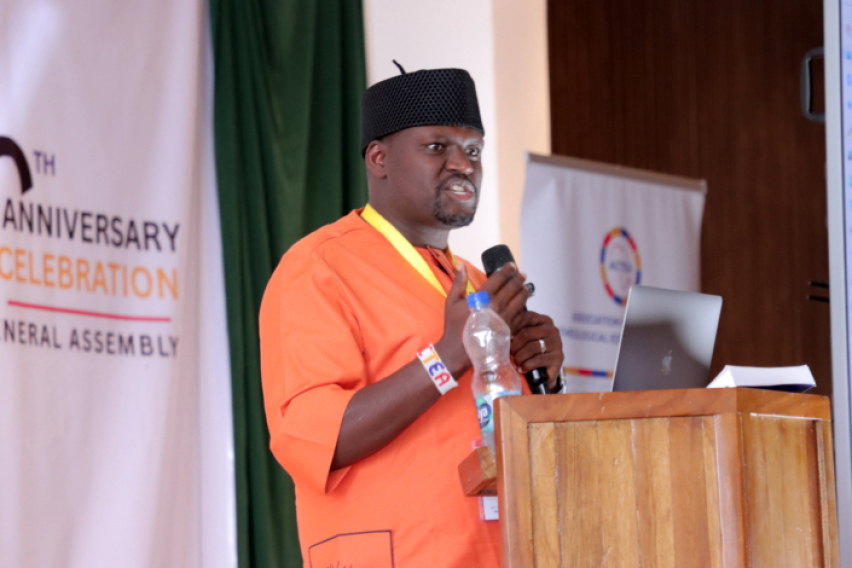
The Association for Christian Theological Education in Africa (ACTEA) announced the restructuring following its General Assembly and 50th Anniversary gathering in Addis Ababa, held March 4-12. Delegates voted to divide the organization into three arms: the Council for Anglophone Theological Institutions (CATI), the Conseil des Institutions Théologiques de l'Afrique Francophone (CITAF) and the Conselho das Instituições Teológicas Lusófonas (CITEL). Each council will operate under a shared continental secretariat, a single board and one General Assembly, all within the broader structure of the Association of Evangelicals in Africa (AEA).
The decision marks a significant shift for an organization that, despite a founding vision of trilingual, continental reach, had come to be seen primarily as an Anglophone body. ACTEA Executive Director Dr. David Tarus acknowledged in an announcement to the ACTEA community that Francophone and Lusophone institutions had not received consistent support over the decades.
"Despite this trilingual heritage and genuine efforts, ACTEA did not serve its Francophone and Lusophone constituencies as fully and consistently as it should have," Tarus wrote.
The restructuring carries particular weight given the scale of the training gap facing African churches. Church growth across Africa has far outpaced the capacity of theological institutions to train pastors and ministry leaders — a crisis that affects congregations in both urban and rural areas. Tarus had previously told CDI that many African churches are led by pastors with little or no formal theological training, and that seminaries and Bible colleges have struggled to expand fast enough to meet demand.
The new structure gives formal standing to CITAF, the Francophone council, which has operated for more than two decades and supports over 200 theological institutions and Christian universities in Francophone Africa. Tarus said CITAF's experience, networks and relationships will now be integrated directly into ACTEA's continental work. The Anglophone and Lusophone councils are still to be constituted.
Founded in March 1976 as a project of the AEA's theological education commission, ACTEA was established to provide accreditation and quality assurance for evangelical seminaries and Bible colleges at a time when formal accreditation systems were limited across much of Africa. As Christian Daily International reported, the organization's 50th anniversary assembly in Ethiopia drew representatives from theological institutions in 31 countries and included discussion of how to expand training without weakening academic or biblical standards.
Tarus framed the restructuring in ecclesiological terms, citing Ephesians 4:5-6 and invoking the unity Christ prayed for as the foundation for the new structure.
The Anglophone and Lusophone councils have yet to be formally established, leaving the full implementation of the new structure as a task for the coming period.