
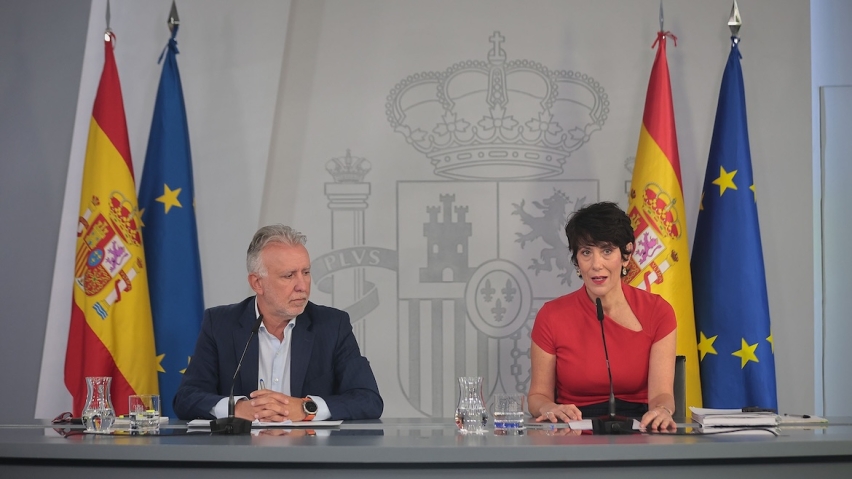
On Tuesday, 22 September, the Council of Ministers of the Spanish government approved the Royal Decree that sets out the procedure for recognising the work undertaken by evangelical pastors prior to their inclusion in the General Scheme in 1999 as Social Security contributions.
According to a statement from the Ministry of Inclusion, Social Security and Migration, evangelical and Adventist worship ministers who served in Spain before those dates “will be able to have that period recognised as a period of contributions for the purposes of accessing retirement, permanent disability or death and survivor's pensions”.
Social Security Minister Elma Saiz stated that this is “a measure that does justice to a group of people who were persecuted during the dictatorship, who carried out their work at a time when they lacked the protective umbrella of the Social Security system, and who will finally see an improvement in their protection”.
FEREDE: “Contained joy”
Carolina Bueno, the executive secretary of the Federation of Evangelical Religious Entities in Spain (FEREDE), expressed her “joy at seeing this promise fulfilled after so many years of work, effort and appeals”, although this joy is “contained as we wait to find out the details of the Royal Decree”.
Bueno pointed out that over 1,200 pastors carried out their Christian ministry during the Franco regime and the years that followed (the known as Democratic Transition) without being able to make social security contributions.
Nearly 700, more than half, have already died without having their rights recognised, leaving their widows in a helpless situation.
“We will be able to speak of true redress once we know the specific scope of the legislation and can verify that it complies with court rulings and the legitimate expectations of our retired ministers”, added Carolina Bueno, who leads the Protestant body in charge of negotiating with the Sate.
Two court rulings
The cases of retired pastors without a pension have been one of the most recurring issues raised with the government by evangelicals this century.
On 3 April 2012, the European Court of Human Rights ruled against Spain in the case of pastor Francisco Manzanas Martín. He was denied a pension because his years of ministry prior to 1999 were not taken into account while the law allowed such years to be counted for Catholic priests who had left the priesthood since 1977. The court in Strasbourg found discrimination on religious grounds.
In November 2017, the Supreme Court partially annulled Royal Decree 839/2015, which had been appealed by evangelicals in Spain on the grounds that it discriminated against the Catholic clergy.
Years of advocacy
In November 2021, FEREDE raised the issue with Félix Bolaños, the minister of the Presidency, who expressed a willingness to work on it. Since then, the evangelical entity has been in contact with parliamentary groups, the Hate Crimes Prosecution Service, and the Directorate General for Religious Freedom.
In 2025, the Interfaith Dialogue Committee and the World Evangelical Alliance backed the issue, bringing it before the UN. This followed years of efforts by the Spanish Evangelical Alliance through the permanent delegation that the global evangelical organisation has at the UN Human Rights Council in Geneva.
On 22 May, at a ceremony marking the 70th anniversary of the Commission for Evangelical Defence in Madrid' national Parliament, the Under-Secretary to the Presidency, Alberto Herrera, had announced that the text would be sent to the Council of State as the “final step prior to” its approval, and acknowledged Spain’s “historical debt” to those pastors.
Next steps
The Royal Decree will come into force following its publication in the Official State Gazette (BOE). FEREDE has announced that it will analyse the accreditation requirements, deadlines, amounts and procedures, and advise the affected churches and pastors on the necessary formalities.
Originally publishes by Evangelical Focus.








