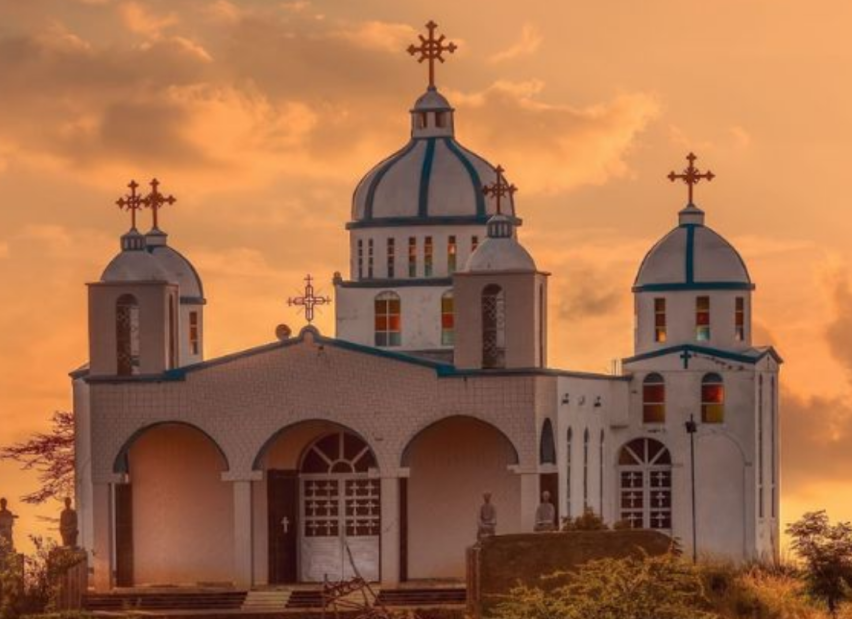
More than 60 Ethiopian Orthodox Christians have been killed in two attacks in Ethiopia’s Oromia region, prompting the country’s Orthodox Church to call for stronger protection of civilians and action against those responsible.
The Ethiopian Orthodox Tewahedo Church said 14 people were killed on Oct. 20 in Merti District and another 46 on Oct. 24 in Shirka District, both in the Arsi Zone of Oromia. More than 20 homes were burned, and more than 20 people were hospitalized with severe injuries, according to a statement issued by the Ethiopian Orthodox Tewahedo Church's Holy Synod.
The attacks occurred in communities where armed violence has repeatedly killed civilians, displaced residents and damaged property. Responsibility for the latest killings remains disputed.
A resident whose 75-year-old father was killed described the attack as an ambush, telling BBC Amharic, “We were completely unprepared and had no prior knowledge. They surrounded us from all four directions.”
Eyewitnesses also told the BBC that five of those killed were children.
A church official described the attacks in three areas of Shirka District as a “massacre,” saying security forces arrived but were unable to stop the assault. Many residents have since fled the affected communities.
The church’s statement did not identify the perpetrators. It condemned the killings and urged government authorities to protect civilians and ensure those responsible were held accountable.
Church warns of repeated attacks
The Holy Synod said attacks against Christians had been increasing and criticized the lack of an effective response to repeated concerns about insecurity.
The church said it had raised security concerns with authorities at different levels of government but that “so far there has been no solution.” The church warned that the violence undermined Ethiopia’s values of mutual respect and peaceful coexistence.
The latest killings add to a longer pattern of violence reported in the Arsi Zone, where local communities have faced attacks, abductions, destruction of property and displacement.
In July, the Ethiopian Human Rights Council, a nongovernmental organization, reported that 458 people had been killed in attacks across the East Arsi Zone over the preceding four years. The organization also documented abductions and people whose whereabouts remained unknown.
Its findings covered multiple districts, including Merti and Shirka, and described repeated attacks against local communities, particularly followers of the Ethiopian Orthodox Tewahedo Church.
The report pointed to religious and ethnic identity as factors in the violence. The scale of the documented killings indicates that insecurity in the region predates the latest attacks.
Who is responsible for the attacks?
Oromia’s regional government blamed a newly formed rebel coalition known as the Alliance for Survival, which includes the Oromo Liberation Army (OLA), for the latest attacks.
According to Reuters, the regional government alleged that the coalition intended to provoke religious conflict but provided no evidence to support the accusation.
A source linked to the rebel alliance, meanwhile, accused the regional government of carrying out the killings, citing conversations with two local residents, Reuters reported.
The OLA did not immediately respond to a request for comment on the latest attacks. The group has previously denied responsibility for similar violence.
The OLA says it is fighting for greater rights for the Oromo people, Ethiopia’s largest ethnic group. The Ethiopian government has repeatedly accused the group of attacking civilians and religious institutions.
Prime Minister Abiy Ahmed has previously described violence against civilians and religious institutions as part of an effort to destabilize the country.
Ethiopia is religiously diverse, with Christians accounting for roughly two-thirds of its population and Muslims making up most of the remainder. The Ethiopian Orthodox Tewahedo Church is one of the nation's largest Christian communities and has a longstanding presence in the country.