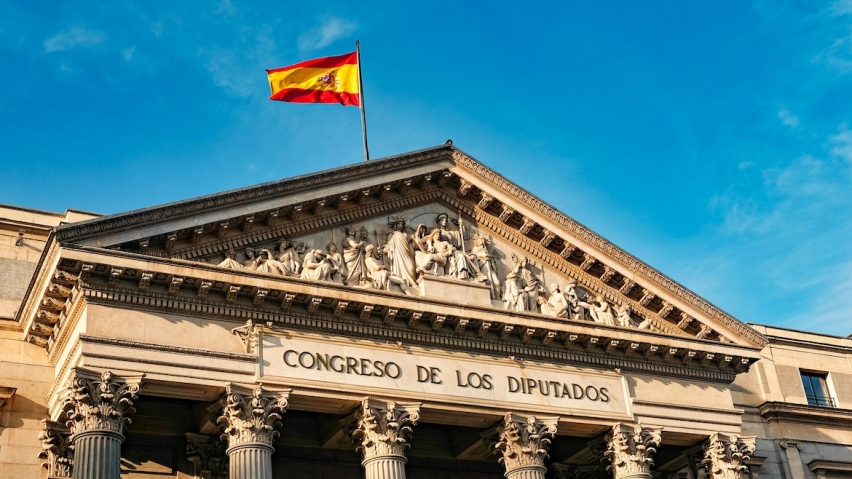
The Spanish Evangelical Alliance (AEE), a leading evangelical organisation in Spain, is launching a new edition of its Vota con criterio (Vote with an informed opinion) document.
It comprises a series of thematic articles, written by evangelical experts ahead of the general election to the national parliament on 29 November.
It is coordinated by the Alliance’s public life participation group, and each article will be published on the Spanish news website, Protestante Digital in the coming days, before being compiled into a single digital reference document.
“This document has already become a classic among us, and many look forward to it ahead of every general election”, explains Xesús Manuel Suárez, the project coordinator, to Protestante Digital.
According to Suárez, the initiative aims to serve the evangelical community in an area that “we rarely address in our gatherings, meetings or sermons: the commitment of the believer to public life”.
“God is sovereign over all areas of the believer’s life, including this one”, he underlines. That is why “a child of God must cast their vote in an election as a service to the Lord, to the country, and to the church”.
Information, biblical principles and freedom
The series is presented as a tool with three main objectives. The first is to help every believer stay informed about the socio-political reality, at least in the most relevant areas of public life.
The second is to find basic principles in the Bible for assessing which electoral proposal “most closely aligns” with them.
The third is to make a decision “with the best information, freely and responsibly”.
Authors who “know the ground well”
The chapters cover the most relevant areas of public life. Each is written by an expert in the field.
“It is certainly a privilege to have them on board because they not only have outstanding qualifications, but also speak from personal experience. They do not speculate as sometimes happens when discussing politics”, says Suárez.
The editor acknowledges that the decision to bring forward the election “has taken us a little by surprise”. He has had to ask the authors to put their other commitments aside for a while.
“I’ve found that it’s usually the busiest people who respond best to these time pressures”, he points out.
However, several of the authors are going through difficult family situations, so it is possible that some chapters may not be ready on time.
Suárez gives two examples: Javier Otero, a pastor and teacher of Evangelical Religious Education, wrote his piece in hospital while caring for his wife; and Marc Correa, a professor at ESADE Business School and an associate research fellow at Harvard University, wrote his on the plane home from his time at Harvard.
“I owe them all an immense debt of gratitude, and I believe it is right that the evangelical community should recognise their dedication”, he says.
Updated chapters and a new one on freedom of conscience
This edition contains the same chapters from the previous edition, published in June 2023, but the authors have updated them in line with political developments.
Some have also changed their approach. For example, the chapter on territorial structure is now addressed “from the perspective of the coexistence of national identities”.
There is also a new chapter on the Romani community, which “is a very important group within the evangelical community” and “has specific demands and proposals for political parties that the whole evangelical community should be aware of and support”.
A new addition to the series is a chapter on freedom of conscience.
“Do not vote against anyone, but in favour of something”
Suárez wants evangelicals to vote “differently”. “We pray that they do not vote against anyone, as many do, but in favour of something”, he states.
He also urges them to “take a certain distance” and not cast their vote “uncritically for anyone, because no party fully embodies our model of a society based on the Kingdom of Heaven and we owe no party unwavering loyalty”.
“We pray that every evangelical will vote for whoever they choose, but that they do so not out of pure emotion, image or tension, but out of reflection, freedom, responsibility and submission to the Word”, concludes Suárez.
List of articles and authors
Migration
Author: Ángel Manuel Hernández Gutiérrez, pastor and president of Misión Cristiana Moderna in Fuerteventura.
Topics: immigration by land, sea and air (Ceuta and Melilla, the Canary Islands, Latin Americans), unaccompanied minors, the ‘pull factor’ and the role of Latin American immigration in the churches.
International politics
Author: Alba Ledesma, lawyer and political scientist, adviser to the Secretary of State for Defence.
Topics: international policy proposals from the PP, PSOE, Frente Amplio (formerly Sumar), Podemos and Vox, and war as a backdrop to international relations.
Media
Author: Pedro Tarquis, doctor and journalist, president of Areópago Protestante, the media project of the Spanish Evangelical Alliance.
Topics: media independence during the 29 November campaign; biblical foundations for staying informed; and questions for candidates on press freedom, public media, institutional advertising and disinformation.
Education
Author: Francisco Javier Otero Sousa, pastor and teacher of Evangelical Religious Education.
Topics: the State Pact for Education, the ‘demographic winter’, multiculturalism, artificial intelligence and social media, PISA results, education in values and the subject of religion.
Healthcare
Author: Miguel Torralba, a doctor and pastor in Madrid.
Topics: healthcare waiting lists, staff shortages, private healthcare, long-term care, palliative and end-of-life care, and healthcare management models according to political parties.
The Roma community
Author: Fernando Navarro Navarro, minister at the Filadelfia evangelical church.
Topics: a biblical perspective on relations between communities, the situation of the Roma community and Roma evangelicals, and demands on political parties: employment, inclusive education and recognition of Roma organisations.
Economy and financial system
Author: Marc Correa Domènech, professor at ESADE and Associate Research Fellow at Harvard.
Topics: prices, interest rates, employment, housing, inequality and poverty, the banking system, and biblical principles regarding resources.
Fiscal policy
Author: Marc Correa Domènech.
Topics: the absence of a state budget since 2023, revenue and the tax burden, public spending, the deficit and debt, corruption, and biblical principles regarding taxation and budgeting in the service of peace.
Coexistence of national identities
Author: Jaume Llenas, lawyer, national coordinator of the Graduate Bible Groups (GBG).
Topics: territorial tensions during the legislative term, the erosion of the autonomous region model and asymmetric models, and biblical principles on territorial planning.
Originally published by Evangelical Focus. Republished with permission.