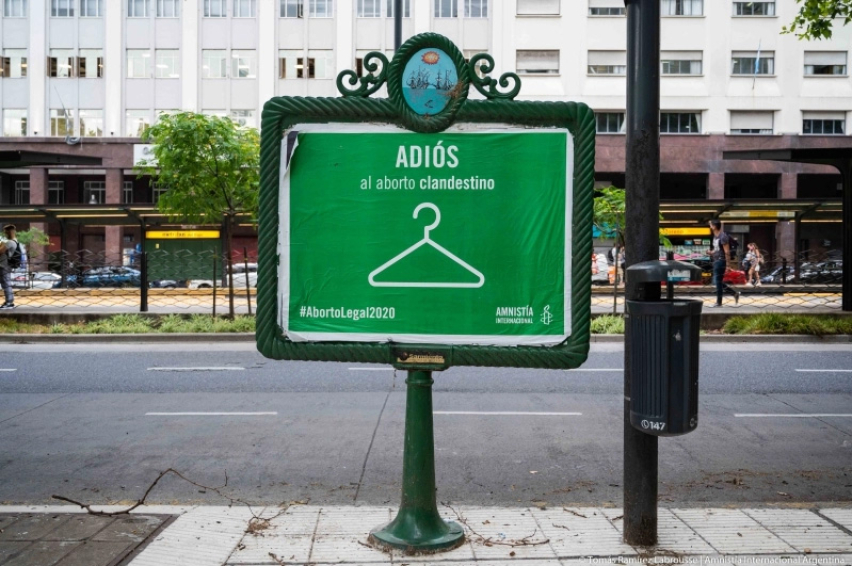
Joining the Geneva Consensus is a political signal, an assertion of national sovereignty, and a door that reopens the debate about the protection of human life from conception.
There are decisions that do not change a law from one day to the next, but they can change the direction of a debate. Argentina’s decision to sign the Geneva Consensus Declaration on Promoting Women’s Health and Strengthening the Family can be understood in this way.
The Geneva Consensus... recognizes the inherent right to life.
The Geneva Consensus upholds principles that are particularly relevant to the Argentine debate: it recognizes the inherent right to life, affirms that abortion should not be promoted as a method of family planning, and establishes that decisions related to abortion should be determined by each state in accordance with its own legislative processes. It also expressly affirms that there is no international right to abortion, nor any international obligation requiring States to finance or facilitate it.
In other words: Argentina is once again saying on the international stage that it has the right to decide, as a sovereign nation, what its political position will be regarding life and motherhood.
The debate over abortion in Argentina has not disappeared.
A law may conclude a parliamentary vote without bringing a social debate to an end. And the debate over abortion in Argentina has not disappeared.
The right to life in Argentina is recognized at the constitutional level through Article 75, section 22 of the Constitution of the Argentine Nation, which incorporates international human-rights treaties. The American Convention on Human Rights establishes that the right to life is protected from conception.
Defending life also means defending women.
The discussion should not be framed as an opposition between “the life of the child” and “women’s rights.” Those of us who defend life maintain precisely the opposite: defending human life from conception also means defending women.
Defending them from violence, pressure, abandonment, poverty, lack of opportunity, and those circumstances that can make them feel that the only way out of an unexpected pregnancy is to end the life of their child.
How can we support a pregnant woman in a vulnerable situation.
A genuine policy of protection should ask how can we support a pregnant woman in a vulnerable situation so that she can choose life without being left alone.
Because a society that wants to protect women should not offer abortion as the answer to their problems, but should instead create conditions in which motherhood does not become a social, economic, or personal sentence.
The fallacy of “legal, safe and free abortion”.
After almost six years of the decriminalization of abortion being in force, we should reconsider the concepts through which the debate was framed.
Abortion... is legal, but unconstitutional.
The expression “legal, safe and free abortion” was one of the principal slogans used during the process that culminated in legalization. It is legal, but unconstitutional. In fact, at least 37 legal actions were initiated against Law 27.610, of which 32 were direct applications seeking a declaration of unconstitutionality.
It is not safe. No medical procedure is completely without risk. The health regulations themselves recognize the need for informed consent and establish that patients must receive information about the possible outcomes and risks of the procedure. It is also well known that many women undergo abortions outside the grounds established by law, for example in pregnancies beyond 14 weeks.
It is not free: taxpayers pay for it.
Facts defeat the narrative.
Argentina is experiencing a pronounced decline in its birth rate. The fall in the number of births has created growing concern about the country’s demographic future.
What kind of society do we want to build if fewer and fewer babies are being born while, at the same time, the state can eliminate human life before birth?
We are speaking... about a generation that will never come into existence.
We are not speaking only about statistics. We are speaking about people. About children. About mothers. About families. And, from a broader perspective, about a generation that will never come into existence.
Sovereignty is also exercised by saying “no”.
There is another especially significant element in the Geneva Consensus. In our country, the abortion debate was marked by strong international pressure. Foundations, movements, and international organizations intervened in our country in order to have abortion legalized.
They financed advertising campaigns, musicians, actors, activist groups that exerted political pressure, coordinated editorial messaging and media trends, educational materials for schools and institutions, and many other strategies that were used very skillfully—with greater or lesser degrees of brazenness—in the service of foreign interests.
Policies relating to abortion must not be imposed from outside.
For that reason, it is particularly significant that Argentina is now asserting a different principle in the international arena: policies relating to abortion must not be imposed from outside; they must be decided sovereignly by each nation.
The Geneva Consensus specifically reaffirms that there is no international obligation requiring states to finance or facilitate abortion, and recognizes the authority of each nation to determine its own policies.
The debate has turned amber again
It is true that, at least for now, repealing Law 27.610 does not appear to occupy a central place on the national legislative agenda. But political agendas also change when reality changes. Perhaps the traffic light is not yet green. But it has turned amber again.
Amber means attention. It means debate. It means that an issue which some people sought to declare permanently settled is once again appearing on the horizon. In joining the Geneva Consensus, a light switched on a road that has not yet ended.
Passing a law may change an article in the penal code. But it does not transform the convictions of a society. And Argentina is a country that loves life, loves children, loves, protects, and defends.
The path towards any eventual review of the legislation will necessarily be political, legal, and democratic. It will require arguments, parliamentary majorities, and a society willing to debate the matter again.
Every process of transformation begins long before a law changes.
But every process of transformation begins long before a law changes. It begins when the discourse changes, when the political position changes, and yesterday’s development once again affirmed that position.
Argentina defends human life from conception.
We defend women. We defend families.
And we defend Argentina’s sovereignty to decide its own future.
Originally published in Spanish by Diario Cristiano. Republished with permission.
Ana Valoy is the founder of the organisation Nacidos para Gobernar (“Born to Govern”). Co-founder of the EPASI Foundation — Equipo de Prevención del Abuso Sexual Infantil (“Child Sexual Abuse Prevention Team”), the Co-founder of the Coalition of Argentine Women. Ana volunteers with A21 (against human trafficking), is a member of the Global Council of Nations, and holds a degree in Political Science. She is a social psychologist, author, speaker, and activist.