A peer-reviewed journal published by the Asia Theological Association has released a volume focused entirely on how theological institutions across Asia are working to form students not just academically but spiritually, relationally, and personally — a challenge that leaders in the region say is growing more urgent.
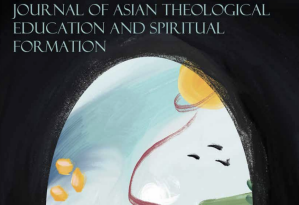
The Journal of Asian Theological Education and Spiritual Formation (JATES), published by the ATA and now indexed in the ATLA Religion Database, dedicated its 2026 volume to what the editors call "institutional approaches to holistic formation." The issue features six research contributions from seminaries in Taiwan, India, South Korea, and the Philippines, drawing on case studies, student surveys, and qualitative research.
The volume's editorial introduction, written by editors Dr. Justin Peter and Dr. Sooi-Ling Tan, identifies a central gap in how the region's seminaries operate: institutions widely desire to form whole persons but lack clarity about how to do it.
Drawing on an ATA-wide study led by researcher Allan Harkness, Peter and Tan write that the findings reveal both "a strong desire among member institutions to foster holistic formation and a corresponding lack of clarity in implementation." Harkness surveyed 47 ATA institutions across 14 countries and conducted focus groups with participants from 45 additional schools across 11 countries.
The editors describe holistic formation as the integration of three dimensions: cognitive or intellectual growth, ministry skills, and what they term "spiritual, relational, and personal formation." The last category — the least systematically addressed, according to their findings — encompasses a student's inner life, character, sense of calling, and capacity for healthy relationships.
Relational and spatial formation
Across the six institutions represented in the journal, several common patterns emerged. Each school had embedded formation within structured curriculum rather than treating it as an add-on to academic work. China Evangelical Seminary used family systems theory and counseling-based coursework to help students develop self-awareness and relational maturity. South Asia Institute of Advanced Christian Studies used practicum placements paired with mentoring and reflective journaling. Torch Trinity Graduate University in South Korea built mentoring into its Master of Divinity program as a sustained relational context for personal and spiritual growth.
The editors also draw attention to what they call the "hidden curriculum" of space and environment — the formative role of shared meals, hospitality, prayer rooms, and retreats. These physical and communal contexts, they argue, shape students in ways that formal coursework alone cannot.
"Holistic formation is woven through curriculum, relationships, spaces, and practices," Peter and Tan write in the journal's editorial introduction.
The JATES findings align with broader concerns Dr. Theresa Lua, general secretary of the ATA, has raised in other settings about the direction of theological education in Asia. Speaking to Christian Daily International in March 2025, Lua said that while Asian institutions have increasingly taken ownership of training their own leaders, online learning has made it harder to provide the kind of in-person formation that discipleship requires. She argued that seminaries need intentional partnership with local churches to fill that gap. "When there is an intentionality in terms of the partnership and the mentoring, then churches are very much involved in that formation aspect," she said.
The 'academization' concern
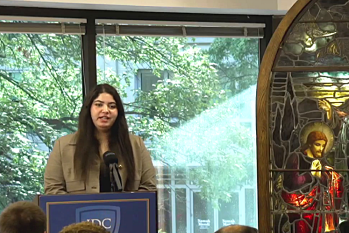
At the Asia Conference on Church and Mission held in Manila earlier this month, Lua pressed the issue further. She warned that seminaries across the region have drifted toward what she called the "academization" of theological education — prioritizing intellectual credentialing in ways that widen the distance between institutions and ordinary congregations.
"There has been a call for decades to provide theological education for all those people in order to empower them to serve in a wide spectrum of ministries in the church and beyond," Lua told the Manila gathering, referring to lay believers. She argued the church's mission requires equipping the full people of God — lawyers, doctors, artists, and business professionals — to live as disciples in every domain of life, not only those who enter professional ministry.
The JATES special issue is partly a response to that gap. The project originated through a partnership between the ATA and the Global Spiritual Formation Project, funded by the Templeton Religion Trust. Thirty-three research abstracts were submitted by ATA member institutions; fourteen were selected for development; eleven completed the full process of peer review, external review, and professional editing. The first batch of papers appears in this volume, with a second installment to follow.
Lifelong discipleship as the frame
Harkness, summarizing the ATA study in the journal's lead article, draws four implications for institutions seeking to improve their formation programs. Formation should be oriented toward lifelong discipleship and service, not just preparation for first ministry roles. It needs to account for both globalization and contextualization — recognizing that Asian students live in complex, rapidly shifting environments. The impact of formation extends beyond individual students to their families, congregations, and communities. And effective formation, he argues, depends on community support and partnerships, both within institutions and with outside stakeholders.
Those conclusions echo what Lua told Christian Daily International last year, when she described her concern that seminaries can easily lose touch with what is actually happening in local churches. "We remind schools that their mission is not just for the seminary itself, but for the church and God's broader mission," she said.
The volume is available online as free download.