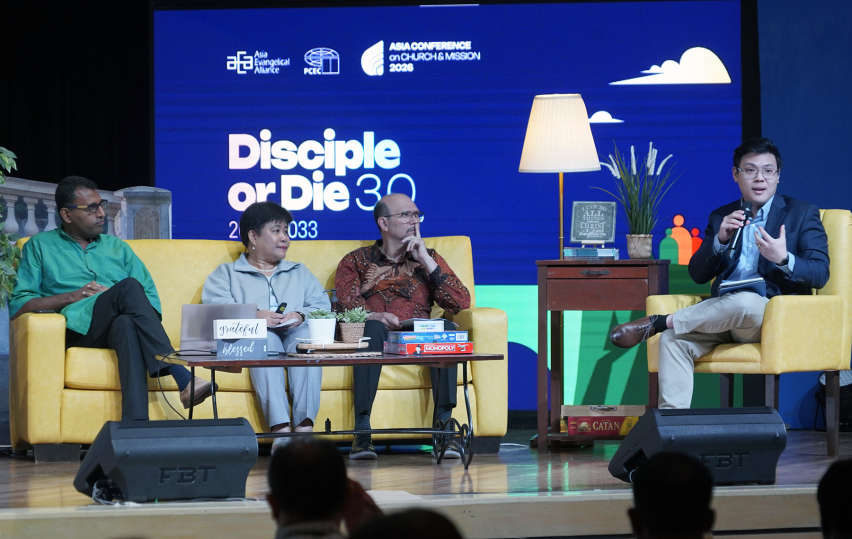
Theological institutions are producing graduates ill-equipped for real-world ministry, denominational structures risk fossilizing into gatekeeping institutions, and Christian leaders across Asia are growing more exhausted than fruitful — these were among the pointed assessments delivered during the second-day morning panel of the Asia Conference on Church and Mission (ACCM), held in Manila.
The panel, moderated as an interactive session rather than a traditional forum, brought together three voices from distinct streams of Christian life and work: Dr. Theresa Lua, General Secretary of the Asia Theological Association; Dr. Gustavo Crocker, General Superintendent of the Church of the Nazarene; and Sharon Croos, Vice President of Asia Region for Compassion International. Each panelist addressed the conference theme of leadership as discipleship, and after each presentation, delegates broke into table discussions to process and respond to what they had heard.
Seminaries serving academics rather than mission
Lua opened with a challenge directed at theological institutions, including the one she leads. The core problem, she said, is that seminaries have narrowed their focus to training professional clergy — pastors, missionaries, and church workers — while largely neglecting the broader people of God.
"There has been a call for decades to provide theological education for all those people in order to empower them to serve in a wide spectrum of ministries in the church and beyond," Lua said. She described this narrowing as the "academization" of theological education — a drift toward intellectual credentialing that widens the gap between academic institutions and grassroots Christian communities.
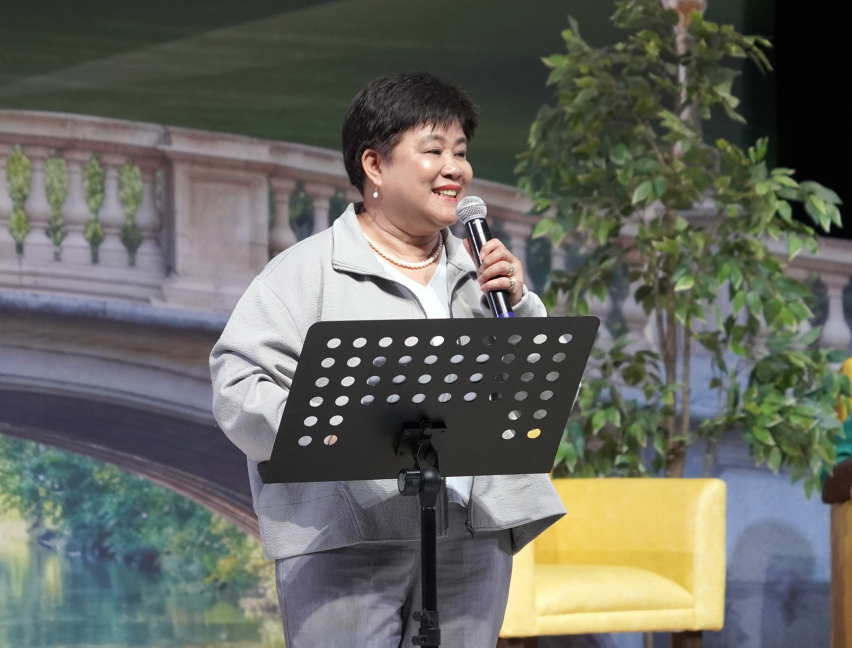
Lua argued that the strongest seminaries worldwide are those closely connected to local congregations, designing curriculum around the actual questions and pressures people in those churches face. She cited what she called "whole life discipleship" as the necessary corrective: equipping believers to follow Christ not only in church activities but in every area of their working and public lives — as lawyers, doctors, government servants, artists and business people.
"The call is to see the whole of the people of God live out the whole of their lives under the lordship of Christ for the sake of the wholeness of God's mission for the whole world," Lua said. She added that theological education must become missiological in its orientation, with curriculum shaped by the real challenges churches face in their specific cultural contexts rather than inherited Western frameworks.
Following her presentation, delegates discussed at their tables what practical changes their seminaries or church contexts could implement within the week.
The Joshua syndrome and generational succession
Crocker, speaking from his experience leading what he described as the world's largest Wesleyan denomination, present in 166 nations, reached back to the book of Judges to diagnose what he called the "Joshua syndrome."
He drew from Judges 2:10, where a generation arose that neither knew the Lord nor what he had done for Israel. Joshua and the elders had witnessed God's acts firsthand, Crocker said, but they failed to ensure the next generation knew the Lord personally. The result was idolatry, compromise, and cycles of oppression.
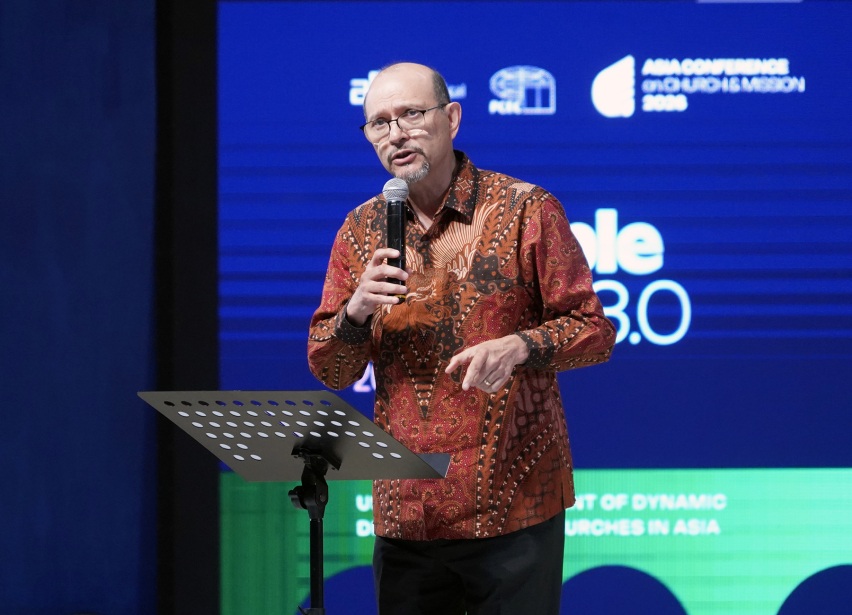
"Success in one generation can lead to spiritual amnesia in the next if we neglect intentional discipleship," Crocker said. He argued this pattern threatens every denomination, movement, and local church today — and is not a relic of ancient history.
He contrasted the Joshua model with Paul's approach in 2 Timothy 2:2, where the apostle charged Timothy to entrust what he had received to reliable people who would in turn teach others. Crocker called this a "seven-generation chain" — from Jesus through the apostles to Paul, Timothy, faithful men, and beyond — and described it as the antidote to the syndrome. He pointed to the ruins of the seven early churches in Turkey as a cautionary illustration: physical structures did not survive, but the principle of generational transmission meant the church of Jesus Christ continued to flourish.
Crocker pressed the assembled leaders on their own accountability, noting that many in the room had been in leadership for more than 30 years. He estimated that the average age of Jesus' disciples was 26 — the same demographic as participants in the Arab Spring and various revolutionary movements — yet many current leaders withhold trust from younger generations until they are middle-aged.
"We went from being groundskeepers to gatekeepers," Crocker said. He drew a distinction between the two: a groundskeeper understands that Jesus builds the church and that the leader's role is to care for it, while a gatekeeper acts as though the church belongs to them. "If I am building the church, it's my church," he warned, "and hell is going to break loose."
Following his remarks, delegates returned to their tables to discuss what would need to change — within their denomination, local church, or sphere of influence — to move from the current state toward genuine generational discipleship.
Activity without intimacy
Croos, the final panelist, challenged leaders to examine not the metrics of their ministries but the spiritual condition of the people those ministries produce. Drawing on his years working across Asia with Compassion International, he identified a pattern he described as movements that remain externally successful while quietly losing their soul.
"The moment can become successful while slowly losing its soul," Croos said. "Performers may attract crowds, but only disciples can transform communities or nations."
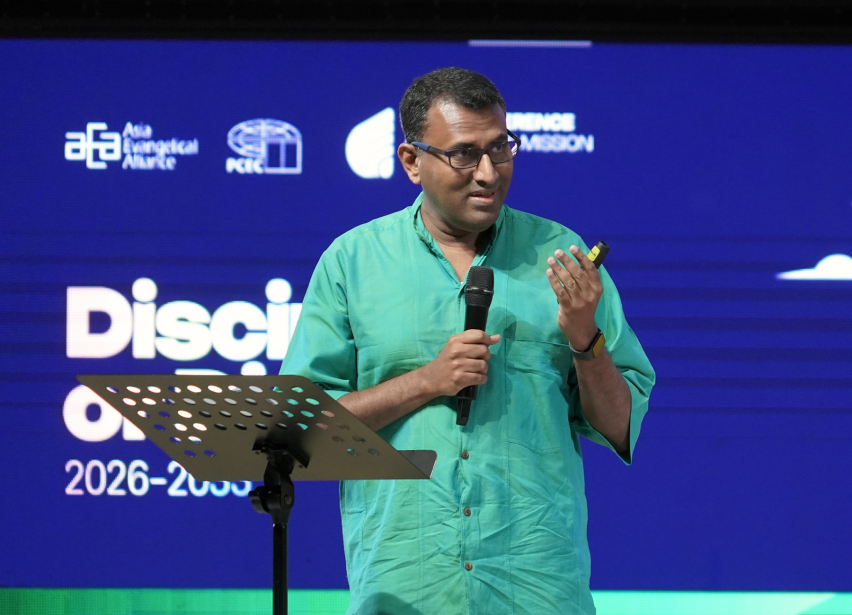
He described a scenario familiar to many in the room: growing churches, rising budgets, packed events and strong social media engagement — alongside leaders who are physically active but spiritually depleted. The problem, he argued, is that modern leadership training has taught people how to build platforms without attending to their inner life in Christ.
Croos outlined five dimensions he considers essential to leadership understood as discipleship. The first is abiding — remaining in Christ as the foundation of everything else. "If leaders are not abiding in Christ, leadership eventually becomes performance," he said. The second is character, which he placed above competency as the primary leadership challenge. "The world celebrates gifting, but God develops character," he said, noting that many ministry collapses occur not because of lacking skill but because character failed to grow alongside influence.
The remaining three dimensions he named were multiplication — producing disciple-makers rather than followers; vulnerability — leading from honesty about weakness rather than protecting an image; and sacrifice — choosing others above self as the servant ethic of kingdom leadership. He acknowledged the particular pressure Asian cultural norms place on leaders to project strength and hide struggle, including a conversation he had heard about a senior denominational leader who felt unable to be transparent even with his wife.
Croos closed with a direct question to the room: "Who are people becoming because of your leadership? More dependent on Christ or more dependent on you? More like Jesus or more like the culture around them?"
After his presentation, delegates engaged in a final round of table discussion, identifying one concrete change they would carry back to their national, denominational, or church context.
The Asia Conference on Church & Mission 2026 runs June 9–12 at GCF South Metro in Alabang, Metro Manila, organized by the Asia Evangelical Alliance in partnership with the Philippine Council of Evangelical Churches. The conference carries the theme "Disciple or Die 3.0" and is oriented toward a concrete goal: that by 2033, 20 percent of evangelical churches represented by AEA member alliances across Asia will become disciple-making churches.