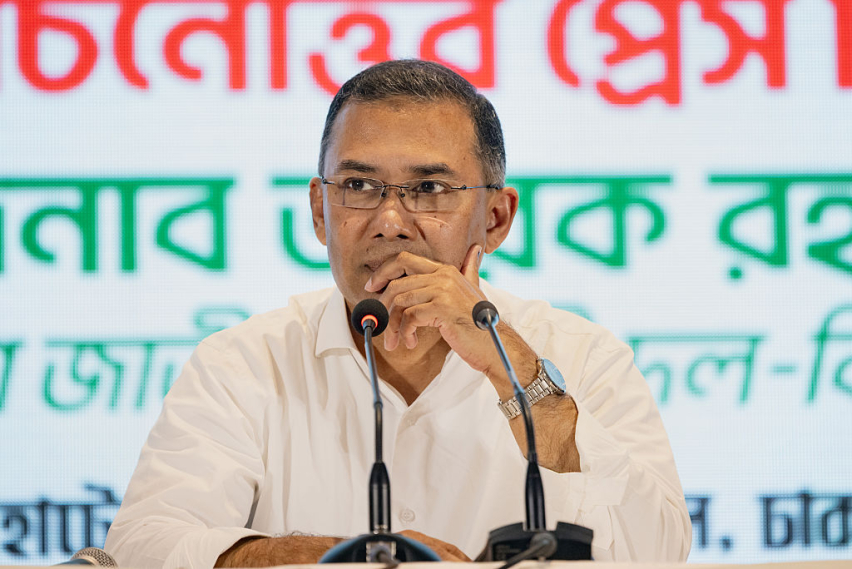
Bangladesh’s new government has prompted cautious optimism among Christian leaders, who say recent political changes offer a potential opening for greater religious freedom even as concerns remain over security, justice and political pressure.
Following the Bangladesh Nationalist Party’s landslide election victory and the appointment of Prime Minister Tarique Rahman, Christian communities are expressing a mix of hope and caution, pointing to both symbolic gestures—such as new financial support for clergy—and longstanding challenges including violence against minorities and weak legal protections.
Initial steps draw mixed response from Christian leaders
Five days after taking office, Rahman chaired a cabinet meeting where his government announced a monthly allowance and festival stipend for religious clergy of all faiths. It marked the first time in the Muslim-majority nation’s history that such a benefit covered non-Muslim leaders.
The Rev. Albert Rozario, vicar general of the Archdiocese of Dhaka, welcomed the move. “I personally congratulate the government,” he told EWTN News, adding that the Church would pray for the government to “govern the country beautifully, harmoniously, and fairly.”
Bishop Sebastian Tudu of Dinajpur, chairman of the Clergy and Religious Commission of the Catholic Bishops’ Conference of Bangladesh, was less enthusiastic. The Catholic Church will not accept the money, he told the same news outlet. “Our Catholic clergy are not salaried, they dedicate their lives to God, so we do not want to receive any kind of monthly salary from the government.”
“In the future there may be some kind of pressure from the government or politically, or they may try to use us,” he warned.
The two responses—one welcoming the stipend and one refusing it—reflect the divided mood among Bangladesh’s roughly 500,000 Christians as a new government takes power after 18 months of political upheaval and violence against minorities. Rahman’s party won a landslide two-thirds majority in the Feb. 12 elections and took office on Feb. 17.
For the country’s Christian community, gestures matter. What matters more, however, is what comes next.
The Rev. Asa Michael Kain, chairman and general superintendent of the Bangladesh Assemblies of God Church, told Christian Daily International (CDI) the election outcome was God’s response to the pleas of believers. “The election mandate is in answer to the prayers of the church,” he said. “This time, due to uncertainty and unstable conditions prevailing, there was a movement of prayer by all churches. The Lord has answered our prayers, and the new prime minister is installed.”
Several Christian organizations issued statements after the election, with the Catholic Bishops’ Conference of Bangladesh, the United Forum of Churches Bangladesh, and the Bangladesh Christian Association all congratulating the BNP and urging the incoming administration to prioritize the security and equal rights of minority communities.
Archbishop Bejoy Nicephorus D’Cruze of Dhaka, president of the bishops’ conference, called on the new leadership to make Bangladesh “a haven of comfort, security, and hope,” according to OSV News.
Churches urge action beyond promises
Yet not all Christian leaders greet the new government with uncomplicated hope. One senior church figure, speaking on condition of anonymity, told CDI that while the new government may prove better than the alternatives, the election itself was neither fully fair nor inclusive. For that leader, the mood sits closer to cautious relief than celebration. “The nation is a little stable, and we thank God for that,” he said.
Bishop Philip P. Adhikary, chairman of the National Christian Fellowship of Bangladesh, told CDI his foremost concern is whether constitutional guarantees will translate into daily reality. Minority citizens, he said, must experience not just promises on paper but practical assurance of safety, justice, and non-discrimination.
“We pray that the new leadership will govern with justice, accountability, and compassion for all citizens, regardless of faith,” he said.
He also pressed for fair representation. Christians have long contributed to Bangladesh’s education, healthcare, and social development sectors, he noted, and the community expects meaningful participation in policy dialogue, not just tolerance at the margins.
Kain presented the church’s expectations more bluntly: “The expectations from the churches for the new government is they will make good on their promises to allow freedom of religious practices and expressions to all,” he said. “That our judicial system will be impartial and just. That corruption will be wiped out, especially from government institutions.”
Who is Tarique Rahman?
The new prime minister, Tarique Rahman, 60, comes from Bangladesh’s most prominent political dynasty. His father, Ziaur Rahman, founded the BNP and served as the country’s sixth president. His mother, Khaleda Zia, led the party for more than three decades and served three terms as prime minister. She died in December, just weeks before polling day. Rahman is Bangladesh’s first male prime minister in 35 years.
He spent 17 years in self-imposed exile in London after a military-backed anti-corruption crackdown led to his arrest in 2008. During the interim period that followed the fall of former Prime Minister Sheikh Hasina, courts overturned multiple corruption and violence-related convictions that he and his party had long argued were politically motivated.
He returned to Bangladesh on Christmas Day 2025. Seven weeks later, he stood before the nation as prime minister.
In his inauguration address, Rahman pledged inclusive governance and said Bangladesh belongs to every citizen regardless of party, religion, or ethnicity.
Kain believes those years abroad changed the man. “Mr. Tarique Rahman, our prime minister, has a very different approach to things in our nation,” he said. “While away from politics for the past 17 years, he has learnt and matured as a leader.”
Legal protections fall short in practice
At the legal level, Bangladesh’s constitution guarantees equal rights to citizens of all religions. In practice, minorities say, it has not worked that way, particularly in land disputes and in cases involving accusations of insulting Islam.
The Cyber Security Ordinance that the interim government passed still criminalizes “religious hatred” and “hurting religious sentiment,” language that authorities can use against legitimate religious expression, rights groups warn.
Prosecutions for past violence, not promises about the future, are what the community now demands.
Dhaka-based political analyst Rezaul Karim Rony described the BNP’s victory to Al Jazeera as “a victory of a democratic, moderate force” and argued the challenge now is building a rights-based state in the spirit of the 2024 uprising.
“The question now is how Tarique Rahman will confront this responsibility,” he said.
Months of violence deepened concerns
The backdrop to this election was grim. The Bangladesh Hindu Buddhist Christian Unity Council documented at least 2,673 attacks on religious minorities between August 2024 and November 2025, including killings, sexual violence, and destruction of homes and places of worship. The interim government disputed those numbers, arguing much of the violence was political rather than communal.
Churches in Dhaka came under direct attack. Hand grenades exploded at the Dhaka Cathedral and at St. Joseph’s School and College in November 2025.
The following month, on Christmas Eve, someone threw a bomb from a flyover near the National Council of Churches building in Dhaka, which housed a church, a Christian Religious Order Trust, and the Bible Society. A young Muslim man died when the device detonated.
In December alone, the Unity Council recorded at least 51 incidents of communal violence nationwide.
Converts from Islam and Christians from tribal and ethnic minority communities faced the sharpest dangers, according to Open Doors. Radical groups used the political vacuum to attack house churches, burn property, and pressure families to renounce their faith. Those responsible, pastors reported, faced no legal consequences.
In Satkhira District, a Christian resident named Sabuj Goldar described a mob attack to Barnabas Aid. “About 50 people came with sticks and sharp weapons,” he said. “We are citizens of this country. Why shouldn’t we get justice?”
Islamist resurgence raises new concerns
Meanwhile, Jamaat-e-Islami won 68 parliamentary seats during last month’s election, the highest total in the party’s history, and took its place as the main opposition for the first time. Its alliance drew close to one-third of the popular vote.
Hasina’s government had banned the party and her administration’s war crimes tribunal imprisoned or executed many of its senior leaders for alleged atrocities during Bangladesh’s 1971 independence war. The interim government lifted the ban in mid-2025, and the party’s resurgence has unsettled minority communities.
Jamaat was not alone in signaling a harder line on religion. In May 2025, the Joint-Secretary General of Hefazat-e-Islam, a separate Islamist pressure group, told supporters he expected to implement sharia (Islamic law) after the election and called for death sentences for insulting Islam or Muhammad, prophet of Islam.
An unnamed leader of the Bangladesh Hindu Buddhist Christian Unity Council told OSV News that Jamaat’s brand of religious fundamentalism “poses a serious threat to religious pluralism in Bangladesh.”
Jamaat’s own leader, Shafiqur Rahman, who is not related to the new prime minister, pledged after the results that the party would serve as a “vigilant, principled, and peaceful opposition,” according to NPR.
Prayerful hope
Ahead of the election, Open Doors quoted a Christian leader identified only as Rajon as saying: “If Islamic religious-based political parties assume power, it is thought that the situation is likely to deteriorate. Conversely, if more open political parties take the reins, there is a possibility of improvement, although nothing is certain.”
Amid that uncertainty, Kain said prayer and politics are not separate tracks.
“We keep praying for [Tarique Rahman] as we are mandated in the Bible to pray for the leaders in authority,” he said. “We pray for his protection and the cabinet to make courageous decisions for our nation.”