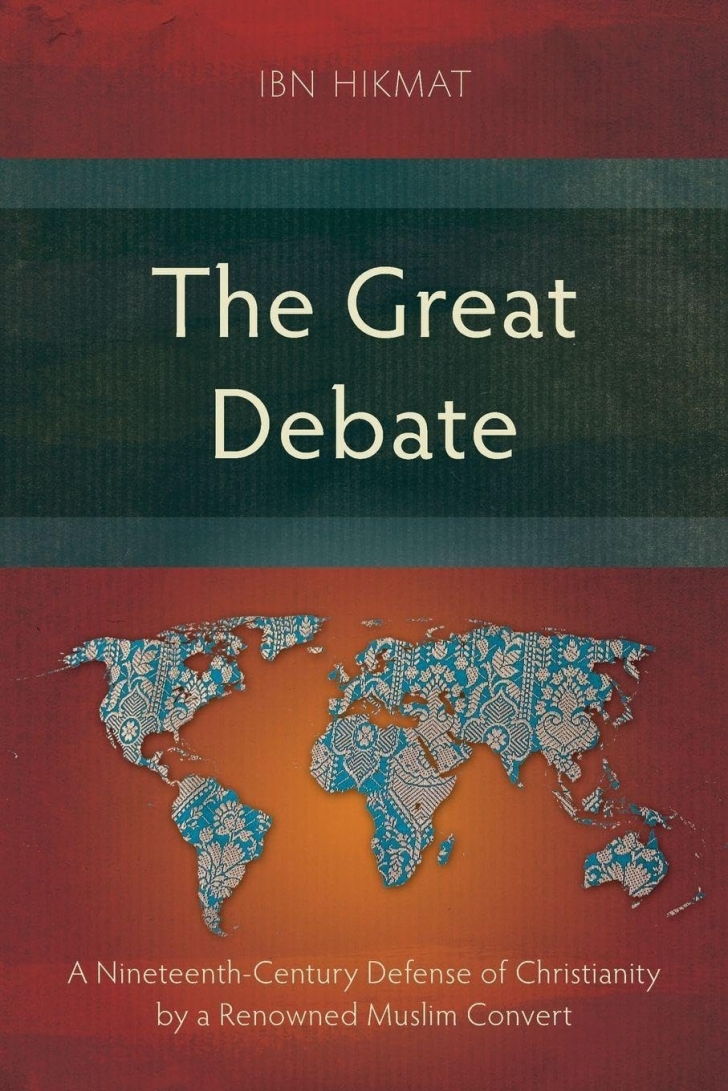
This academic contribution to the dialogue between Christians and Muslims draws on the South Asian "Great Debate" of 1854 in Agra and later additions to the unfinished Debate by a South Asian convert to Christ – providing a fascinating historical study and a resource for contemporary Christian debate with Muslims.
It’s a unique insight into the life and times of a nineteenth-century convert, which brings fresh South Asian perspective to a deeply relevant international subject.
"Imad ud-din’s conversion hit both Muslims and missionaries like a wave of disbelief, astonishment and awe. Given the reputation he had as a staunch, ardent, bigoted Sunni of Wahhabi persuasion, and then a saintly Sufi with high profile royal and religious lineage, his conversion was a shocking event with potentially serious implications for the Indian Muslims and Islam."
Meticulously researched, this academic study of Mawlwi "Imad-ud-din Lahiz and his theology also provides strong historical and biblical arguments for Christian responses to Islam today, using the foundational theology of a man who courageously (and continuously) put his life on the line for the Truth of Christ.
The inspiring story of "Imad ud-din’s heartfelt search for truth and his subsequent encounter with Christ, as told by Hikmat, is a helpful reminder that there are other people within the House of Islam who are genuinely seeking God today.
"It should also be remembered that the Agra munazara, as it is generally understood, was won by Muslims; they achieved this, it was claimed, by proving with help from European biblical criticism, that the Bible had been totally corrupted and was utterly unreliable."
"It is clear from his early autobiographical and apologetic writings that "Imad ud-din was trying to turn the tide of the Agra munazara."
Hikmat looks at "Imad ud-din’s contribution to the discussions of the Islamic theologies of "abrogation" and "corruption" (of the Bible) – both covered at the Great Debate – and, whilst not uncritical of "Imad ud-din’s response to the latter, nevertheless argues that he throws fresh light on both.
Hikmat then proceeds to unpack "Imad ud-din’s contribution to the three areas of theology that had been on the agenda for the Great Debate but had not been addressed at the time: "the Holy Trinity, the prophethood of Muhammad, and the Qur’an". Beginning with the Trinity, "the most hotly debated issue between Christians and Muslims", Hikmat argues that "Imad ud-din’s personal testimony "places him in the company of the apostles, especially with St Thomas and St Paul. Both of them believed in the divinity and the lordship of Christ after the risen Christ revealed himself to them", though he also argued from both OT and NT for the divinity of Christ and the Trinity. Hikmat then explains how "Imad ud-din argues the doctrine of the Trinity from the Qur’an, from Muslim eschatology and from some "concrete Muslim traditions".
On the prophethood of Muhammad, Hikmat argues "that the fundamental reason for "Imad ud-din’s conversion was that Muhammad, the Prophet of Islam, did not stand in the line of the biblical prophets….thus he could not be a prophet in the biblical tradition, let alone be the seal of the prophets".
Hikmat is not uncritical of "Imad ud-din: he clearly knows both the Bible and the Qur’an well, and he draws on a wide range of other reading, to point out weaknesses or gaps in "Imad ud-din’s writings. And he obviously has access to a lot of new research, unavailable to "Imad ud-din (in the chapter on the authorship of the Qur’an, for example, he quotes favourably from Keith Small and Tom Holland).
The book is a valuable addition to academic studies of Christianity and Islam.
But, more than that, the central sections, with "Imad ud-din’s responses to the five theological discussions that the Great Debate had been designed to address – and Hikmat’s occasional additions to the arguments, when he sees gaps or weaknesses in "Imad ud-din’s arguments – also add phenomenally useful arguments to any Christian seeking to help thinking Muslim friends address intellectual resistance to Christ today. As these "taster" references illustrate:
"Imad ud-din tried to show to his former friends…that their attack on the Bible and confidence in the integrity and authenticity of the Qur’an was unfounded."
"Imad ud-din’s conversion came though reading the NT, which in turn appeared to convince him of its unadulterated inspiration in such a way that he would never again doubt its divine origin and textual integrity."
"Surprisingly, even Muhammad could not distinguish between the (Qur’anic) verses given by Allah and Satan; they were the same in style and eloquence. It was only some time later that Muhammad was informed by Gabriel that those verses came from Satan" (page 263, with sources).
"Imad ud-din could not accept the divine nature of the Qur’an not only because none of its self-authenticating claims stood up to his enquiry but also because it lacked certain qualities of the true word of God: the Bible" (not least its power to change hearts). "He asserted that "there is not a single place of hope in the entire Qur’an" (page 271).
The Great Debate: A Nineteenth-Century Defense of Christianity by a Renowned Muslim Convert, Ibn Hikmat (Langham Academic). ISBN 978-1-78641-278-2 (print); 978-1-78641-279-9 (ePub); 978-1-78641-280-5 (PDF).