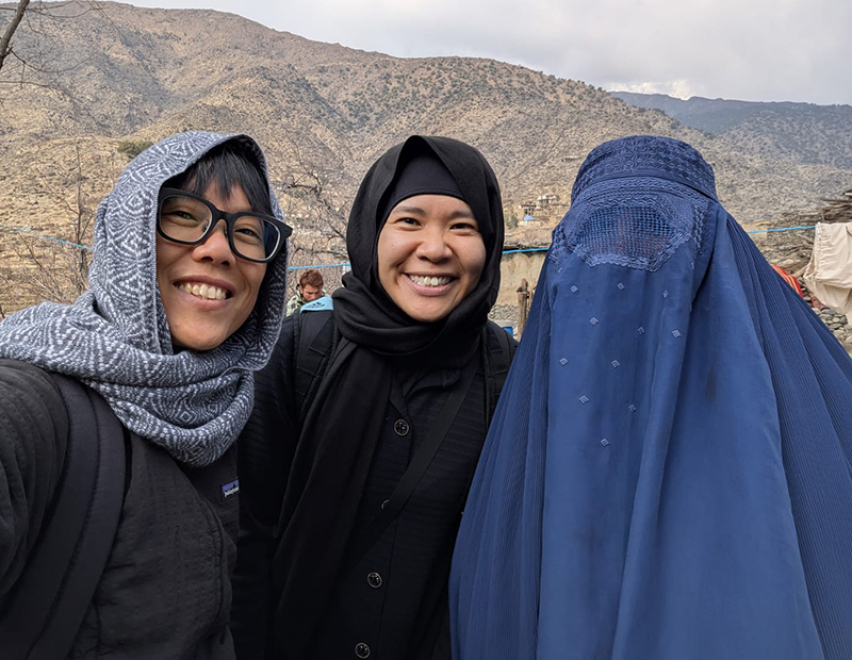
The suffering of women and children often hides in plain sight. It lives behind closed doors, inside refugee camps, in conflict zones, in red-light districts, and in poor communities where desperation forces impossible choices. It is carried in stories most people never hear. Dr Winnie Fung has spent years listening to those stories, and they have shaped both her calling and her leadership.
Winnie serves as Chief Executive of CEDAR Fund. The acronym stands for Christian response to poverty expressed through Education, Development, Advocacy, and Relief. It is a Hong Kong-based Christian relief and development organization founded in 1991.
CEDAR Fund collaborates with churches and mission partners in some of the world’s hardest places.
CEDAR Fund collaborates with churches and mission partners in some of the world’s hardest places, currently serving in 14 countries in Asia, the Middle East, and Africa. Together they respond to its deepest challenges: human trafficking, poverty, climate-related hardship, conflict, and the long struggle to restore human dignity where it has been most deeply wounded.
A summer turning point
It is easy to miss the formative moments earlier in an executive leader’s journey that shape who that person is today. For Winnie a significant turning point was a difficult summer during her graduate years at Harvard when she traveled to an urban slum in Manila, Philippines. There she lived among the poor and encountered incarnational ministry for the first time.
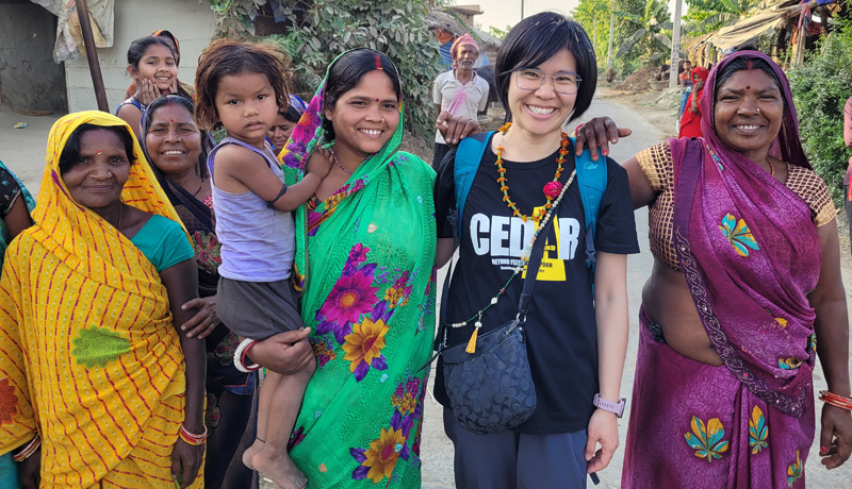
During that summer Winnie became very sick. While lying there unable to help others, she began thinking about her neighbors. Before coming to Manila, she was studying Corporate Finance at Harvard. She realized that no matter where her degree came from, no matter how eloquently she could write mathematical equations and economic models, none of those mattered to the family and the baby who were suffering from hunger next door.
Economics could contribute to the understanding of systemic causes of poverty and contribute to poverty alleviation.
But during that time, God also showed her that her study of economics could contribute to the understanding of systemic causes of poverty and contribute to poverty alleviation. When she went back to Harvard after her Manila trip, she changed her study program from Corporate Finance to Development Economics, and she has been in the field of development ever since.
Learning to see
Winnie often returns to the language of seeing. Later as a student while traveling in Morocco, she began to understand how easy it is for whole groups of people to remain invisible, even when they live close by. Morocco is a predominantly Muslim country, yet despite differences in language, religion, and background, she recognized something disarming and simple: their common shared humanity.
Women like her, concerned about how they looked, they wanted to belong, and they wanted to live with dignity.
The women around her were not distant figures. They were women like her, concerned about how they looked, they wanted to belong, and they wanted to live with dignity.
When she returned to Cambridge, she suddenly noticed Muslim women in her own neighborhood. They had always been there, but she was so busy with her life she had simply not noticed them.
Christian mission often begins not only with action, but with attention.
The time in Morocco opened her eyes to see people she had somehow missed or never truly noticed before. Those experiences stayed with her. They taught her that Christian mission often begins not only with action, but with attention.
A different academic path
What was once the pursuit of academic achievement had shifted. These experiences changed her path and eventually led her into a life shaped by faith, justice, and the lives of people the world often overlooks. Poverty was no longer something to study from a safe distance.
Winnie began to see that her PhD in Economics from Harvard could help her understand famine, malnutrition and poverty in ways that might enable her to serve people in strategic ways. When she finished her studies, she accepted a teaching position in economics at Wheaton College. There she came to understand integral mission even more deeply.
The Church’s role
Winnie believes that true community transformation requires the renewal of hearts. Therefore, this mission is not only the responsibility of local charitable organizations but also that of local churches, which are called to help the poor, proclaim the gospel, and live out integral mission.
The church is called to participate in God’s restorative work in the world.
Relief and development cannot be treated as work to outsource while the church keeps only evangelism for itself. The church is called to participate in God’s restorative work in the world.
That conviction eventually led her back to Asia. By conventional standards, leaving a respected tenured academic position for leadership at CEDAR Fund may have seemed surprising to some. To Winnie, it was simpler than that. It was obedience. She had long known where her heart was. She believed this was where God was calling her, and she followed.
The wounds of poverty
Trafficking thrives where poverty, gender inequality, and silence meet.
Anti-human trafficking remains one of Winnie’s deepest concerns. Years ago, in Kolkata, India she interviewed women in one of Asia’s largest red-light districts and listened to stories marked by exploitation, coercion, and survival. Since then, this burden in her heart has only grown. She has seen how trafficking thrives where poverty, gender inequality, and silence meet.
She has met women whose lives were negotiated through dowry systems and girls whose futures narrowed before they were old enough to imagine them. She remembers one woman in India who had six daughters. That mother had to sacrifice and sell one of her girls so the others could survive.
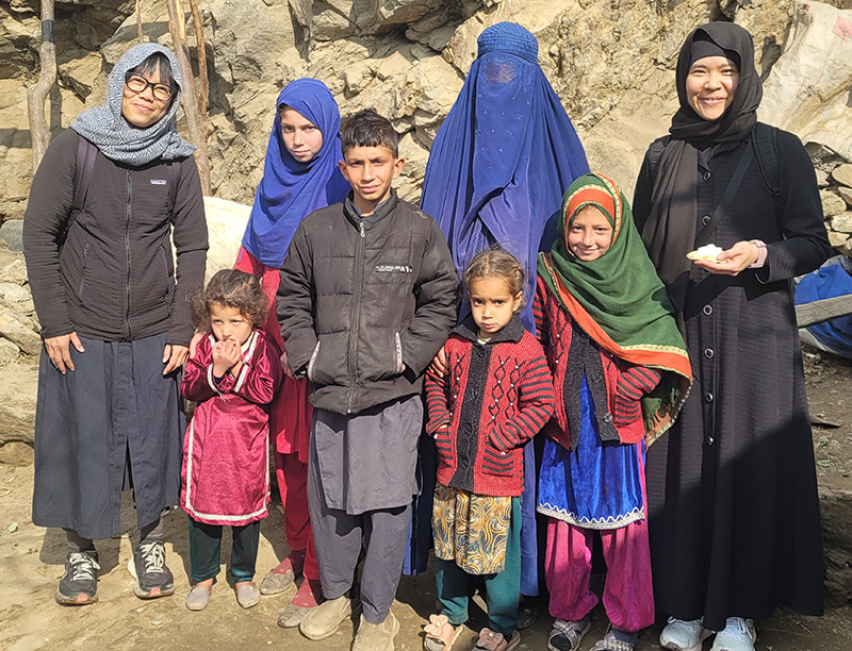
That burden has become even sharper in Afghanistan. There, she met families trying to navigate a life in which girls can no longer continue school beyond the primary level and women are pushed out of public life. Depression is rising. Suicide is increasing. Families search desperately for educational alternatives for their daughters, only to fall prey to scams and greater exploitation.
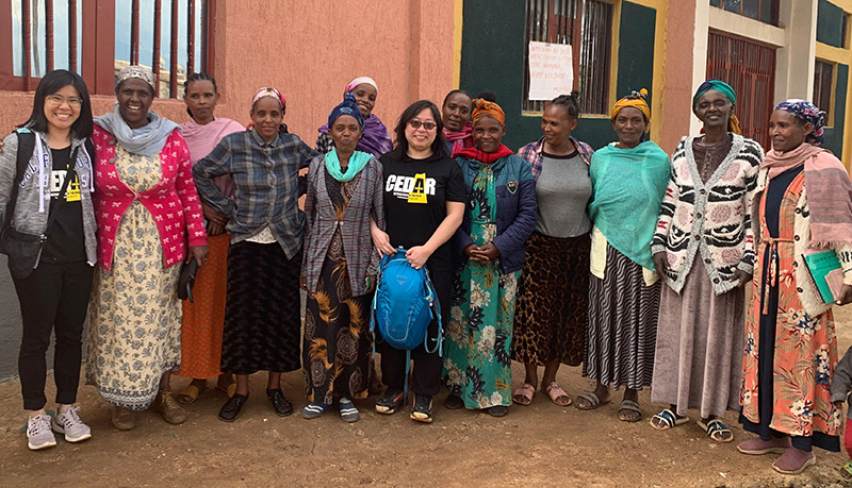
In Ethiopia, she found that underage domestic labor had become so accepted that even some church leaders participated in it. For Winnie, one of the deepest tragedies is not only that women and girls are suffering, but that many are slowly being erased.
Restoring human dignity
These are not stories Winnie carries lightly. They are part of what gives her leadership its seriousness. Though always integrating wisdom learned through opportunities to study with Nobel Prize winners and world-renowned economists, she does not build her responses upon theory alone. She speaks and acts first from what she has personally seen and the people she has personally met.
Women and girls are... created with dignity, worth, courage, and a humanity no broken or distorted system has the right to take away.
She believes that women and girls are not created for silence, fear, exploitation, abandonment, or shame. They are created with dignity, worth, courage, and a humanity no broken or distorted system has the right to take away. They deserve to be seen, respected, protected, heard, defended, and given the space to flourish.
Through years of listening, leading, and refusing to look away, Winnie has chosen to carry hope into places where women and children have been wounded most deeply. Her leadership reminds us that compassion must not remain a feeling. It must become action.
Mary Lederleitner has a MA in Intercultural Studies from Wheaton College and a PhD in Educational Studies from Trinity Evangelical Divinity School (TEDS). She has taught as an Adjunct Professor in the graduate programs at both institutions, and currently in the D.Min. Program at TEDS. Mary served for twenty years in a variety of global leadership roles with Wycliffe Global Alliance and SIL Global. She has authored books including Women in God’s Mission: Accepting the Invitation to Serve and Lead which won a book-of-the-year award from Christianity Today in the Missions / Global Church Category. Mary now serves as Associate Professor and Director of the Women’s Institute at William Carey International University.
Benjamin (Ben) Mudahera is a Guest Writer at the Women’s Institute at William Carey International University. Ben is a development practitioner and writer who is currently completing a Master of Arts in Development Studies, specializing in Global Women’s Empowerment. Ben has over 15 years of experience serving across humanitarian and development organizations in Rwanda. His experience spans education, refugee affairs, WASH, and community development, with a strong focus on supporting women, youth, and marginalized communities. Through his writing, Ben brings a people-centered, reflective, and faith-informed perspective, seeking to amplify stories of dignity, leadership, and transformation.
William Carey International University (WCIU) seeks to provide innovative distance education to enhance the effectiveness of scholar-practitioners as they serve with others to develop transformational solutions to the roots of human problems around the world.