A U.N.-appointed body on Wednesday (April 22) urged Pakistan to intensify efforts to eradicate forced conversions/marriages, noting that young minority girls consistently fall victim to Islamist coercion.
To prevent forced conversions/marriages, the independent experts appointed by the U.N. Human Rights Council (UNHRC) urged Pakistan to raise the minimum age of marriage to 18 across all provinces and territories, criminalize forced religious conversion as a distinct offense and enforce laws related to human trafficking and sexual violence.
They also echoed recommendations from U.N. treaty bodies calling for prompt, impartial investigations into all allegations and accountability for perpetrators.
“We are deeply concerned that law enforcement authorities often dismiss complaints lodged by victims’ families, fail to investigate or prosecute forced conversions in a timely manner, or neglect to properly assess the age of victims,” the panel concluded in a statement.
The statement called for comprehensive, gender-responsive support services for survivors, including safe shelters, legal aid, psychological counseling and reintegration programs.
Pakistan has yet to adequately address underlying drivers such as gender inequality, poverty, social exclusion, religious intolerance and discrimination against minorities, they said in the statement.
“Freedom of religion or belief and equality must be ensured for all without discrimination,” they said.
Voicing concern over the continued and widespread abduction and forced religious conversion of women and girls from minority communities in Pakistan, the panel warned that impunity was allowing the practice to persist. They said conversions carried out in the context of marriage must be free from coercion and based on full consent – conditions that cannot be met in cases involving minors.
“Any change of religion or belief must be genuinely free from coercion, and marriage must be based on full and free consent, which is not legally possible when the victim is a child,” the panel stated.
The statement was endorsed by the U.N.’s Tomoya Obokata, special rapporteur on contemporary forms of slavery; Nazila Ghanea, special rapporteur on freedom of religion or belief; Nicolas Levrat, special rapporteur on minority issues; Siobhán Mullally, special rapporteur on trafficking in persons, especially women and children; Claudia Flores (Chair), Ivana Krstić (Vice-Chair), Dorothy Estrada Tanck, Haina Lu, and Laura Nyirinkindi of the working group on discrimination against women and girls; and Reem Alsalem, special rapporteur on violence against women and girls.
Last year, about 75 percent of reported victims of forced conversion through marriage were Hindu, while 25 percent were Christian, the panel stated. Nearly 80 percent of these incidents were recorded in Sindh Province. Adolescent girls between the ages of 14 and 18 were identified as particularly vulnerable, though some victims were reportedly even younger.
The panel highlighted that poverty and social marginalization further increase the risks faced by minority women and girls.
“These women and girls endure a continuous sense of terror, face coercion and are deprived of their freedom of religion or belief and autonomy under patriarchal and political pressures. This must stop,” they stated.
The scale and persistence of such violations indicate systemic discrimination against non-Muslim women and girls, who are often compelled to convert to Islam in order to marry Muslim men, the panel stated.
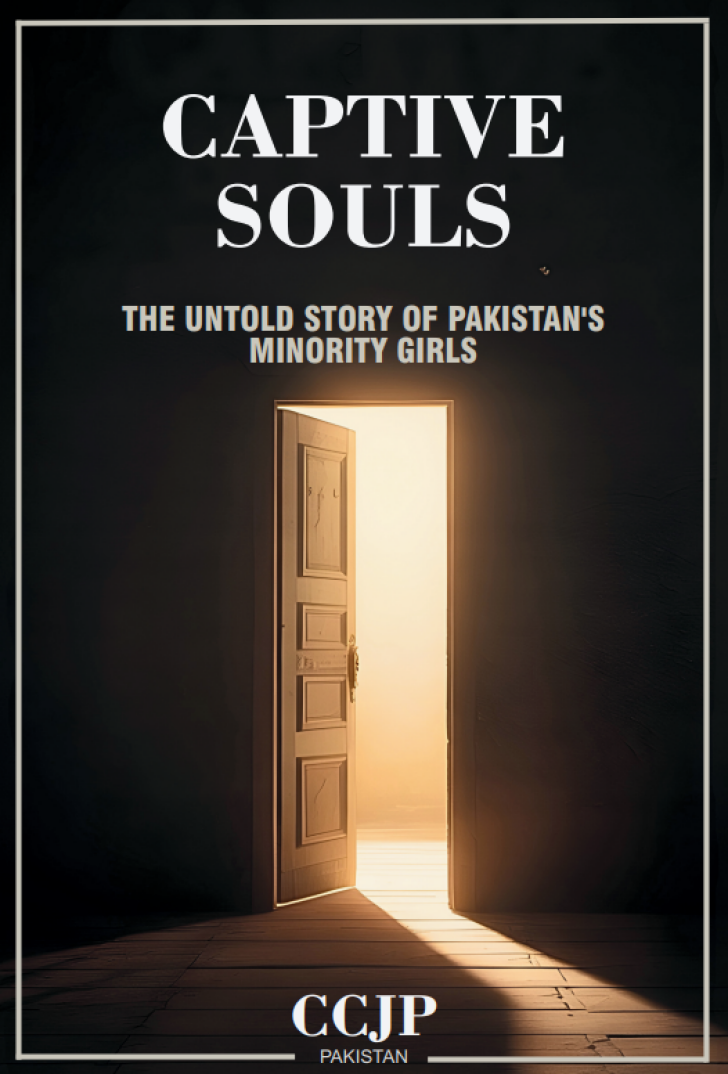
At the same time, the National Commission for Justice and Peace (NCJP) renewed its call for legislation criminalizing forced conversions, following the recent release of a report entitled, “Captive Souls: The Untold Story of Pakistan’s Minority Girls.”
The report, based on cases involving Christian girls between 2021 and 2025, found that conversions were consistently carried out through coercive means, including threats, intimidation, deception and economic pressure.
“In many cases, individuals are compelled to convert in order to escape discrimination, violence, or social marginalization, or to resolve economic pressures such as debt,” the report stated.
NCJP Executive Director Naeem Yousaf Gill said Pakistan lacks a specific law criminalizing forced religious conversion and called for formal state recognition of the issue as a first step toward reform.
“Only then can the state earnestly tackle the problem through comprehensive legislation designed to protect the rights of religious minorities, particularly girls and women,” he said.
Gill proposed safeguards including due process in conversion cases, a minimum age requirement for conversion, strict penalties for coercion, independent verification mechanisms, victim support services and specialized courts for expedited proceedings.
The report also criticized a Feb. 3 ruling by Pakistan’s Federal Constitutional Court that upheld the Islamic marriage of a 13-year-old Christian girl, Maria Shahbaz, with a 30-year-old Muslim accused of abducting her, despite official documentation indicating she was below the legal marriage age.
Catholic Church leaders, including Catholics Bishops Conference President Bishop Samson Shukardin and NCJP National Director Bernard Emmanuel, said such cases raise concerns about inconsistent application of child marriage laws.
“Courts are not consistently applying legislation that prohibits the marriage of anyone under 18 years of age,” a joint statement said. “This selective application of the law is deeply troubling.”
They emphasized that while judicial independence must be respected, courts are obligated to ensure that cases involving forced conversion and underage marriage are handled transparently and in line with constitutional and international human rights standards.
Pakistan ranked eighth on Open Doors' 2026 World Watch List of countries where it is most difficult to be a Christian. The report cited forced conversions, abductions and gaps in legal protections among key concerns.