Churches and Christian leaders across South Africa have joined growing calls for action against gender-based violence after the bodies of nine women were discovered in Ekurhuleni, Gauteng, since July 2026.
What began with statements of shock from national church bodies has developed into prayer marches, vigils and public demands for greater accountability, as police investigate whether some of the deaths are connected.
The latest body was discovered in Dawn Park, Boksburg, on Sept. 17, bringing the number of women found dead in the Ekurhuleni area to nine. Five days earlier, the body of 38 year old Elizabeth “Tsontso” Moselakgomo was found behind a hotel in Rhodesfield, a suburb of Kempton Park in Ekurhuleni. She had gone out for a jog on Sept. 9.
Police have established a specialised multidisciplinary investigation team and say there are possible links between some of the cases, although investigators have cautioned that further forensic and investigative work is required before those connections can be confirmed.
The deaths of the women, aged between 20-38 years, have generated widespread fear and anger in communities around Ekurhuleni and renewed questions about South Africa's response to gender-based violence and femicide.
The South African Council of Churches called for urgent action following the discovery of the women's bodies. In a statement issued earlier after six bodies had been found, the council described the deaths as causing “shock, profound grief, and outrage” and called on the government to turn its declaration of gender-based violence and femicide as a national disaster into visible action.
The Southern African Catholic Bishops' Conference also called for urgent action. Its Justice and Peace Commission said the Church had received the news with “deep sorrow and grave concern” and urged the authorities to ensure that those responsible were brought to justice.
After the number of victims reached nine, the Catholic bishops commended police for establishing a specialised multidisciplinary investigation team, deploying additional resources and increasing police visibility in affected areas. They nevertheless called for urgency to be sustained until the circumstances surrounding every death had been established.
The Dutch Reformed Church in South Africa, known locally as the Nederduitse Gereformeerde Kerk (NG Kerk), also issued a statement after the discovery of the seventh woman. Its general secretary, Dr. Nioma Venter, said the killings could not simply be treated as another series of crimes.
“This is a serious indictment of a society in which women still cannot live, move or work safely,” Venter said, calling for “urgent, visible and sustained action” from the state, police, justice system, churches and wider community.
Pastor Bert Pretorius, president of the South African Community of Faith-Based Fraternals and Federations, also challenged the country's response. Pretorius questioned whether the national disaster declaration on gender-based violence had translated into sufficient resources on the ground.
He said political will should be measured by practical measures such as detectives deployed, forensic capacity, evidence processed, survivors supported and perpetrators successfully prosecuted.
Beyond statements
But over the weekend, the response from Christian communities moved beyond statements.
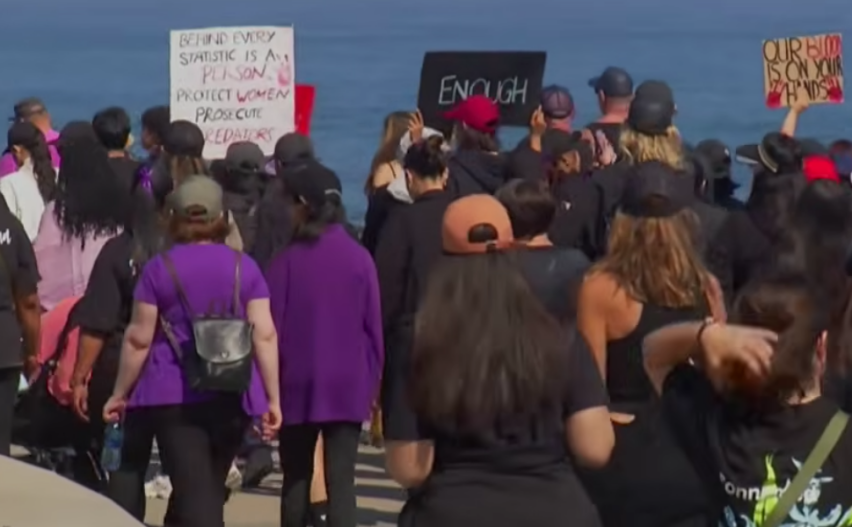
On Friday, dozens of men dressed in black took part in a prayer march through Kempton Park, an area where several of the women's bodies were discovered.
The march was led by local religious leaders, including Rev. Chris Mathebula of Hope Restoration Church. Participants gathered at the Ekurhuleni Civic Centre after walking through the area and condemning the killings.
Religious leaders called on men to take greater responsibility for confronting violence against women and said the country needed less talk and more action. They also handed a memorandum of demands to the City of Ekurhuleni mayor.
The march also brought a political dimension to the religious response, with leaders urging residents to consider the record and priorities of those seeking public office when they vote. That call comes ahead of South Africa's local government elections, scheduled for November.
Another Christian gathering took place on Sunday near Dawn Park, where the ninth woman's body was discovered.
Rev. Kenneth Meshoe, senior pastor of Hope of Glory Tabernacle Church and leader of the African Christian Democratic Party, led church members in prayer in Villa Liza. Meshoe called for the return of the death penalty for people convicted of rape and murder.
In other communities, churches have joined wider public demonstrations.
In Mossel Bay, church leaders, members and community organisations walked from All Saints Anglican Church to the Da Gamaskop Police Station on Sept. 18 and called attention to gender-based violence. Clergy including Father Howard Buys, Calvyn Frans, Roger Muller and Hennie Petersen joined the demonstration.
The response has also spread online, where missing-person appeals have circulated alongside messages of grief after victims were identified.
One of those women was 28-year-old Gracious Nkomo. Her family had spent weeks searching for her, with appeals for information shared on social media. Her body was found along the R21 in Kempton Park on Sept. 10, and her family identified her on Sept. 18.
Elizabeth "Tsontso" Moselakgomo, 38, was another identified victim. She was a mother and runner whose disappearance after going for a run prompted a search before her body was found in Rhodesfield. Her family said she was a member of the Zion Christian Church and the breadwinner for her family.
The growing Christian response comes as the government has moved to strengthen its response to the killings.
On Sunday, Sept. 20, the Inter-Ministerial Committee on Gender-Based Violence and Femicide announced that it had approved a Comprehensive Emergency Strategy aimed at speeding up efforts to bring those responsible for the Ekurhuleni killings to justice.
The government said the strategy would focus on prevention and rebuilding social cohesion, law enforcement, protection, safety and justice, as well as support for victims and survivors.
The specialised investigation team has also been elevated, with coordination placed under the Deputy National Commissioner for Detective Services.