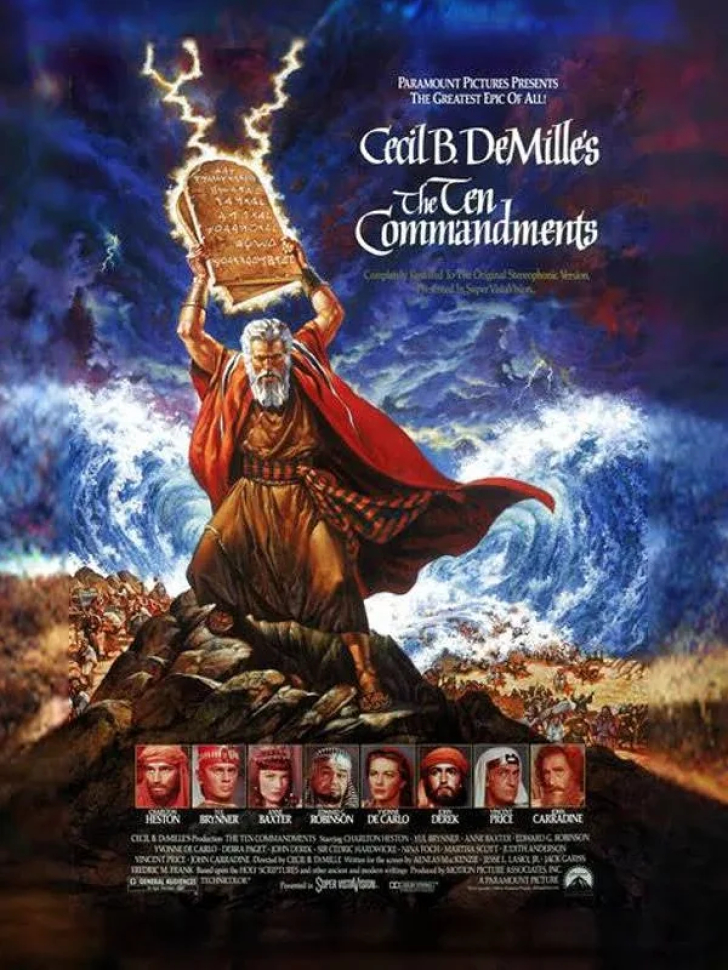
A new exhibition at Yale Divinity School in the United States is offering a vivid look at how 20th-century Hollywood shaped the public’s theological imagination through theatrical broadsides and vintage film advertisements.
Titled “Silence and Spectacle: Biblical and Religious Movie Posters from the Silent Era to the Golden Age of Hollywood,” the exhibition at the faculty school New Haven, Connecticut features roughly two dozen original posters spanning the 1920s to the 1960s. The works are on view in the school’s Croll Family Entrance Hall gallery and the Day Missions Reading Room of the Divinity Library.
The collection illustrates an era when cinema served as one of the primary visual conduits of the Christian story, echoing earlier traditions such as stained glass and icons.
“Biblical and religious films are a major source of the public’s interaction with and perception of scripture and religious tradition,” said co-curator Richard Lindsay, a Yale Divinity School alumnus and author of a book on biblical epics. “You can’t avoid the impact that they’ve had on the imagination of how people view the Bible.”
The posters on display originate from the United States, Europe, South America, and Japan. They capture Hollywood icons cast as biblical and historical heroes, such as Charlton Heston as Moses and Ingrid Bergman as Joan of Arc, illustrating how cinematic depictions redefined sacred texts for mass audiences.
The pieces are drawn from a 200-item collection assembled by the late Rev. Michael Morris, a Dominican friar and art historian who died in 2016. Morris frequently compared Hollywood’s grand movie palaces to modern cathedrals that safeguarded cultural and spiritual myths. The collection is now housed at the Dominican School of Philosophy and Theology in Berkeley, California, overseen by co-curator Father Christopher J. Renz.
“In Hollywood, Biblical symbols were significantly adapted to accommodate marketing needs,” Renz noted in the exhibition catalog. “Our collection of movie posters in general and this exhibition in particular explore the social and cultural impact of this activity.”
Organizers say the exhibition demonstrates how secular marketing and sacred narrative repeatedly collided, leaving a lasting imprint on modern Christian culture.