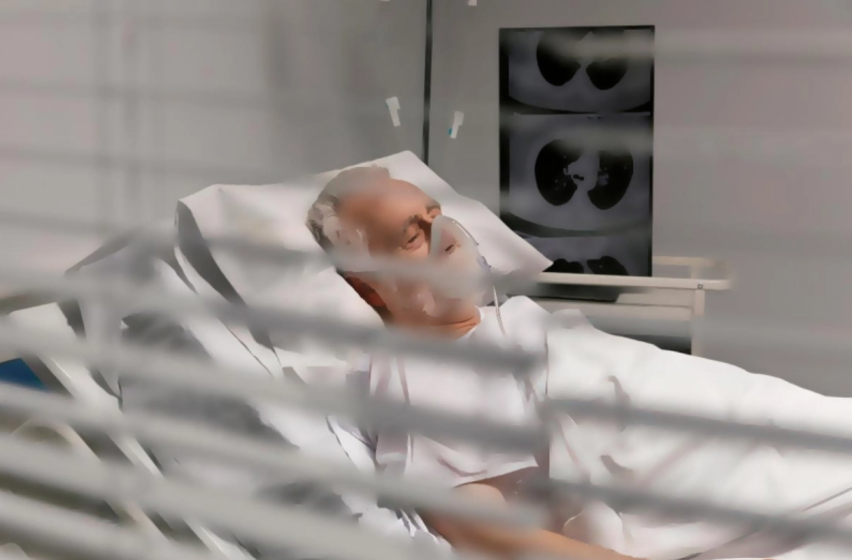
The French Senate has rejected the “right to die” in an End of Life bill in a major setback for proponents of the planned law, including President Emmanuel Macron. The National Assembly passed the bill in May 2025 but the upper Senate altered its wording during a recent debate on Jan. 21-22. Senators voted 144 to 123 to reject Article 4, which would have established the legal conditions for "medical assistance in dying" (euthanasia and assisted suicide).
Instead, the Senate opted for Article 2, which states that everyone has the right to the “best possible relief from pain” but "without any voluntary intervention intended to cause death."
On May 13, 2025, Macron posted on the X social media channel his support for assisted dying.
“When suffering is resistant to all treatments, when there is no longer any hope, I believe we should be able to help people die with dignity,” wrote Macron, adding: “Humanity and fraternity.”
Reports say an unlikely alliance in the Senate between Conservative and Socialist parties formed to block the original bill, citing ethical concerns and in reaction to changes in the original bill during committee stage.
The Senate also scrapped a controversial obstruction clause threatening institutions and healthcare workers, such as in Catholic care homes with prison if they refused to allow euthanasia on premises.
Meanwhile, Gregor Puppinck, Director General of the European Centre for Law and Justice (ECLJ), a Christian legal rights group, expressed both this delight and shock at the news, on social media. He said the Senate’s rejection of euthanasia and assisted suicide came “to everyone’s surprise” and it reaffirmed the right to palliative care.
“There was therefore a majority of senators who rejected the text previously adopted in committee, which provided for allowing voluntary death in the last days of life, as an extension of palliative care or sedation,” said Puppinck.
“For some, rather on the left, this text did not go far enough in recognizing the right to die, while for others it was unacceptable, because it 'put its foot in the door' by breaking the ban on killing.”
Puppinck referred to a “foot in the door” strategy by supporters of assisted dying and euthanasia whereby once a concession is made to allow this form of death, it leads to further concessions — opens the door, so to speak — to more permissive laws later on.
“The 'foot in the door' strategy, rejected by the Senate, is indeed a reality,” said Puppinck. “It has been accepted for decades by the promoters of euthanasia of the Association for the Right to Die with Dignity (ADMD), and it is also verified in the countries that have legalized it. All of them have broadened the conditions of access to 'voluntary' death, to cover people suffering from mental suffering and minors.”
Several of these countries, as a result, have reduced their investments in palliative care, according to Puppinck. He referred to 5% of deaths in Canada being caused by lethal injection, adding that “the proportion is increasing every year.”
“Unable to find a compromise between life and death, the Senate ‘withdrew’ to the consensual terrain of palliative care,” he said. “Care that France sorely lacks.”
Only 50% of the needs are currently met in the country, according to the ECLJ President, with 7,500 beds, and these needs will increase with the aging of the population.
“The State allocates only 1.6 billion euros per year to this essential need; And the projected increase of one billion in the next 10 years is far from enough,” he added. This refers to the specific palliative care spending within the wider social security budget.
The bill is now in a form of political deadlock. The Senate votes on the amended text of the bill on Jan. 28. This will either see the right to die rejected or reinstated. If the latter, the bill enters a “Commission Mixte Paritaire” used to break deadlocks between the two parliamentary houses. It involves a committee of seven senators and seven deputies who try to find a compromise. If they fail to do so, the National Assembly is given the final decision and can reinstate the original bill text allowing the right to die.
“This text was terrible,” opined Puppinck. “It allowed euthanasia and suicide by decision of a single doctor, at the oral request of a patient, in three days, without the relatives being informed and able to take legal action.”