Fulani attacks on Christians in Nigeria were partially thwarted with rare resistance over the weekend, and a kidnapped priest was released, sources said.
While coordinated assaults in Kogi and Plateau states took the lives of at least 34 people last week, Fulani assailants were partially turned away in Kaduna and Plateau states though there were some casualties, Truth Nigeria reported.
In Kogi state, Fulani assailants on May 5 struck Edede, outside Oganenigu in Dekina County, killing three people and burning homes and farms, according to Truth Nigeria. On Saturday (May 9) Fulani terrorists attacked Ochipu in Bassa County, killing five people. These attacks plus others on homes in Plateau state left at least 33 civilians and one police officer dead, along with 21 others wounded, the outlet reported.
In southern Kaduna state, however, advance intelligence enabled residents and vigilantes in three villages in to repel planned attacks by suspected Fulani Ethnic Militia on Sunday (May 10), reported Truth Nigeria, operated by U.S.-based missions group Equipping the Persecuted. The coordinated response forced the armed group threatening to attack Maro Audu and Ungwan Shawa Maro villages in Kajuru County and Kutura Rimi in Kachia County to retreat, according to the outlet.
In Plateau state, hundreds of gunmen on Saturday (May 9) circled and fired upon the town of Barkin Ladi, 25 miles south of Jos, intending to raid it on motorbikes, Truth Nigeria reported. About 60 volunteers armed with locally made shotguns and 40 policemen kept them from breaching the perimeter, according to the outlet.
“Fulani Ethnic militias were stopped from taking over the town, but eight Christians, including a police inspector, were killed and 11 locals wounded during coordinated assaults that forced residents to flee their homes,” Truth Nigeria reported. “Residents said the attacks began around 6:30 p.m. on May 9 when militia armed with assault rifles invaded Sabon Layi, Rakung, Gangare and communities around the General Hospital area of Zat and Bet in Barkin Ladi South of Jos.”
Community leaders reportedly said Fulani terrorists on motorcycles and on foot shot sporadically at civilians and residential areas. David Nanpet of the International Committee on Nigeria (ICON) told Truth Nigeria that local defenders lacked defensive weaponry. He said seven people were initially killed during the attacks, while at least 11 others were wounded and received hospital treatment.
A Plateau state police source told Truth Nigeria on condition of anonymity that more than 100 local police had received training but had not been equipped with firearms. He noted that local vigilantes are often arrested for possessing homemade weapons, while attacking militants with assault rifles move about freely.
Priest Released
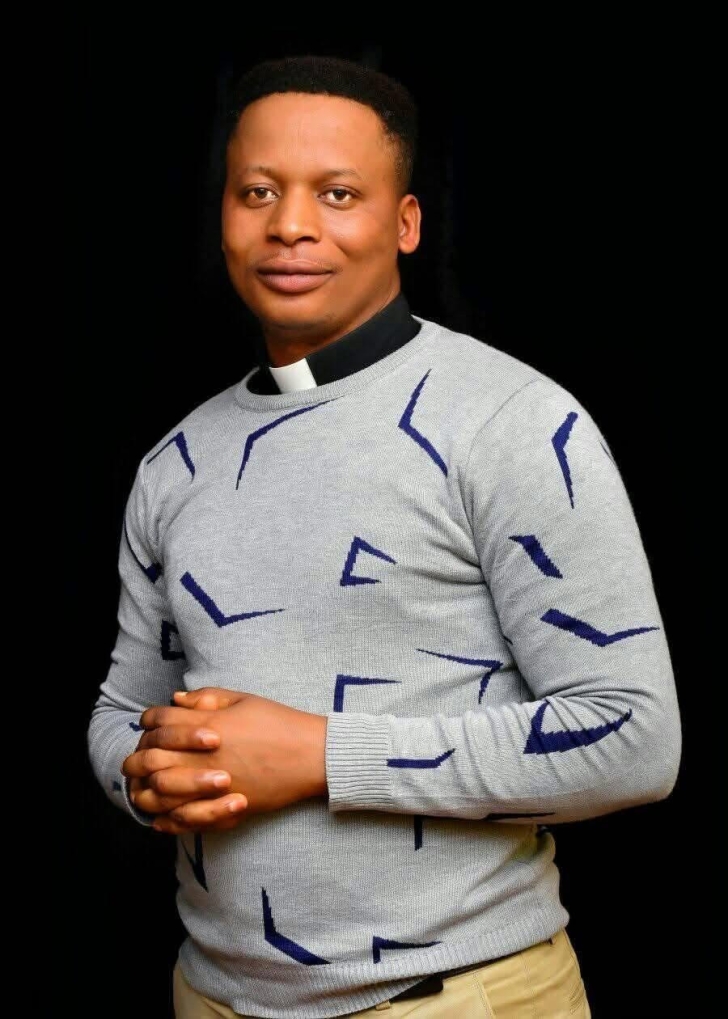
In southern Kaduna state, the Catholic Diocese of Kafanchan on Tuesday (May 12) announced that a priest kidnapped on Feb. 7 had been freed.
Armed terrorists had abducted the Rev. Nathaniel Asuwaye from his home, the Rev. Jacob Shanet, diocesan chancellor/notary of Kafanchan, said in a press statement that failed to identify the kidnappers, the location of the priest’s home or the terms and date of his release.
“Fr. Nathaniel is now safe and receiving care,” Shanrt said. “He is in stable condition, remains in good spirits and appreciates your prayers and support.”
More Christians were killed in Nigeria than in any other country from Oct. 1, 2024 to Sept. 30, 2025, according to Open Doors’ 2026 World Watch List. Of the 4,849 Christians killed worldwide for their faith during that period, 3,490 – 72 percent – were Nigerians, an increase from 3,100 the prior year. Nigeria ranked No. 7 on the WWL list of the 50 countries where it is most difficult to be a Christian.
Numbering in the millions across Nigeria and the Sahel, predominantly Muslim Fulani comprise hundreds of clans of many different lineages who do not hold extremist views, but some Fulani do adhere to radical Islamist ideology, the United Kingdom’s All-Party Parliamentary Group for International Freedom or Belief (APPG) noted in a 2020 report.
“They adopt a comparable strategy to Boko Haram and ISWAP and demonstrate a clear intent to target Christians and potent symbols of Christian identity,” the APPG report states.
Christian leaders in Nigeria have said they believe herdsmen attacks on Christian communities in Nigeria’s Middle Belt are inspired by their desire to forcefully take over Christians’ lands and impose Islam as desertification has made it difficult for them to sustain their herds.
In the country’s North-Central zone, where Christians are more common than they are in the North-East and North-West, Islamic extremist Fulani militia attack farming communities, killing many hundreds, Christians above all, according to the report. Jihadist groups such as Boko Haram and the splinter group Islamic State in West Africa Province (ISWAP), among others, are also active in the country’s northern states, where federal government control is scant and Christians and their communities continue to be the targets of raids, sexual violence, and roadblock killings, according to the report. Abductions for ransom have increased considerably in recent years.
The violence has spread to southern states, and a new jihadist terror group, Lakurawa, has emerged in the northwest, armed with advanced weaponry and a radical Islamist agenda, the WWL noted. Lakurawa is affiliated with the expansionist Al-Qaeda insurgency Jama’a Nusrat ul-Islam wa al-Muslimin, or JNIM, originating in Mali.