U.S. lawmakers on Tuesday (Feb. 10) introduced a bill aimed at increasing oversight of religious freedom in Nigeria and bolstering accountability for attacks targeting Christians and other vulnerable groups.
The proposed legislation, known as the Nigeria Religious Freedom and Accountability Act of 2026 (H.R. 7457), was introduced in the U.S. House of Representatives by Republican Reps. Riley Moore of West Virginia and Chris Smith of New Jersey, with support from other members of the House Foreign Affairs and Appropriations Committees.
The bill would require the U.S. Secretary of State to prepare a detailed annual report to Congress on efforts by both the United States and Nigerian authorities to protect religious freedoms and confront ongoing violence. It would assess Nigeria’s compliance with international standards, including actions taken to prosecute perpetrators and protect religious minorities.
Speaking in Washington, lawmakers framed the bill as a response to what they described as widespread religious violence and persecution of Christians in Nigeria.
“For years, Christians in Nigeria have faced unspeakable violence — churches burned, villages destroyed, families slaughtered — while the global community looked away,” Rep. Moore said in a press release. “This legislation makes clear that the United States stands with our persecuted brothers and sisters in Christ.”
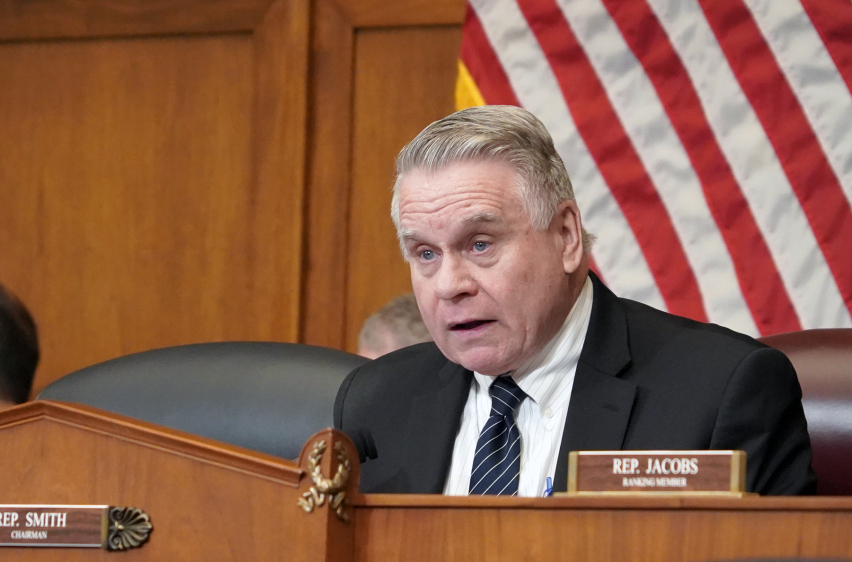
Rep. Smith, chairman of the House Foreign Affairs Africa Subcommittee, noted that the Nigerian government’s denial of religious persecution has enabled violence to continue.
“Now that President Trump has rightly redesignated Nigeria a ‘Country of Particular Concern,’ the United States has a responsibility to do its due diligence in ensuring that the Nigerian government is taking the proper steps to address and punish the systemic violence against Christians and non-radical Muslims by Islamist extremists, such as Boko Haram and Fulani terrorists,” Smith said.
Supporters argue that requiring regular reporting will build pressure on Nigerian authorities to take concrete steps to protect vulnerable communities and prosecute those responsible for violence.
Some media reports also say the bill could pave the way for targeted sanctions, including visa bans and asset freezes against individuals or groups linked to violence, such as former Kano State Gov. Rabiu Musa Kwankwaso and militia organizations like the Miyetti Allah Cattle Breeders Association.
Nigeria, Africa’s most populous country, has long faced a complex security crisis that intersects with religion, ethnicity and economic grievances. Islamist militant groups such as Boko Haram and the Islamic State West Africa Province (ISWAP) have waged violent insurgencies for years, killing and abducting civilians across the northeast and beyond.
While violence in Nigeria affects Muslims and Christians alike, many U.S. lawmakers and advocacy groups say Christian communities are disproportionately targeted. Earlier this year, extremist gunmen attacked several villages in Kwara state, killing scores of civilians in one of the deadliest assaults in recent months. Survivors said attackers used deception and extreme violence, killing and abducting residents over extended hours.
Another recent assault in northern Kaduna state left several villagers dead and multiple people abducted, including a Catholic priest, illustrating how violence continues to unfold across regions over time.
In 2025, U.S. airstrikes targeted Islamic State militants in northwest Nigeria, with President Donald Trump saying the strikes aimed to stop extremist groups that had “been targeting and viciously killing, primarily, innocent Christians.”
Analysts note that while extremist groups do attack Christian communities, they also target Muslims and other civilians, and the conflict is shaped by a web of political, economic and ethnic factors. Nigeria’s government has stressed that it is fighting terrorism and protecting all citizens, rejecting claims that it tolerates systematic persecution.
Trump’s role and U.S. policy
Trump played a prominent role in raising the profile of Nigeria’s violence in U.S. policy discussions. In late 2025, he redesignated Nigeria as a “Country of Particular Concern” under U.S. international religious freedom law, a move that signaled U.S. concern about alleged systemic attacks on Christians.
Trump also ordered U.S. airstrikes against Islamic State targets in Nigeria and authorized restrictions on visas for Nigerians believed to be involved in mass killings and violence against Christians. Officials said the visa measures aimed to hold perpetrators and their families accountable.
In an interview in January, Trump indicated that further U.S. military action in Nigeria could occur if violence against Christians continues, reflecting his administration’s readiness to explore a range of policy options. On Feb. 11, The Christian Post reported that the US will send 200 troops to train Nigerian forces to fight Islamic militants as part of the collaboration between the US and Nigeria.
However, some analysts argue that focusing on religious identity oversimplifies the conflict. They note that Islamist militants attack communities of all faiths, and that issues such as governance, poverty and land disputes also drive much of the violence. Critics also said the narrative of persecution can overshadow the multifaceted nature of insecurity in Nigeria.
If passed, the Nigeria Religious Freedom and Accountability Act would do more than require annual reporting. It would instruct the State Department to assess Nigeria’s compliance with its obligations to protect religious freedom, document steps toward safeguarding vulnerable groups, and identify individuals or entities on human rights sanctions lists.
Lawmakers said the measure would ensure sustained U.S. engagement and oversight of Nigeria’s religious freedom conditions, ensuring that religious freedom concerns remain on the agenda between Washington and Abuja.
The bill’s progress through Congress will be watched closely by religious freedom advocates, international observers and policymakers concerned about Nigeria’s future stability.