Editor’s note: This article contains content that some readers may find distressing.
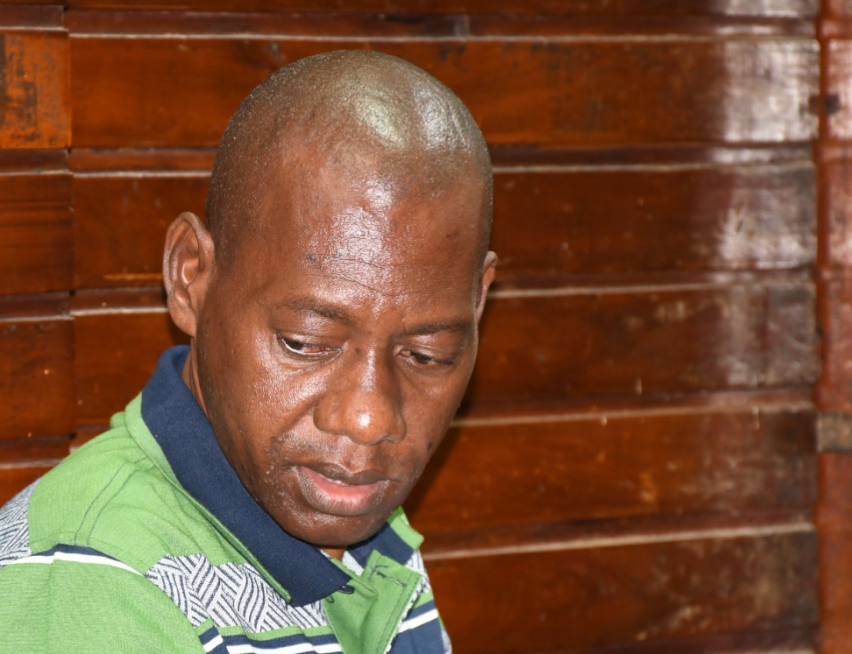
A Kenyan court has sentenced self-proclaimed preacher Paul Nthenge Mackenzie to 200 years in prison for his role in the deaths of 191 people, including 190 children, bringing a major criminal case arising from the Shakahola tragedy to a landmark conclusion.
The sentence, delivered by Justice Diana Kavedza at the High Court in Mombasa on Nov. 6, follows Mackenzie’s conviction last month on 191 counts of murder. Twenty-eight co-accused were also sentenced to prison terms ranging from 10 to 160 years.
Mackenzie, founder of Good News International Church, was sentenced to 100 years for 183 counts of murder by starvation and a further 100 years for eight counts of murder by direct homicide. The two terms will run consecutively, giving him an aggregate sentence of 200 years.
Prosecutors said Mackenzie instructed followers to starve themselves and their children to death in the belief that doing so would allow them to reach heaven and meet Jesus. Those who resisted were allegedly beaten, restrained or confined by members of the group.
Justice Diana Kavedza described the suffering endured by the children, saying that some had watched their siblings die after days without food. “Children observed as their siblings dropped dead after enduring hunger for days,” she said.
Meanwhile, Ojiro Odhiambo of the Kenya Human Rights Commission criticized the failure of state institutions to prevent the tragedy, saying, “All these people (institutions) have failed the people (victims).”
The court rejected Mackenzie’s defense that he had not forced followers to starve. His lawyer indicated that the conviction would be appealed.
The case emerged in April 2023 after police began investigating reports of deaths in Shakahola Forest in Kilifi County. Subsequent investigations uncovered hundreds of bodies buried in shallow graves, with some victims reportedly buried alive.
Authorities ultimately recovered 448 bodies from the forest. Mackenzie also faces separate proceedings concerning another 52 suspected deaths, bringing the wider number of suspected victims to 500, according to Reuters.
The scale of the tragedy raised serious questions about how the group had operated for years without effective intervention from authorities.
It also triggered a national debate about the regulation of religious organizations, particularly the activities of independent churches and religious leaders operating outside established denominational structures.
Regulatory reforms remain unfinished
Following the discoveries at Shakahola, President William Ruto established a Presidential Taskforce on the Review of the Legal and Regulatory Framework Governing Religious Organizations in May 2023.
The taskforce, chaired by Reverend Mutava Musyimi, was mandated to examine weaknesses in the existing system and recommend measures to prevent religious extremism, exploitation and abuse.
It presented its report to the President in July 2024, recommending a framework combining religious self-regulation with government oversight.
Among its proposals was the establishment of a Religious Affairs Commission and the introduction of a Religious Organizations Bill to provide a more comprehensive legal framework for registration, accountability and oversight.
In November 2024, Tana River Senator Danson Mungatana withdrew his Religious Organizations Bill following opposition from church leaders who argued that the proposed legislation threatened constitutional freedom of worship.
The government subsequently pursued a separate legislative process based on the presidential taskforce's recommendations.
In July 2025, Cabinet approved the proposed reforms, including the draft Religious Organizations Bill, 2024, and the Religious Organizations Policy, 2024.
The government opened the proposals to public participation in September 2025, inviting written submissions from religious organizations and other stakeholders. The deadline for submissions was Oct. 22, 2025.
Nevertheless, the proposed legislation had still not become law by May 2026.
In May, civil society organizations and religious stakeholders called for the bill to be shelved, arguing that some of its provisions could discriminate against smaller religious communities and undermine constitutional protections.
Among the concerns were proposed registration requirements, mandatory endorsement by umbrella religious organizations and provisions requiring formal theological qualifications for religious leaders.
The debate reflects the difficulty of developing regulations that address religious exploitation without giving the state excessive authority over religious practice.
Questions over government accountability
The Shakahola case has also renewed scrutiny of the conduct of government agencies before the mass deaths were discovered.
Mackenzie had previously attracted the attention of authorities, including arrests in 2017 and 2018 over allegations involving his followers and their children’s access to education and healthcare.
The discovery of hundreds of bodies in 2023 prompted investigations into whether security agencies and local administrators had failed to act on earlier warnings.
The Senate’s 2023 Ad Hoc Committee report on Shakahola documented failures within the existing legal and administrative framework and recommended stronger oversight of religious organizations.