
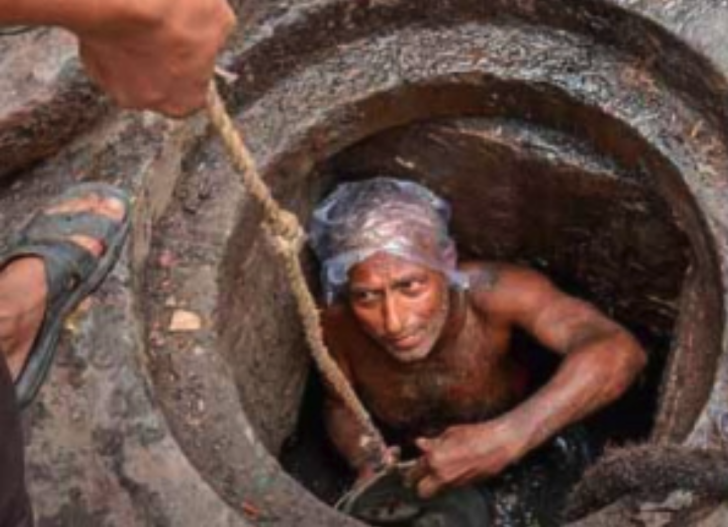
A Muslim lawmaker in Pakistan’s Punjab Provincial Assembly on Tuesday (Sept. 1) introduced legislation seeking to establish permanent legal protections for sanitation workers, a workforce that includes a large proportion of Christians.
The Punjab Waste and Sanitation Workers (Dignity, Safety, Security and Welfare) Bill 2026, introduced by Ahmad Iqbal Chaudhry, chairman of the Public Accounts Committee-III, seeks to establish statutory protections for sanitation workers’ safety, dignity, social security and welfare across the province.
The bill was introduced following the deaths of four sanitation workers in Sahiwal and Faisalabad earlier this year. On May 7, sanitation worker Shabbir Masih, a father of three, died in Faisalabad after being exposed to poisonous gases while working. His colleague, Sanwal Masih, was hospitalized after suffering similar exposure. Three days earlier, on May 4, workers Shakeel Masih and Samar Masih died while cleaning a manhole in Sahiwal without protective equipment.
The proposed legislation seeks to move beyond temporary administrative responses that typically follow workplace accidents by requiring occupational safety measures, protective equipment and social-security protections for sanitation workers.
Chaudhry said on X that sanitation workers perform essential but dangerous work while frequently lacking basic safety protections.
“Sanitation workers perform some of the most difficult, dangerous and essential work in our society,” he said. “Yet far too many continue to enter sewers and hazardous environments without adequate protective equipment, safety standards, occupational safeguards or social protection.”
He said hundreds of sanitation workers had died in the line of duty and that the recent deaths in Sahiwal and Faisalabad underscored the need for legislative action.“An overwhelming majority of those doing the most hazardous sanitation work come from our Christian community,” Chaudhry said, adding that many workers were among the poorest and most vulnerable members of society.
He also criticized what he described as unequal public responses to workplace deaths involving marginalized workers.
“If such tragedies repeatedly struck people from influential or privileged sections of society, there would be outrage, accountability and immediate action,” he said. “When the victims are among the poorest and most vulnerable, their deaths too often pass without the same response. Is their life worth any less?”
The proposed legislation comes amid growing scrutiny of the treatment and working conditions of sanitation workers in Pakistan.
A July 2025 report by Amnesty International, “Cut Us Open and See That We Bleed Like Them,” documented what it described as systemic discrimination, hazardous working conditions and caste-based exclusion affecting sanitation workers in Pakistan.
The report found that sanitation work was disproportionately assigned to non-Muslims from communities historically described as “lower caste,” often leaving workers with limited alternatives for employment. Women sanitation workers faced additional discrimination based on caste, religion and gender, Amnesty said.
The organization also documented cases in which sanitation workers had faced stigma and violence, including blasphemy allegations. Among the cases it examined was that of Aasiya Noreen, a Christian sanitation worker better known as Asia Bibi, whose blasphemy conviction and subsequent acquittal became an international human-rights case.
Amnesty said its review of nearly 300 government job advertisements published between 2010 and March 2025 found numerous advertisements explicitly requiring applicants to be non-Muslim or from “lower castes” for sanitation positions.
The practice has been challenged in the courts.
In a December 2025 ruling, the Islamabad High Court directed authorities to end discriminatory language in government advertisements for sanitation jobs, including requirements such as “Christians only,” and emphasized the state’s responsibility to provide sanitation workers with appropriate safety measures.
Justice Raja Inam Amin Minhas noted in the ruling that more than 70 Christian sanitation workers had died since 1988 after exposure to toxic gases. The court described the failure to provide adequate safety measures as a serious lapse in the state’s responsibilities and called for protective equipment and monitoring mechanisms.
Separately, the National Commission for Human Rights (NCHR) has petitioned the Federal Constitutional Court seeking an end to manual sewer cleaning, highlighting the risks posed by toxic gases and other hazardous conditions.
The petition calls for stronger national health and safety standards, noting that inadequate enforcement, insufficient training and a lack of protective equipment continue to expose sanitation workers to preventable deaths and injuries.
Rights advocates say the conditions faced by sanitation workers demonstrate the need for stronger enforcement of labor and occupational-safety laws, as well as greater accountability for authorities responsible for workplace safety.








