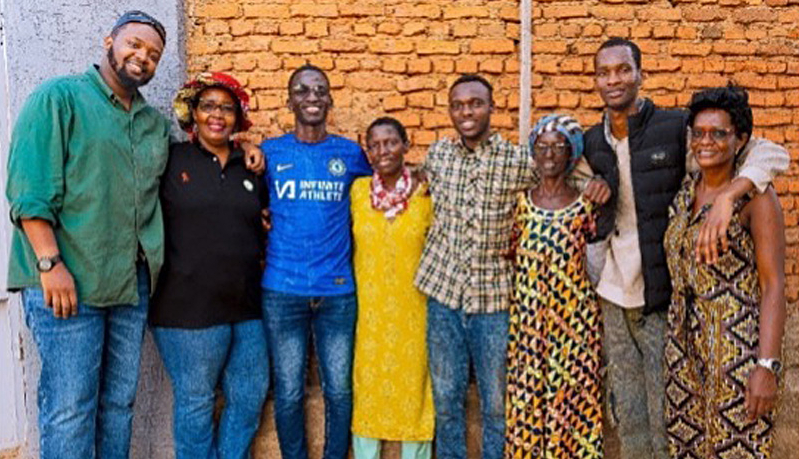
Rwanda knows what it means to rebuild while still carrying deep scars. In many communities, loss, poverty, illness, and social rejection still live quietly inside ordinary homes. Women often carry more than one burden at once, and children can grow up close to fear, shame, or hunger before they are old enough to name it. It is in that kind of space that Djamila Consolate, known as Maman (Mother) Deborah, has spent years serving, not loudly, but faithfully.
She came to see that God had been protecting her to help others.
Maman Deborah is the Founder and Legal Representative of Love to Help Organization. This mission was shaped by a deeply personal turning point. After living through a dangerous situation, and not losing her life like many others had, she came to see that God had been protecting her to help others.
Biblical fire
That insight also shaped by Scripture. Maman Deborah was deeply moved by the story of Deborah and Jael (Judges 4-5), women whose courage still feels startling. Deborah led with wisdom and strength. Jael defeated Sisera, the feared commander, in a moment that changed the course of battle. Their time was not especially favorable to women, yet they acted with boldness anyway.
For Maman Deborah, their stories raised a serious question: “If women like Deborah and Jael could do such tremendous work in a far more difficult season, why not her?” Today Rwanda has opened more visible space for women’s leadership than many societies still do, even if the struggle is not over in every part of women’s lives.
Created “for such a time as this.”
But she did not want to wait for perfect conditions before obeying God. Like in Esther’s story in Scripture, she kept sensing that maybe she too was created “for such a time as this.”
Who she walks with
Love to Help Organization... stays close to people who are often pushed to the margins
Her passion to help others took shape as Love to Help Organization. It was founded in 2005 and the organization is now serving people in five districts of Rwanda. It stays close to people who are often pushed to the margins: single mothers, teenage mothers, widows, orphans, couples in difficulty, children at risk, women infected or affected by HIV/AIDS, and families living under poverty, stigma, school interruption, malnutrition, and poor health access.
For some of these women, survival itself had become painful. A few had earned a living through prostitution, not because that was the life they wanted, but because poverty, rejection, and desperation had narrowed too many other choices.
She approached them with presence, dignity, and practical help.
Maman Deborah did not approach them first with condemnation. She approached them with presence, dignity, and practical help. She has stayed close enough to know what shame, survival, and silent suffering actually look like.
Love that carries
One painful early reality made that closeness unmistakable. Some women who had tested HIV positive were too ashamed to go and collect the medication they needed. Fear of being seen. Fear of gossip. Fear of being reduced to one label. Shame was becoming stronger than treatment, so Maman Deborah went to collect the medication on their behalf.
She knew what that could mean socially. People could easily assume that she herself was HIV positive, but she accepted that burden anyway. If carrying that shame could help save another woman’s life, she was willing to carry it. It is one thing to say we care. It is another to stand so close to another person’s shame that others may mistake it for your own.
God loves you.
Her message to wounded women has remained simple and deeply human: “God loves you, the nation loves you, the community loves you, and myself—I love you too.”
Work with dignity
Berwalove... means “Be Smart-Love.”
The work of Love to Help Organization includes counseling, school support, self-help groups, skills development, and socio-economic empowerment. One important part of the mission is Berwalove, which means “Be Smart-Love.”
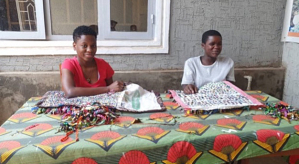
It is a tailoring project that equips women with practical skills, income possibilities, and renewed confidence. In a quiet way, it reflects the spirit of Dorcas the biblical woman remembered for clothing people with care (Acts 9:36-41).
This organization has supported more than 500 children.
The results are not small. This organization has supported more than 500 children in ways that enabled them to have access to education.
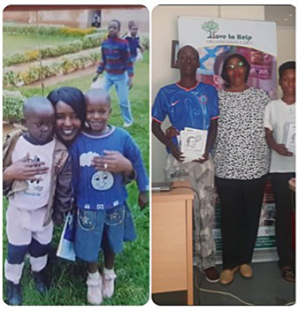
It has established over 30 self-help and savings groups. In 2025-2026 alone it improved livelihoods for 168 families, reaching 612 direct beneficiaries and 2,389 indirect beneficiaries.
But numbers tell only part of the story. Some women once in extreme poverty and stigmatized have begun rebuilding their lives with dignity. Some children growing up inside HIV-related vulnerability have remained in school instead of fading into neglect.
Keeping hope alive
Perseverance matters.
Like many locally rooted ministries, Love for Hope Organization continues its work at a time when needs remain heavy and the wider funding environment has grown more difficult. Yet the mission has not gone quiet. It is still counseling, still training, still helping women and children stay closer to dignity and hope. That perseverance matters.
May this story make us pause and ask what becomes possible when faithful local work is strengthened rather than left to carry too much of the load alone. Support for such ministries helps trusted, rooted work to reach further, remain steadier, and protect more lives from being swallowed by shame, poverty, and silence.
She let grief become compassion, and compassion become action.
Maman Deborah did not wait for perfect conditions. She let grief become compassion, and compassion become action.
In a world that often celebrates quick impact, her life offers a gentler witness. Sometimes the most powerful Kingdom work is simply this, to stay close to suffering long enough for hope to grow again.
Benjamin (Ben) Mudahera is a Guest Writer at the Women’s Institute at William Carey International University. Ben is a development practitioner and writer who is currently completing a Master of Arts in Development Studies, specializing in Global Women’s Empowerment. Ben has over 15 years of experience serving across humanitarian and development organizations in Rwanda. His experience spans education, refugee affairs, WASH, and community development, with a strong focus on supporting women, youth, and marginalized communities. Through his writing, Ben brings a people-centered, reflective, and faith-informed perspective, seeking to amplify stories of dignity, leadership, and transformation.