

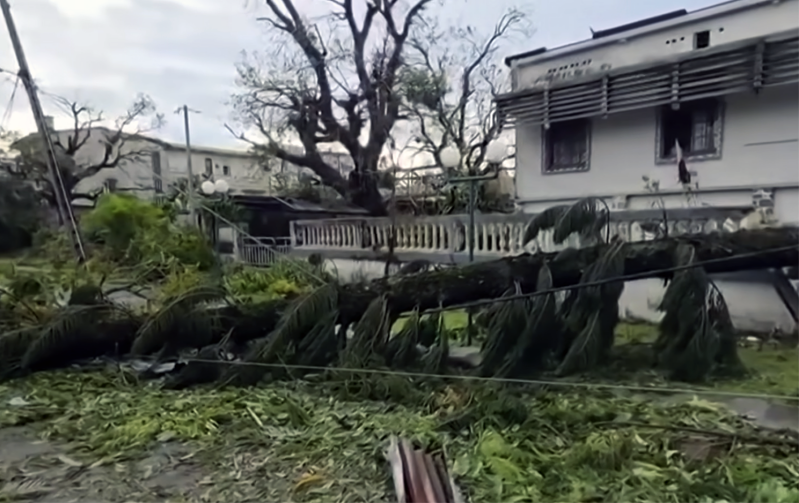
Intense tropical cyclone Gezani struck Madagascar’s eastern coast on Tuesday (Feb. 10), making landfall near Toamasina at approximately 7 p.m. local time. The storm, one of the most intense recorded in the satellite era, brought sustained winds of 110 mph and gusts exceeding 155 mph, killing at least 38 people and threatening a nation already struggling with disease, hunger, and political transition.
According to reports from BBC News and Al Jazeera, the cyclone leveled homes and uprooted trees in Toamasina, a port city of roughly 575,000 residents. Madagascar’s National Bureau of Risk and Disaster Management (BNGRC) confirmed Wednesday, Feb 11. that at least 29 of the deaths occurred in the Toamasina region alone, where roughly 75% of the infrastructure has been damaged or destroyed. Recovery operations remain ongoing.
Compounding crises
Gezani’s arrival complicates a significant Mpox outbreak. As of early February, health officials confirmed 410 cases (including 229 laboratory-confirmed cases) across 23 regions. While the Boeny region remains the epicenter, officials fear that widespread flooding and the displacement of over 6,000 people will hamper containment efforts and accelerate the spread of the Clade 1b virus in rural areas.
In the South, 1.5 million people continue to face acute hunger. The World Food Programme (WFP) warned that severe damage to the Port of Toamasina, which handles 80% of Madagascar's international trade, could block critical food and fuel imports destined for the ‘Grand Sud’ region and the capital, Antananarivo. Disruptions at the port risk delaying humanitarian shipments already scheduled to support drought-affected communities.
Situation updates from the United Nations Office for the Coordination of Humanitarian Affairs (OCHA) highlight the growing strain on emergency services as the country faces overlapping climate, health, and food-security challenges.
Global development indicators show that approximately 80% of Madagascar’s population lives below the international poverty line, limiting household resilience to repeated climate shocks and public health emergencies.
Political and religious response
“We are called to stand together in practical love—supporting those suffering from hunger, disease, and disaster,” said Rev. Dinah Ratsimbajaona, president of the National Evangelical Alliance in Madagascar.
Ratsimbajaona described the cyclone as striking at a “critical convergence” of crises. “Madagascar stands at a defining moment in its national journey,” he said. “Churches are opening their doors as shelters, mobilizing food support, and praying for protection over healthcare workers, for families facing hunger, and for leaders navigating this fragile transition. We trust God to sustain our nation and guide us toward peace, justice, and restoration.”
The disaster hits as Madagascar remains under a transitional government following the October 2025 takeover. Col. Michael Randrianirina, who assumed the presidency after the ousting of Andry Rajoelina, visited Toamasina on Wednesday to survey what he described as a “catastrophic landscape.” A government spokesperson acknowledged what officials called a “triple threat” of cyclone destruction, infectious disease, and deepening hunger, stating that authorities are coordinating emergency response efforts with regional and international partners.
The crisis coincides with renewed regional diplomacy. A Southern African Development Community (SADC) mission, led by former Malawian President Dr. Joyce Banda and the Panel of Elders, is scheduled to engage government and church leaders to facilitate a roadmap toward constitutional stability and a return to democratic elections. In December 2025, It was reported that the SADC mediation team is expected to deploy to Madagascar by March 2026 as part of efforts to promote inclusive dialogue and restore democratic governance following the 2025 political transition.
On the ground
Local leaders are already responding to immediate humanitarian needs. In Toamasina, Pastor Lova Andrianirina is using his partially unroofed church as a temporary shelter.
“We are opening what remains of the building for those whose homes were destroyed,” he said. “Our sanctuary is damaged, but our mission remains intact.”
Gezani is the second major storm to hit the island in two weeks, following Cyclone Fytia, which killed 14 people on Jan. 31 and displaced thousands, according to United Nations humanitarian reports. With the cyclone season expected to continue through April, meteorological services warn that Gezani may regain strength as it exits into the Mozambique Channel.


