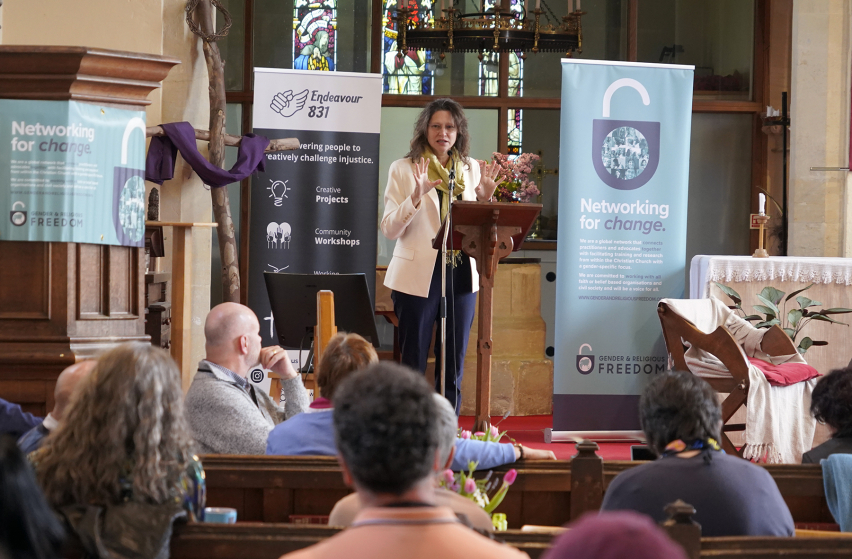
A decade after a small gathering in 2016 first sought to name and address the distinct ways religious persecution affects women, the Marcham+10 conference began on Friday (April 17), highlighting both progress and persistent challenges in confronting what is now widely termed “gender-specific religious persecution.”
With global advocates, researchers and faith leaders in attendance, the two-day consultation on Friday and Saturday (April 17–18) brings together a diverse coalition of practitioners, academics, policy advocates who have spent the past 10 years developing frameworks, research and advocacy strategies to better understand how gender intersects with religious freedom violations.
Organizers say the anniversary moment is both reflective and forward-looking – assessing gains made since the original Marcham meeting while confronting the reality that many forms of abuse remain widespread, underreported and insufficiently addressed.
Commenting to Christian Daily International, Kate Ward, co-founder of the Gender and Religious Freedom (GRF) network, whose work helped catalyze the original 2016 gathering, described the origins of the movement as rooted in practical encounters with women facing layered vulnerabilities in contexts of religious persecution.
“I realized the problem was way bigger than even I imagined, and I needed more advocates and allies,” she said, recalling her early work with persecuted women through Release International.
From anecdote to global framework
Ward traced the emergence of the concept of gender-specific religious persecution to her field experience in countries such as Pakistan, where she encountered what she described as “double vulnerability” – women facing both external persecution due to their faith and internal marginalization within their own communities.
She recounted cases of women harassed in public spaces because of their religious identity, while simultaneously experiencing abuse or diminished status within their homes and churches. In some cases, she said, young women were at heightened risk of trafficking or exploitation, particularly in economically vulnerable regions.
“What we call it is internalized oppression…their internal mindset that said, ‘I am worth nothing,’” Ward said.
These early observations, initially anecdotal, became the basis for a broader realization that persecution is not experienced uniformly. Instead, it manifests differently depending on gender, age and social context – a recognition that has since reshaped research and advocacy approaches across the religious freedom sector.
Panelists at the conference underscored how the field has evolved over the past decade from scattered testimonies to a more structured, evidence-based discipline. Rachel Morley of Open Doors International noted that systematic research efforts beginning around 2018 enabled organizations to analyze how persecution impacts men and women differently, leading to the development of gender-specific reporting frameworks.
This shift has allowed for more nuanced insights – for example, identifying patterns in which women are often targeted through sexual violence or forced marriage, while men are more frequently attacked in ways linked to their perceived roles as leaders or providers.
The legacy of Marcham 2016
The original Marcham conference in 2016, reported at the time by World Watch Monitor, marked one of the first coordinated efforts to bring together practitioners, researchers and advocates focused on the intersection of gender and religious persecution.
Ward said the initial aim had been modest – producing a joint statement, later known as the “Marcham Letter to the Global Church.” But its most enduring impact, she suggested, was relational rather than institutional.
“What came of it, I think more powerfully, was the grouping together, the collaboration,” she said. “People who’d worked together for two and a half days became friends…and we were able to form really effective relationships moving forward.”
That collaborative ethos remains a defining feature of the movement. Speakers on the opening day repeatedly emphasized the importance of cross-sector partnerships, including cooperation between Christian organizations, secular actors, and governments.
Ward pointed to moments where such collaboration enabled unexpected opportunities, including invitations to contribute to discussions at the United Nations and partnerships across advocacy networks.
Language, awareness and political traction
One of the most significant developments over the past decade, several speakers said, has been the growing adoption of the term “gender-specific religious persecution” in policy and public discourse.
Ward noted that the phrase, once largely unknown, is now used in parliamentary debates in the United Kingdom and in international forums.
Conference speakers also highlighted how research reports and advocacy campaigns have influenced policymakers. Gender-specific findings have been cited in legislative settings, including UK parliamentary discussions on freedom of religion or belief, signaling increased recognition of the issue at governmental levels, they said.
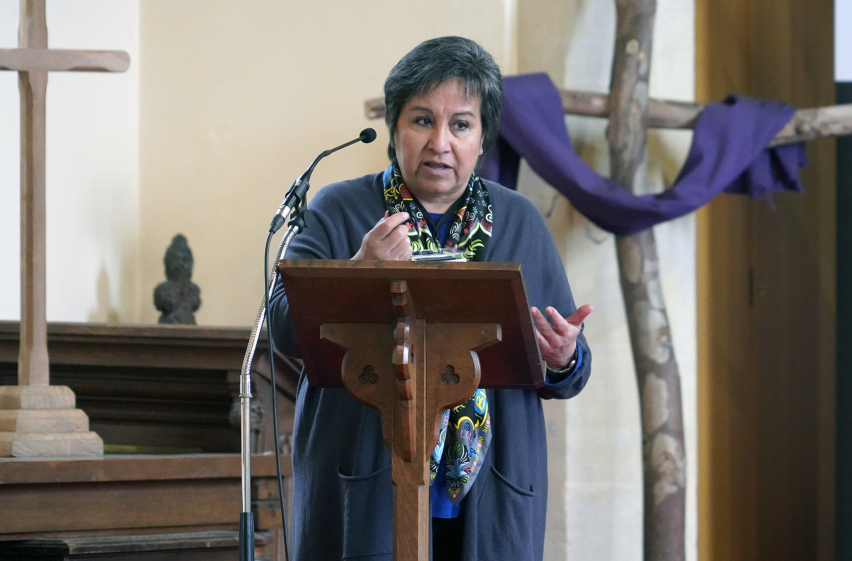
Marcela Szymanski of Aid to the Church in Need described how large-scale reports documenting religious freedom violations have helped expose patterns of abuse, including what she characterized as “abduction and sexual enslavement with religious pretense,” often obscured under less precise terminology.
At the same time, speakers acknowledged that greater visibility has not necessarily translated into proportional action. Many of the structural drivers of gender-based persecution – poverty, impunity, and entrenched cultural norms – remain deeply embedded.
‘Endemic’ and ‘institutionalized’ violence against women
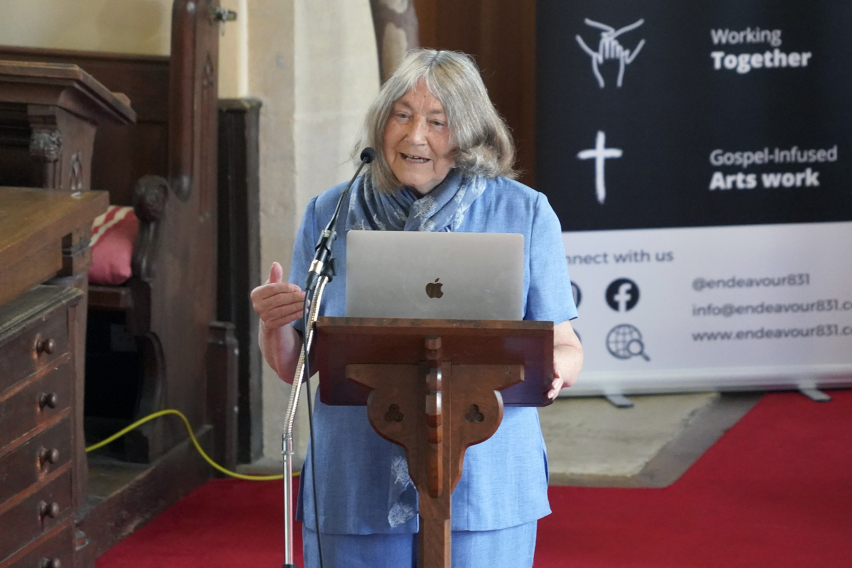
The scale and complexity of gender-based violence globally were underscored in a presentation by Elaine Storkey, a longtime advocate and former president of Tearfund, who drew on decades of research and field experience.
Storkey described violence against women as “endemic” and “institutionalized” across societies, affecting girls and women from early childhood through adulthood.
She cited a wide range of issues – including sex-selective abortion, female genital mutilation, child marriage, trafficking, domestic violence and sexual violence in conflict zones – arguing that these forms of abuse often intersect with religious identity in ways that intensify vulnerability.
In conflict settings, she noted, sexual violence has increasingly become both a tactic of war and a broader societal crisis, citing the Democratic Republic of Congo as an example where such violence has evolved into a widespread, endemic problem.
“Religion, gender, status, power – everything comes into one as these women become victims,” she said.
Storkey also challenged churches to confront internal dynamics that may contribute to or perpetuate inequality, calling for theological reflection and structural reform to address attitudes that enable abuse.
Intersectionality and blind spots
Another key theme emerging from the first day of the conference was the importance of intersectionality – the recognition that women’s experiences of persecution are shaped by multiple, overlapping factors, including religion, class, ethnicity and geography.
A video message from researchers involved in the Coalition for Religious Equality and Inclusive Development (CREID) emphasized that even within broader feminist movements, the experiences of religious minority women are often overlooked.
This gap, speakers suggested, has historically limited both understanding and response strategies, underscoring the need for more inclusive frameworks that account for religious identity alongside other dimensions of inequality.
Challenges of resourcing and implementation
Despite advances in awareness and research, Ward identified a persistent and critical challenge: lack of funding.
“In order to bring change…it’s very poorly resourced,” she said, noting that much of the work in this field continues to be carried out with minimal financial support.
This resource gap affects everything from research capacity to grassroots interventions, limiting the ability of organizations to scale successful initiatives or sustain long-term impact.
Yet, Ward expressed hope that Marcham+10 would serve as a catalyst for the next phase of work.
“My hope for this event is that it could become another landmark, but I don’t want this event to be a full stop,” she said.
Instead, she called on participants to build on the knowledge and relationships developed over the past decade, working more effectively together to advance research, advocacy and practical responses.
“We need to realize we have the knowledge and the skills to take this forward into the next era,” she said.