
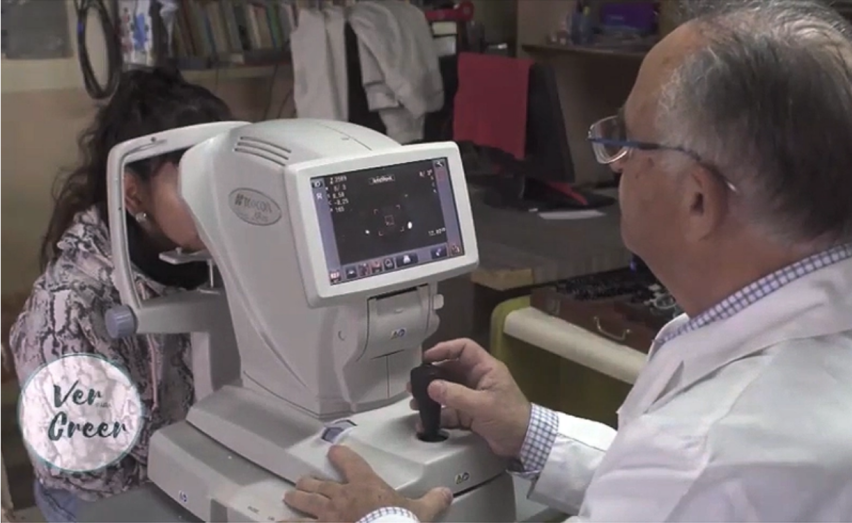
In many towns in Argentina’s interior, access to a basic eye exam can be a luxury. In that context, “Ver para Creer” (“Seeing to Believe”) was created—an evangelism-focused organization that provides vision care to people who otherwise lack access.
“It’s a primary eye care program for people who don’t have access to this specialty in places where access to such care is extremely limited,” explained its founder, Daniel Domínguez, in an exclusive interview with Diario Cristiano, Christian Daily International's Spanish edition.
The situation is clear: there are regions where specialists simply don’t exist. “There are many places in Argentina where people have no access to even a basic eye exam,” Domínguez said.
Faced with this reality, the team flips the usual model—they don’t wait for patients; they go out to find them. “We go to these places and serve people. They’re diagnosed, given prescriptions, and in most cases we try to provide them with glasses,” he said.
Access to vision care is limited not only by distance but also by cost. Domínguez explains that “an eye exam costs between 50,000 and 80,000 pesos (about $40 to $70 U.S. dollars just for the visit)… plus travel, lodging, and food. That’s a lot of money for people who don’t have access.”
That’s why the program directly targets those left out of the system. “We go out in search of those patients,” he said, reflecting both a sense of responsibility and a desire to bridge that gap.
But the initiative goes beyond healthcare. The project’s identity is explicitly Christian and strongly evangelistic. “Throughout the entire process… we share God’s love, the gospel, and the message of Jesus Christ,” Domínguez said.
The campaigns are carried out in partnership with local churches, which not only provide space but also continue spiritual follow-up. “It’s both a vision care initiative and an evangelistic campaign, because it is fundamentally evangelistic,” he added.
The process is simple: mobile clinics are set up in schools, parishes, or community centers. There, exams and diagnoses are performed, and in many cases glasses are provided on the spot.
They also serve incarcerated individuals, bringing equipment, glasses, and the Word of God, along with biblical materials for evangelism and spiritual growth.
The initiative also follows a strategic missionary approach. “I always tell pastors that these are guaranteed evangelistic campaigns,” Dominguez says.
Unlike other events where attendance is uncertain, here the need draws people in. “People come on their own… they line up. So you have 100 to 200 people a day, sharing the gospel with them three or four times,” he explained.
This direct contact opens the door for follow-up by local churches. “It ensures that they receive the message of the gospel,” he emphasized.
The program began around 2010 and now aims to expand across the entire country. The team currently consists of eight to nine people, but the vision is much bigger.
“My dream is for every province to have a ‘Ver para Creer’ team,” Domínguez said, with the goal of reaching “the most remote places in the country.”
With upcoming campaigns planned—including a recent one in Fuerte Apache, a disadvantaged neighborhood in Buenos Aires—the organization continues its mission of combining practical assistance with the proclamation of the gospel in places where both are often scarce.
Originally published by Diario Cristiano, Christian Daily International's Spanish edition.








