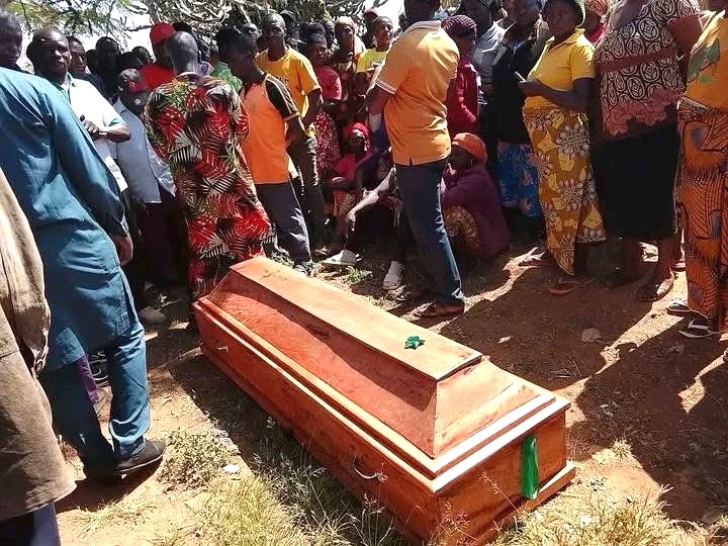
More Christians than Muslims were killed in terrorist attacks in Nigeria from October 2019 to September 2025, and Fulani assailants were responsible for more of the deaths than the designated terrorist groups that the Nigerian and U.S. governments are targeting, according to a new report.
Among 42,033 civilians killed during the period, 22,835 were Christians and 10,519 were Muslims, according to the report that the International Institute for Religious Freedom (IIRF) and the Observatory of Religious Freedom in Africa (ORFA) has submitted to the U.N. Special Rapporteur on Freedom of Religion or Belief.
“The evidence does not support a simple ‘war on Christians’ framing,” the IIRF and ORFA stated. “But it does establish a consistent, measurable pattern of religious targeting – one that simply cannot be explained by climate or resource competition alone.”
The report’s most important finding for policy purposes was identifying who actually perpetrated the crimes, the two groups stated. Fulani terror groups were responsible for 44 percent of all civilian deaths and 53 percent of Christian civilian deaths during the period. Boko Haram and Islamic State West Africa Province (ISWAP) accounted for a combined total of only 12 percent of civilian deaths.
“Yet official communications routinely substitute ‘bandits’ and ‘unknown gunmen’ for identifiable Fulani militia affiliates,” the report asserts. “This misnaming is not merely imprecise; it actively obstructs investigation, disarmament and prosecution.”
Fulanis in Nigeria are predominantly Muslim, and Boko Haram and ISWAP are Islamic extremist groups with declared intentions of imposing sharia (Islamic law) nationally.
Beginning on May 16, a joint U.S.-Nigerian operation in the northeastern state of Borno killed more than 20 ISWAP fighters, the report noted.
“The Trump administration has framed these operations as part of a broader campaign to protect Nigeria’s Christians – a framing the Nigerian government has been careful to distance itself from,” IIRF/ORFA stated.
The U.S.-Nigerian airstrikes targeted a legitimate counterterrorism priority, but the far larger driver of lethal violence against civilians is a Fulani militia network operating primarily in north-central Nigeria, where the military is largely absent and where no international strikes are being conducted, the groups noted.
“Civilians die where the state is not engaged,” they reported. “There is almost no overlap between the 10 local government areas with the highest civilian death tolls and those where Nigerian security forces are actively deployed.”
The report findings undercut distorted claims on opposing sides of how violence in Nigeria is viewed, the authors said.
“On one side is the ‘genocide’ framing, built on aggregate death tolls that circulate widely but lack transparent sourcing or incident-level verification,” they stated. “On the other side is reactive dismissal: having debunked inflated numbers, mainstream outlets and parts of the humanitarian community conclude that religious targeting is not a meaningful factor at all, recasting the violence as a resource conflict driven by climate and competition over land. The IIRF/ORFA data cuts through both distortions.”
The 22,835 Christians and 10,519 Muslims killed clearly show that Christians were disproportionately targeted, the report indicated.
“When the cases of undetermined religious affiliation are distributed proportionally and adjusted for the religious composition of each affected state, one concludes that Christians were killed at 4.4 times the rate their population share would predict,” IIRF/ORFA states. “Hausa Muslims in the North West zone were also abducted and killed in large numbers by the same perpetrator groups.”
Over the six years, ORFA recorded a total of 79,323 people killed, including 42,033 civilians, in 15,434 attacks.
“That is an average of seven lethal attacks every single day,” IIRF/ORFA reported. “An additional 34,917 people were abducted, overwhelmingly civilians.”
The report was based on primary records from a local partner network with Armed Conflict Location and Event Data (ACLED), verified and enriched with religious-identity attribution through on-the-ground confirmation, and incidents are cross-checked to avoid double counting, the authors stated.
Of the 34,917 people abducted, 34,773 were civilians, and there were 4,590 attacks with abductions – an average of two attacks per day involving kidnappings, according to the report, which found 73 percent of civilians abducted died or disappeared in the attacks on their own communities.
Among the 42,033 civilians killed, 184 were African Traditional Religionists (ATRs) and 8,495 had an unknown religious identity. Among the 34,773 civilians abducted, 15,932 were Christians, 15,272 were Muslims, 252 were ATRs and 3,317 were of unknown religious identity.
Relative to their proportion of the population in the affected states, however, Christians were 3.2 times more likely than others to be abducted, according to the report.
The 44 percent of the civilian deaths that Fulani Terror Groups were responsible for amounted to 18,577, and Unidentified Terror Groups accounted for 32 percent of the killings, or 13,346. The 12 percent of the civilian killings that Boko Haram and ISWAP were responsible for amounted to 4,941 lives lost.
For Christians specifically, Fulani Terror Groups accounted for 53 percent of deaths and Boko Haram and ISWAP only 8 percent. ORFA’s research identifies Fulani Terror Groups as affiliates of a broader Fulani Ethnic Militia (FEM), an ethno-religious armed network; a substantial share of “bandit” and “unidentified” actors were also FEM-affiliated.
“On a six-year view, FEM is now a larger factor in lethal violence than Boko Haram and ISWAP combined,” the report concluded.
The report added that in the last three months of 2025, killings of civilians were up 51 percent compared with the last quarter of 2024 (1,148 to 1,739) and abductions up 153 percent (1,352 to 3,427).
“Fourth quarter 2025 is the worst quarter for killings and abductions in ORFA's seven years of monitoring,” the report stated.
Recommendations
ORFA documented systemic breaches of duties on the part of the Nigerian government, including impunity for the Fulani Ethnic Militia.
“Despite being responsible for more than half of Christian civilian killings and near half of all civilian killings, commanders of Fulani militia are almost never identified, arrested or prosecuted,” the report stated. “The attention given to Boko Haram and ISWAP, while justified, is not matched by comparable action against FEM.”
IIRF/ORFA also cited foreseeability without deployment; community attacks in north-central Nigeria recurred on a predictable seasonal calendar, but security forces were not pre-positioned at known hot spots.
Routine labeling of identifiable Fulani assailants as “bandits” and “unknown gunmen” in official communications and media coverage obstructed investigation, disarmament and prosecution, according to the report.
“It also hinders international protection responses,” it stated.
The government employs “data architecture that erases the religious dimension,” IIRF/ORFA stated.
“The absence of religious-identity fields in ACLED, UNHCR [U.N. High Commissioner for Refugees], IOM [U.N. International Organization for Migration], and IDMC [Internal Displacement Monitoring Centre] data feeds produces the misreading that religious targeting does not occur, and therefore does not require a security or justice response,” they reported.
The 153 percent year-on-year rise in abductions in the last three months of 2025 and ongoing intensification this year indicates that the government’s “trajectory is not one of improving protection,” it added.
IIRF/ORFA recommended the Nigerian government acknowledge publicly that violence in Nigeria has both resource and religious dimensions, and that FEM, distinct from Boko Haram and ISWAP, is a principal driver. It suggested designating FEM-affiliated armed groups accordingly.
Also recommended was respect for Freedom of Religion or Belief (FoRB) to the level in national discourse, and structural reform, including outlawing religious hate speech in the Criminal and Penal Codes and anchoring FoRB protections in the Constitution.
Officials should conduct credible, independent investigations of mass community attacks, with priority for north-central states, and prosecute militia commanders, the report stated, and rebalance security deployments across the North East, North West, and North Central zones in line with ORFA’s geographic and seasonal hotspot data; it also suggested funding and integrating community-level policing.
The government should require religious-identity fields in national security and humanitarian reporting (NEMA [National Emergency Management Agency] and state authorities) and encourage UNHCR, IOM, IDMC and ACLED to do the same.
The IIRF was founded in 2007 with the mission to promote religious freedom for all faiths from an academic perspective. ORFA is a research, training, and advocacy program, with the mission to promote religious freedom on the continent.