
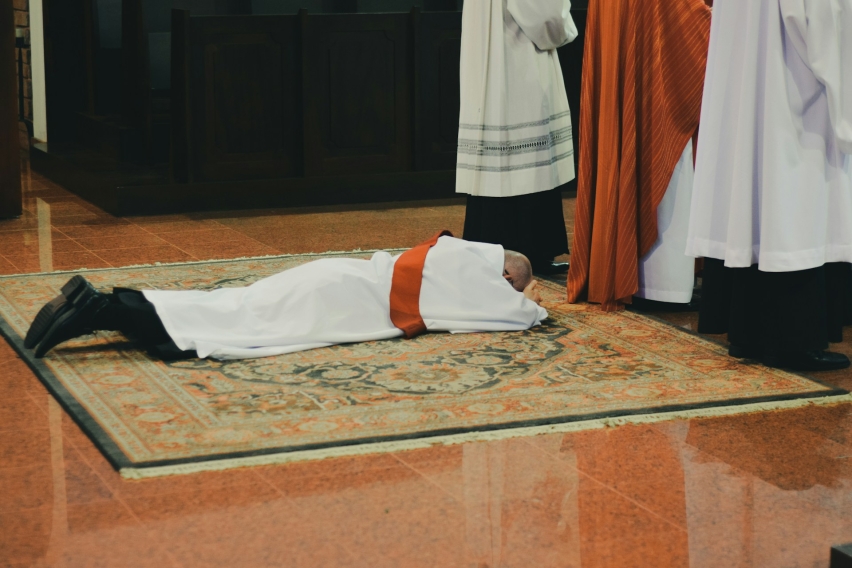
Nicaragua’s government has prohibited the ordination of new Catholic priests and deacons in several dioceses, a move church leaders say intensifies pressure on religious communities in the country.
According to reports published by ACI Prensa, the measure directly affects the dioceses of Jinotega, Siuna, Matagalpa and Estelí—territories currently under heavy government pressure and without the presence of their resident bishops.
This administrative and police restriction represents a direct blow to the ministerial structure of Nicaragua’s Catholic Church, preventing young men who have completed their theological training from formally serving their congregations. Local leaders say police are preventing any outside bishop from conducting ordination rites, reinforcing what analysts say is an attempt to dismantle the institutional presence of the Church in the country.
The persecution is not limited to Catholicism. Nicaragua’s evangelical community has also faced unprecedented pressure under the administration of Daniel Ortega and his wife, Co-President Rosario Murillo. In recent years, Nicaragua’s Interior Ministry has revoked the legal status of more than 1,500 nonprofit organizations, the majority of which were evangelical churches and missions, confiscating their assets and properties in favor of the state over alleged administrative irregularities.
Leaders of historic denominations and independent ministries have been subjected to surveillance, threats and the forced closure of their Christian radio and television stations. As has happened with the dioceses mentioned above, many evangelical pastors have fled the country after being accused of “treason against the homeland” simply for providing humanitarian aid during civil protests or for refusing to align their sermons with the official political narrative.
Experts on human rights and religious freedom describe the situation as critical. Researcher Martha Patricia Molina, author of the report “Nicaragua: A Persecuted Church,” previously described ordination efforts as a “liturgical oasis” in the desert of repression.
Critics say the tightening of state policies aims to “eradicate the spiritual influence of Christian churches in favor of a political ideology that promotes the cult of the Sandinista regime.”
The pastoral impact has been devastating, especially in areas such as Matagalpa in northern Nicaragua, where it is estimated that nearly 70 percent of clergy have been forced into exile to protect their safety. Although the operational capacity of several dioceses has been reduced by half, spiritual resistance remains strong among the faithful.
“The Church in Nicaragua is crucified, but not immobilized,” a priest said from exile, emphasizing that new vocations continue to emerge despite the risks.
Originally published by Diario Cristiano, Christian Daily International's Spanish edition.








