

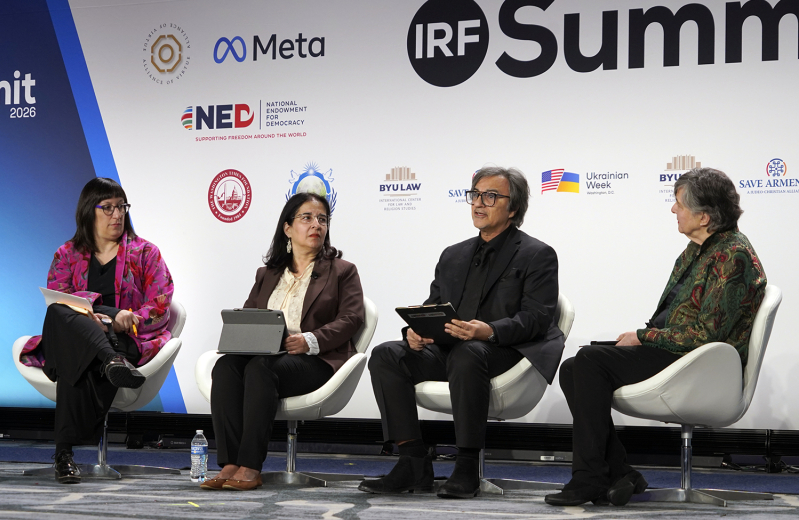
Record numbers of people are displaced by conflict and persecution worldwide, and they continue to face extraordinary obstacles to religious freedom as refugees, advocates told the sixth annual International Religious Freedom Summit this week.
The loss of freedoms that refugees regularly experience includes religious liberty. Turkish-born Nuri Kino, a Swedish investigative journalist and human rights advocate whose family fled to Sweden when he was a toddler, told summit participants on Monday (Feb. 2) of a young man from Iraq who faces persecution as Swedish authorities who detained him in December ruled he could be deported.
A church leader in a small Swedish city on Dec. 14 notified Kino that officials detained the 19-year-old Christian from his high school. The organization Kino founded, A Demand For Action (ADFA), began assisting him.
“Matthias was 9 years old when his father climbed to the roof of their home in Iraq, where families often sleep during the summer, and told them it was time to flee – ISIS [Islamic State] was about to take over their city,” Kino said. “This was of course very dramatic.”
Two years later, the Iraqi family arrived in Sweden and began building a new life, he said.
“Matthias was now one of the top students in his high school aiming to become a doctor, and was loved and respected by his teachers and classmates – and yet today he still sits in the detention center in my country,” Kino said. “Christians in Iraq are considered second-class citizens. Despite having survived crimes against humanity and war crimes, they do not have equal rights under the constitution.”
The European Union Agency for Asylum recently issued new guidelines for asylum seekers, he noted. Those with links to ISIS may be granted protection in the absence of evidence of war crimes, yet Christian asylum seekers from Iraq and Syria are being deported under the same guidelines based on claims that persecution no longer exists, he said.
“Asylum systems should be thoroughly reviewed,” Kino said. “Independent audits are needed to assess to the role of subjective judgment and lack of knowledge in asylum decisions.”
A new system should be implemented in which everyone has the same opportunity to be granted asylum, he told participants.
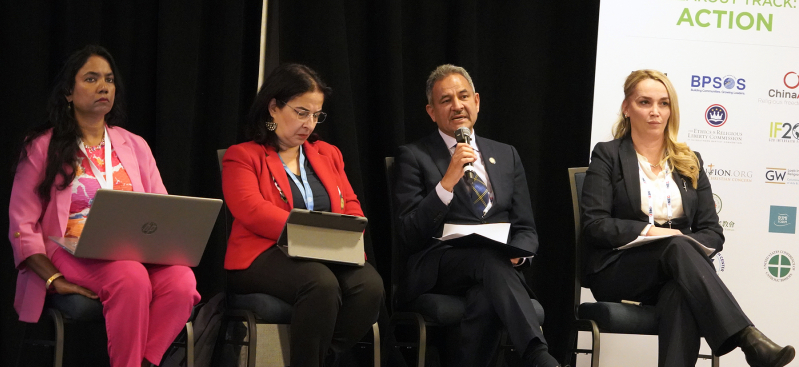
In a panel discussion on the same subject – “Protecting the Persecuted on the Run” – on Tuesday (Feb. 3), U.S. Commission on International Religious Freedom Vice Chair Asif Mahmood said historically the United States has played a leadership role in addressing the growing refugee crisis with the U.S. Refugee Admission Program, but it has been slashed.
“The challenges are very important,” Mahmood said. “At the start of 2025, the [U.S.] administration issued an executive order that suspended the refugee programs pending a review halting the resettlement of all refugees in the pipeline. Many religious minorities from countries such as Afghanistan, Burma and Iran remain in limbo.”
U.S. President Donald Trump lowered the refugee admission ceiling in October, setting the cap for FY 2026 to 7,500, down from 125,000 cap set for FY 2022-2025. The administration’s admission policy prioritizes white Afrikaners allegedly facing discrimination and violence in South Africa.
“This historical low ceiling leaves little room to resettle refugees and severely religious persecuted communities,” Mahmood said. “And today I think is the time when there’s not only a huge challenge for people who are living in persecuted time, but also countries who are accepting them.”
Tens of millions of people are displaced worldwide, he noted.
“We recommended that the United States government prioritize resettlement for refugees fleeing countries with the most egregious forms of religious persecution and maintain a robust annual admission ceiling for the refugees programs,” Mahmood said. “These are the people who really need help, and this is our ethical, moral and our human duty to help them so that they are protected, their children are protected.”
Refugee resettlement grants and contracts that formerly went to various public and private organizations were diverted to the Office of Refugee Resettlement in the Department of Health and Human Services under the Trump administration. The U.S. also has temporarily removed Temporary Protected Status for refugees from various countries, in January including those from Somalia.
“The U.S. had given several nations, because of real danger…the protection status for the Rohingya in Burma, and so many people, Rohingya Muslims, are in huge danger,” Mahmood said. “The Department of Homeland Security can reauthorize their temporary protection status and give them work permits until their country is back in line.”
In negotiations with business contracts with other governments, the United States should include clauses that require religious freedom and other human rights in those countries, he said.
“Religious persecution is on the rise, and has been on the rise for decades, and we have more refugees in the last 10 decades,” Mahmood said. “Our message to the government is definitely to extend the Temporary Protection Status for those people who are in real harm’s way.”
Aid to countries such as Nigeria and Syria, he added, should be predicated on guarantees that Christians can live free of persecution and discrimination.
“When we can protect them there, that flow or influx of refugees will go down,” Mahmood said. “We pass this message every day to members of Congress, the State Department, to anybody who is making decisions or who is in the decision-making position to do that.”
The effort must come not only from the United States, he said
“Recommendations should come from United Nation, from civil society, journalists and other places,” Mahmood said. “The task is very tough; it is doable.”


