
Religious repression in China is no longer limited to demolition and closures as the regime has undertaken more subtle and comprehensive means designed to gradually eradicate faith from the country, according to a new report by advocacy group Christian Solidarity Worldwide (CSW).
“The Chinese Communist Party appears to believe it has moved past the need for open confrontation,” states Chinese columnist Ansel Li in a report released by CSW on Monday (Dec. 1). “The battle is over. Religion has been tamed. Now comes the quiet dismantling – not by fire, but by acid. A slow, confident disintegration. What it seeks is not control of religion, but its absence. To build, in the end, a nation without gods.”
The report outlines legislation that has emerged in the last few years that justifies previous repression – raids, church closures and arrests – while suffocating religion through less visible controls.
“Since the pandemic, the machinery has become more sophisticated,” Li states in the report. “Where once the police and security forces were the blunt instruments of control, now the pressure flows through subtler channels: civil affairs bureaus, education departments, cultural tourism agencies. The crackdown has crept into the capillaries of everyday life.”
The strategy involves redefining belief itself through Sinicization (conforming with Chinese culture and ideology), shrinking physical and online space for religion through pseudo-legal ploys, de-sanctifying religion and cutting youth off from religious language, culture and memory, Li wrote.
“What emerges is not just suppression – it is erasure, calibrated and continuous,” he stated.
President Xi Jinping’s government has codified authoritarian control, with crackdowns often preceding formation of legislation and regulations acting as an administrative siege designed to stifle dissent and subjugate religious expression, the CSW report noted.
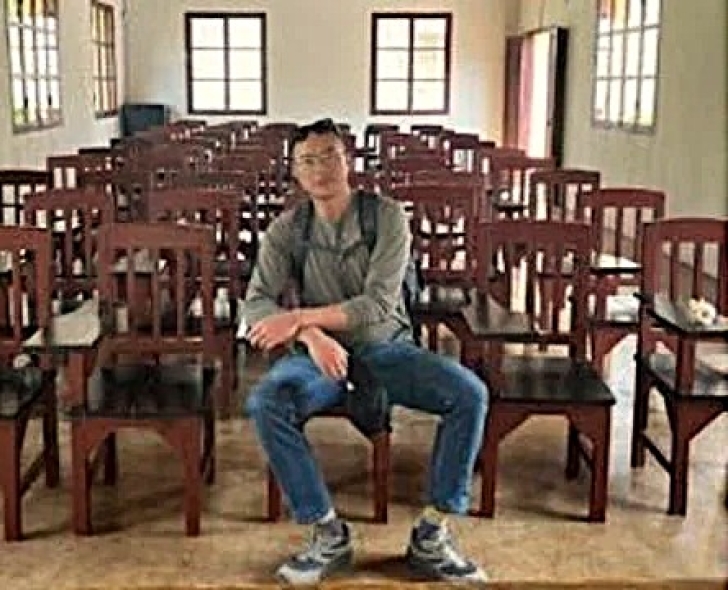
Among other examples, regulations such as Article 41 of the 2023 Measures for the Management of Religious Activity Venues helped imprison Ma Yan of Yinchuan House Church in Ningxia earlier this year, the report noted. The measure prohibits religious activities outside an approved venue.
Ma was arrested on Aug. 9, 2024 by Jinfeng District police during a home Bible study with 10 other Christians. After Ma and another person were administratively detained for 10 days, on Aug. 20, 2024 they were criminally detained for “organizing an illegal gathering.”
Ma was arrested on Sept. 29, 2024, prosecuted on Jan. 27, and his trial began on Feb. 10. He was sentenced to nine months in prison on March 24, though he was released on April 17 due to time served in prior administrative detention.
“The key point in Ma Yan’s case is that he and other Christians were only holding ordinary Bible study meetings and were not disturbing social order, but they were convicted of ‘organizing an illegal gathering,’” the report stated. “This shows that the government has fully included unauthorized religious activities in the category of ‘illegal behavior,’ and that even religious communication may lead to criminal charges.”
Criminalizing private Bible study reflects the Sinicization of Christianity, the report noted.
“As a pilot region for religious Sinicization, Ningxia [a small autonomous region] has in recent years extended its control measures from Islam to Christianity, escalating from administrative regulation to criminal enforcement, in accordance with the directive to ‘strengthen the [Chinese Communist] Party’s leadership over religious affairs,’” the report stated. “As a broader trend, criminal risks are increasing, and the house churches are facing a deepening survival crisis.”
From 2020 to 2025, legal cases involving religious beliefs, activities, groups or venues escalated from individual cases to systematic suppression, involving sensitive areas such as Gansu, Hebei, Ningxia and Tibet, ECLJ noted. The number and geographical distribution of cases also expanded significantly, reflecting the full implementation of the Sinicization of religion, it stated.
“The shift from administrative penalties (such as fines and detention) to criminal convictions (such as for ‘illegally crossing borders,’ ‘illegal gatherings,’ ‘engaging with cults’ and ‘inciting subversion’), and the strengthening of judicial means show the deep penetration of the ideology of the Central Committee into daily life, placing religious activities under a more stringent legal control framework,” the report stated. “The targets of suppression have expanded from minority religions such as Islam and Tibetan Buddhism to include Christian house churches, unregistered Catholic groups and online churches.”
Under the Sept. 15 Internet Religious Information Services Management Measures and the “resistance to infiltration” policy, digital surveillance has become a core tool for the Sinicization of religion, the report stated. Local implementation in regions such as Gansu, Hebei, Ningxia, Tibet and others fits the central government’s mandate of “maintaining national unity, ethnic unity and social stability.”
“The enforcement of religious Sinicization is particularly harsh in ethnic minority and politically sensitive areas, where local policies serve as direct extensions of central directives,” the report stated.
In 2023 every national religious association rolled out its five-year plan for deepening Sinicization. For the government-approved Catholic Patriotic Association, this meant a program to train “dual-proficient” clergy – those trained in both in religious doctrine and Chinese traditional culture.
“In Shanghai, this effort is run jointly by the Catholic Church and Fudan University’s philosophy department,” the report stated. “The stated goal? To ‘raise the political consciousness and cultural literacy’ of priests, nuns and key laypersons. In short: the purpose of studying traditional culture is not spiritual enrichment, but political alignment.”
Both Catholics and Protestants are now subject to “Sinicized theology” – in effect, rewriting and distorting sacred texts, the ECLJ asserted.
“Across the country, churches are fabricating crude fusions of local folk culture with biblical teaching: ‘Theology of the Eight Blessings’ in Fujian (a riff on local fortune traditions), ‘Thanksgiving Theology’ in the northeast, and ‘Reverence Theology’ in Shandong,” the report stated. “These are not developments in theology – they are its disfigurement.”
Additionally, traditional hymns are being replaced by ‘Sinicized sacred music,’ which praises the CCP in religious cadence, the report stated, noting that “wedding and funeral rites now carry state-sanctioned ‘Chinese characteristics.’”
The CCP has striven to make sure the young never hear about religion with “disturbing clarity,” the report observed. Under the pretext of “protecting minors from religious influence,” it has implemented policies that isolate children from their own cultural and spiritual heritage through boarding schools, inland relocation and language erasure.
The government has imposed policies to force children between 6 and 18 years old into a vast network of colonial boarding schools where they are taught exclusively in Mandarin, under tightly controlled, militarized conditions, the report stated.
“The aim is not education, but reprogramming – an environment engineered to erase familial and cultural memory,” it noted.
In inland relocation, children are not only removed from their homes but moved far beyond them. Tibetan students are shipped to “Inland Tibet Classes” in Hebei or Jiangsu, hundreds of miles from their home. Uyghur youth are enrolled in “relocation classes” and sent to faraway high schools.
“The strategy is blunt: remove the soil, and the roots will wither,” the report stated.
Language is central to memory, so in every part of the CCP’s ethnic education system, the use of native languages is banned.
“Classrooms preach a materialist worldview, framing religious belief as a ‘harm to youth development,’” the report stated. “Religion becomes not just alien, but dangerous. If these policies persist, the outcome is not theoretical. In one or two generations, entire cultures – and the faiths they carry – will vanish within China’s borders. Not by dramatic confrontation, but by systematic forgetting. This is not assimilation. It is extinction by design.”








