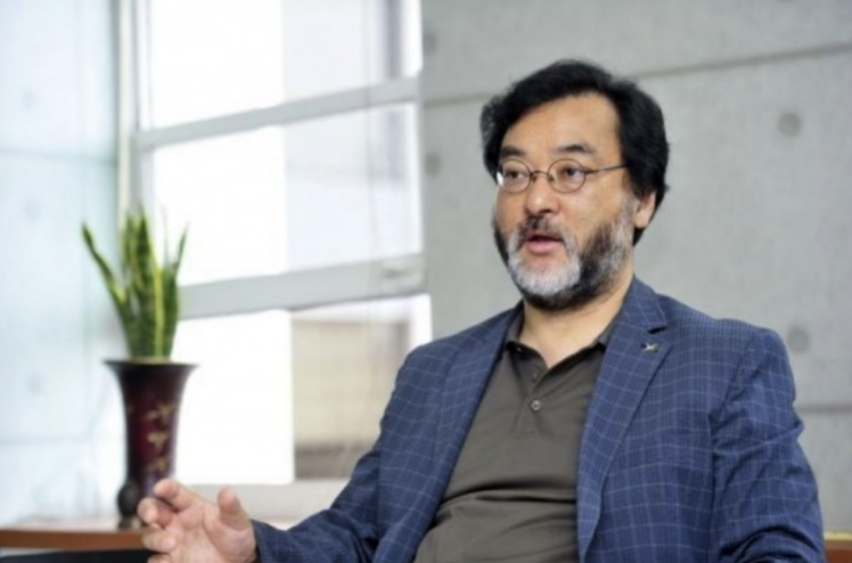
A South Korean futures scholar and church leader is calling on Christians worldwide to treat artificial intelligence as a gospel tool rather than a threat — and to train ordinary believers to use it for cross-cultural mission.
An Jong-bae, chairman of the International Futures Studies Association and co-representative of the Jeju AI World Mission Center, told Christian Daily Korea that the church must move beyond both fear and uncritical acceptance of AI and develop biblically grounded standards for its use.
"AI is ultimately a tool, humans are the subjects, and God is the sovereign," An said. "Whether AI becomes a blessing or a curse for humanity depends not on the technology itself, but on the values and faith of the people who use it."
An's central proposal is what he calls "AI media missionaries" — a vision in which pastors, Sunday school teachers, youth, worship leaders and laypeople alike use AI to produce and distribute gospel content across languages and cultures. He described it as the most urgent task facing the Korean church in the AI era.
"Good gospel content is not created simply by learning how to use AI tools," he said. "Conviction about the gospel, a biblical worldview, sound theology, and an understanding of people and culture are all needed together."
Field mission and digital mission
An told the Korean outlet that AI will not replace traditional field mission but expand it. He envisions a future in which missionaries physically present in a region are complemented by digital outreach that overcomes barriers of language, geography, time and cost.
"The greatest change in the AI era is that more Christians can participate in world mission, transcending barriers of language, region, time, and cost," he said.
Real-time multilingual translation and locally adapted content production, he said, are the areas where AI can most immediately serve mission work. He also pointed to global online discipleship training and mission administration support as areas of growing potential.
But An stressed that human oversight remains non-negotiable. "AI can transfer language, but it does not perfectly understand culture and emotion. Multilingual content must always be reviewed by local language specialists and church leaders."
Limits on AI in ministry
On the growing use of AI in sermon preparation and Bible study, An drew a clear line. AI should function as a research assistant — helping with historical and cultural background, original language comparison, compiling illustrations and statistics, producing Bible study materials, multilingual translation, church administration and gospel video production — but must not substitute for preaching, pastoral care or spiritual discernment.
"AI should be used as a professional assistant that helps with preparation and research — not as a substitute for preaching, Bible study, pastoral ministry, or mission," he said.
He warned against a growing dependency that could erode pastoral integrity. "If the habit of using AI-written sermons or prayers without sufficient meditation and verification becomes normalized, a pastor's spirituality, creativity, and accountability can be weakened."
He argued that well-used AI should free up pastors for what matters most, not crowd it out. "The time saved through AI should be devoted more to meditation on the Word, prayer, fellowship with God, caring for congregants, and discipleship training."
'The standard is love, not efficiency'
An outlined a set of principles he believes should govern Christian engagement with AI: acknowledging God's sovereignty, protecting human dignity, prioritizing Holy Spirit guidance and human responsibility, centering use on gospel and love, and maintaining truthfulness and accountability.
"In Christianity, the standard for AI use must not simply be 'Is it technically possible?' or 'How fast and efficient is it?'" he said. "We must first ask: 'Is it in accordance with God's will?', 'Does it uphold human dignity?', 'Does it spread the gospel and love?'"
He was equally direct about what AI must never become. He said it must not be used in ways that harm human life or expand surveillance, control, discrimination, hatred, falsehood or greed. The guiding question, he argued, should not be "what is possible?" but "what is right, what is beneficial to humans, and what is in accordance with God's will?"
He described the ultimate measure as "not efficiency, but love; not success, but God's glory."
What AI cannot do
As AI reaches the point of providing answers at near-human levels, An said questions about the essence of ministry and mission are sharpening — and the answers point to what no technology can replicate.
"AI can explain information about the Bible and provide counseling-like answers. But AI cannot worship God, cannot repent in faith, and cannot receive the Holy Spirit's guidance to fulfill a calling," he said.
He told Christian Daily Korea that the core of ministry lies not in the transfer of knowledge but in love for souls and relationship. AI can compose comfort, he said, but it cannot sit beside someone in suffering, weep with them and hold their hand. It can write a prayer, but it cannot hold a soul in its heart and intercede through the night.
He argued that this reality makes the character and spirituality of pastors and missionaries more important, not less, in the AI era. "What only humans can do in the AI era is build a spiritual and personal relationship with God, discern the leading of the Holy Spirit, share in the pain of the congregation, and build up the church community."
A call for the Korean church to lead
An called on the Korean church to play a directing role in the AI era rather than a reactive one. He framed this in terms of what he called "AI humanism" — the conviction that AI must be developed and used in ways that elevate human dignity, freedom, creativity, responsibility and the common good.
"AI is the means, humans are the subjects, and human happiness and the common good must be the purpose," he said.
He urged the Korean church to move beyond declarations and apply ethical principles in actual education and ministry — building a gospel content production ecosystem that includes not only clergy and missionaries but youth, media professionals, cultural artists and laypeople across generations.
"The Korean church must not be a community that refuses or merely follows AI technology, but one that sets the direction — serving as salt and light — so that AI technology serves humanity, life, and the common good," he told the Korean outlet.
Citing Martin Luther's use of the printing press to distribute the Bible, An argued that today's church faces a comparable technological moment — and a comparable opportunity.
"Using AI, even an ordinary Christian can participate in world mission," he said. "A gospel song made by one person can be translated into multiple languages and sung around the world; a short mission video made by one person can cross borders and bring someone to their first encounter with the gospel."
"AI is ultimately a tool, humans are the subjects, and God is the sovereign," he concluded. "I hope the Korean church and all Christians will, grounded in a biblical worldview and Christian AI ethics, make good use of AI to fulfill the calling of sharing gospel- and love-filled content with the world."