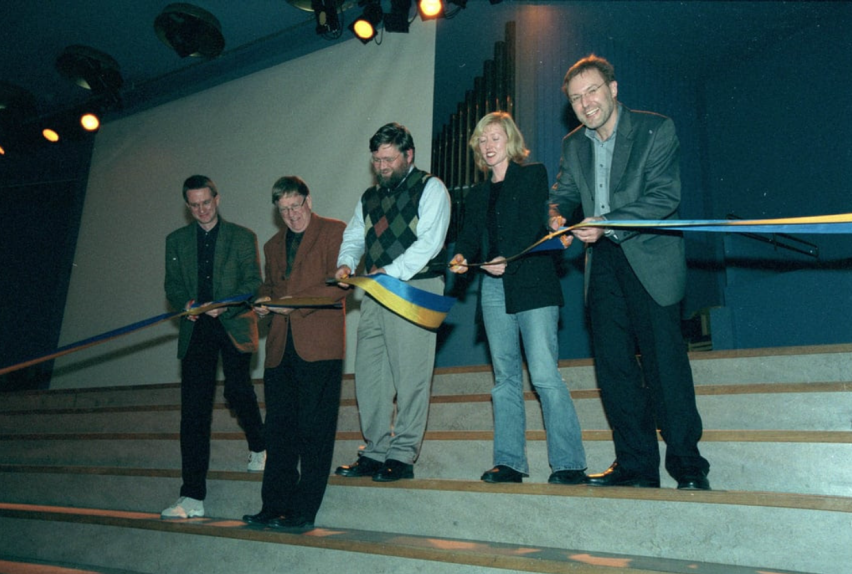
The Swedish Evangelical Alliance recently marked its 25th anniversary. Its leader says the alliance will keep bearing biblical witness to Christ as so-called progressive theology spreads, including in many of the country’s free churches.
Olof Edsinger, general secretary of the Swedish Evangelical Alliance, told Christian Daily International that the alliance speaks for classical Christianity in the media.
“We are an important voice for classical Christian faith in both Christian and secular media, with almost one new article published every week,” Edsinger said.
“Through this, we have an important role in encouraging our grass roots — not least in a time when progressive theology is spreading also in many free churches.”
The alliance (Svenska Evangeliska Alliansen) aims to be a voice in the public sphere and to build relationships between Christians from different churches. It also develops resources on issues such as debates over science and faith, sexuality, and the relationship between Christianity and Islam.
Edsinger said the Swedish group, like all Nordic evangelical alliances, has strong links with the World Evangelical Alliance, the European Evangelical Alliance and the Lausanne Movement.
The modern alliance was launched Oct. 26, 2001, when evangelicals gathered at Filadelfia Church in Stockholm. Its first regular board included Anders Blåberg, Olof Djurfeldt, Carl-Olof Hultby, Stefan Gustavsson and Hans Weichbrodt.
The first Swedish Evangelical Alliance was formed in 1853. Edsinger said it went through different seasons but struggled to unite because of differences between denominations that proved difficult to overcome.
The modern alliance grew out of the Swedish Lausanne Committee, which by the end of the 1990s had lost much of its direction and momentum, he said.
From the start, the alliance took on an apologetics profile under its first chairman and general secretary, apologist Stefan Gustavsson.
“Two important frontlines to address already from the start were the secularization of Western Christianity and the critique from the so-called new atheists,” Edsinger recalled. “We also made a strong impact in the late 2000s when we campaigned against the political agenda to make Swedish marriage law gender neutral. Unfortunately, we lost this battle, and quite soon the whole issue moved into the church instead!”
In recent years, the alliance has stepped up its work in international missions. It started a mission alliance that now includes 20 organizations.
“We have also worked intentionally to build relationships with the international churches in Sweden,” he said.
“Looking ahead, we hope to keep playing a role in building alliances between evangelical Christians, with the Lausanne Covenant as an important common foundation,” Edsinger said.
He said the alliance plans to “make something more substantial” around the 2,000th anniversaries of the start of Jesus’ ministry in 2030 and of his death and resurrection in 2033.