Evangelical free churches in Switzerland contribute social services worth hundreds of millions of francs each year, supported by tens of thousands of volunteers, according to findings cited in an interview published by the Swiss evangelical outlet Livenet.ch.
The report, based on earlier research referenced by Peter Schneeberger, president of the umbrella group Freikirchen.ch, estimates that around 45,000 volunteers connected to free churches provide roughly 11.7 million hours of service annually. Calculated at an estimated rate of 50 Swiss francs ($55) per hour, that work would equate to about 500 million francs ($550 million) in value.
In Switzerland, the term “free churches” generally refers to evangelical congregations that operate independently of the state and are not part of the country’s church tax system, unlike the Roman Catholic Church and the Swiss Reformed Church, which are officially recognized in many cantons.
The interview, published in the context of the United Nations’ designation of 2026 as the Year of Volunteers, points to a broader role played by churches outside state-recognized denominations in Switzerland’s social landscape. Nationwide, volunteer work across all sectors totals about 590 million hours per year.
Schneeberger told Livenet.ch that although the original study dates back to the COVID-19 period and has not been formally updated, the underlying data continues to offer insight into the scale of church-based engagement. “We assumed that 45,000 volunteers were engaged,” he said, outlining the calculation behind the estimated economic value.
Perceptions of free churches appear to be shifting, according to a 2024 survey conducted by GFS Bern. The proportion of respondents who associated free churches with efforts to combat poverty, hunger and support the common good rose from 26% in 2016 to 31% in 2024.
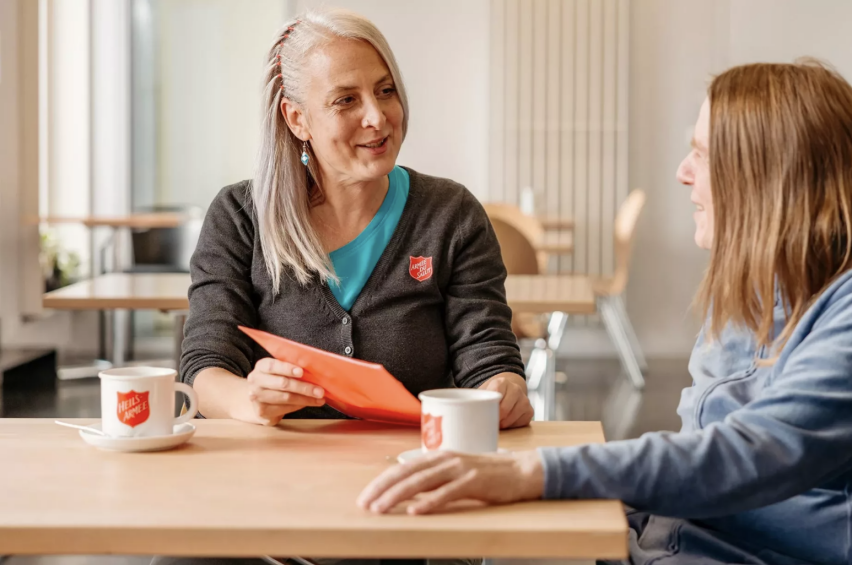
Schneeberger attributed that change in part to direct experience, saying more people are encountering social services run by church members. He also pointed to reporting by the Salvation Army, which tracks volunteer activity and recorded fluctuating but overall rising levels of engagement between 2022 and 2024.
Examples of such work include food distribution programs like “Tischlein-deck-dich”, a secular initiative often operated locally by church volunteers, as well as clothing distribution and other aid projects organized by congregations.
Youth ministries also form a significant part of this engagement. The Swiss Evangelical Youth Association, known as BESJ, reports that between 30% and 35% of participants in its programs have no church background, while sports initiatives such as floorball attract more than half their participants from outside church communities.
International aid efforts are also supported through church networks. The Aktion Weihnachtspäckli (a Christmas presents initiative) distributed about 115,000 packages last year to countries including Ukraine and Moldova, with volunteers in Switzerland collecting and preparing parcels outside major retail stores and transporting them east.
The interview identifies several key demographic groups served by these activities, including families, older adults and those experiencing social isolation. Schneeberger noted that Switzerland’s aging population has increased demand for volunteer support, with many older church members involved in visiting care homes or delivering meals.
He also pointed to loneliness as a growing concern in Swiss society, particularly as single-person households increase. Community meals and similar initiatives, he said, can offer one way to address that need.
At the policy level, the contribution of non-recognized religious groups—including free churches—has gained some official attention. A report by the canton of Zurich covering 2019 to 2023 examined their social impact, and authorities have since opened funding applications to such groups. According to Schneeberger, this has led to the distribution of significant public funds, reflecting recognition of their role.
At the same time, tensions remain in other areas of government interaction. Schneeberger said tax authorities are increasingly classifying free churches primarily as religious bodies rather than charitable organizations, which can limit access to tax-deductible donations. A meeting with Switzerland’s Federal Tax Administration is planned to address the issue.
Despite these challenges, cooperation with authorities is generally described as positive, particularly at the national level. In the canton of Bern, for example, a government-appointed official for religious affairs convenes discussions that include non-recognized religious groups.
Looking ahead, church leaders are preparing new initiatives aimed at expanding their social engagement. A movement called “Kirche für andere” (“Church for Others”) is expected to launch next year, bringing together 10 church associations. The initiative draws on the “Five Marks of Mission,” a framework used in various Christian traditions to guide outreach and service.
Schneeberger said the effort reflects a growing desire among congregations to engage more directly with people outside church communities.