
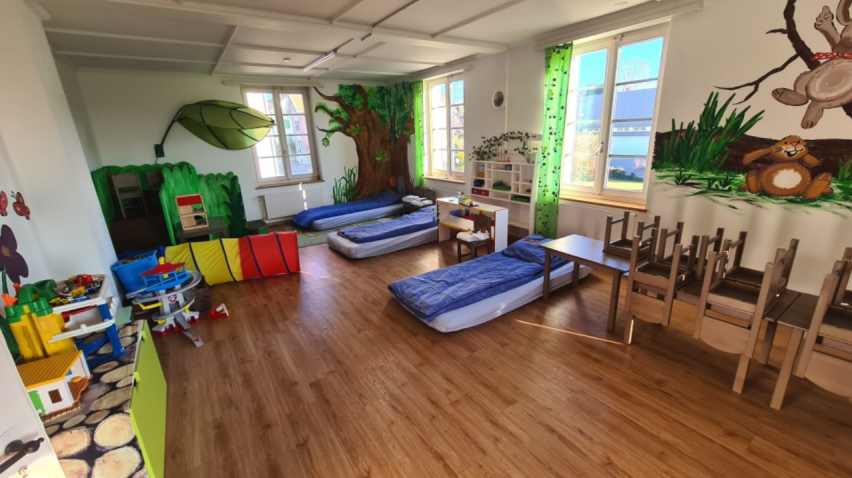
A new report by the Swiss Federal Council has found that privately hosting Ukrainian refugees has had a generally positive effect on their integration, affirming the role played by churches and faith-based networks in supporting displaced people since the start of the war in Ukraine.
The report, adopted April 1, concludes that refugees who stayed with host families were better able to navigate daily life in Switzerland and showed positive trends in social, linguistic, cultural and professional integration. While these outcomes are not considered conclusively proven, the findings point to the value of close personal contact between refugees and local communities.
The Swiss Evangelical Alliance (SEA) welcomed the report, noting that many of the early efforts to house and support Ukrainian refugees were led or supported by churches within its network.
In a statement released April 7, the SEA highlighted that private accommodation initiatives—such as the kirchen-helfen.ch platform—enabled more than 1,000 Ukrainian refugees to find housing with individuals and families across Switzerland. The network, which collaborates with around 100 local churches, also reported additional capacity for further placements during the early phase of the crisis.
“When many people opened their doors and offered private accommodation, this has now proven to be valuable,” the SEA said, referencing the Federal Council’s findings. It added that such efforts helped refugees manage everyday life and contributed to integration across multiple areas.
The government report also suggests that private hosting arrangements may strengthen public acceptance of refugees and contribute to social cohesion. However, it notes that the financial impact remains unclear, as potential savings from faster workforce integration may be offset by the costs of recruiting and supporting host families.
The Federal Council has invited Switzerland’s cantonal authorities to consider expanding private accommodation as a complementary approach in future crises and encouraged further measures to strengthen civil society engagement in refugee integration.
The findings build on extensive grassroots efforts that began shortly after Russia’s full-scale invasion of Ukraine in 2022. At the time, the SEA’s humanitarian task force coordinated support for refugees both within Switzerland and in neighboring countries.
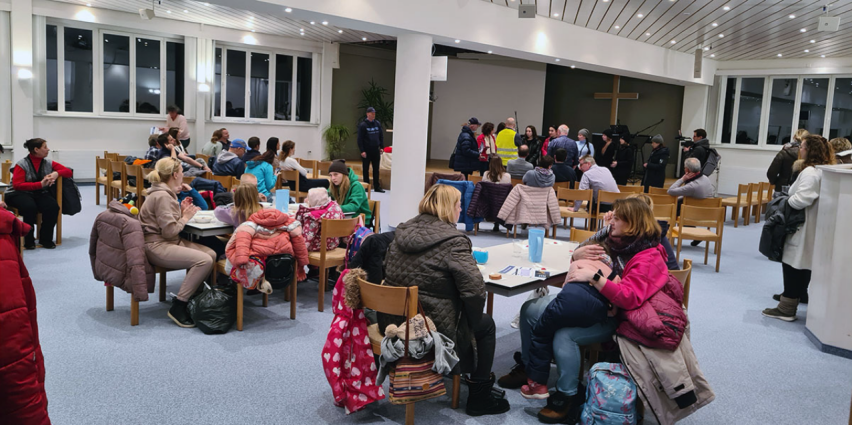
According to earlier reporting by the alliance, around 30,000 Ukrainian refugees were registered in Switzerland in the early months of the war. In addition to private hosting initiatives, Christian organizations—including partners working through SEA-RES—delivered approximately 100 truckloads of humanitarian aid, totaling an estimated 700 tons, into Ukraine.
Church networks also mobilized training and support for volunteers and host families, including guidance on assisting individuals affected by trauma. Resources were developed in cooperation with partners such as the European Evangelical Alliance, which provided expertise on refugee care and protection, particularly for women and children vulnerable to exploitation.
Humanitarian groups such as World Vision also contributed by establishing child-friendly spaces in refugee reception centers, offering safe environments for children affected by displacement.
The SEA said the Federal Council’s report represents recognition of the “selfless” efforts of church members and volunteers who responded rapidly to the crisis and continue to accompany refugees in Switzerland.
The State Secretariat for Migration is expected to work with civil society partners to explore how such engagement can be further strengthened, as Switzerland considers longer-term approaches to refugee integration.








