Two church leaders abducted in Sudan’s Nuba Mountains have been released, local sources said.
The Rev. Yaqob Ibrahim Tia and Zakaria Suliman Jana, both prominent leaders of a Sudanese Church of Christ (SCOC) congregation in Heiban, South Kordofan state, were freed on July 28 and Aug. 1 respectively, area Christians said.
Without revealing the motives of the abductions or the terms of their release, the sources said break-away members of the rebel Sudan People’s Liberation Army-North (SPLA-N) were responsible for the kidnappings.
Pastor Tia was released along with his family members – two sons, ages 17 and 20, a 15-year-old nephew and Daniel Ibrahim Tia, brother of Catholic priest Fadi Ibrahim Tia. Fadi Ibrahim Tia is also the brother of Pastor Yaqob Ibrahim Tia.
Pastor Jana was abducted the morning of July 31, following the abduction of Pastor Yaqob Ibrahim Tia on July 23.
Pastor Yoqob Ibrahim Tia, accompanied by fellow church leaders from Heiban, expressed deep joy and gratitude and spoke out strongly against the ongoing fighting in Heiban among the SPLA-N factions. He and his family members and others were freed after a hand-over meeting attended by local church leaders.
“The conflict that is taking place in our area is something that does not benefit everybody,” Rev. Tia told the gathering of church leaders.
He urged political leaders to denounce violence and bring peace. The government of Sudan is believed to play a part in creating the conflict.
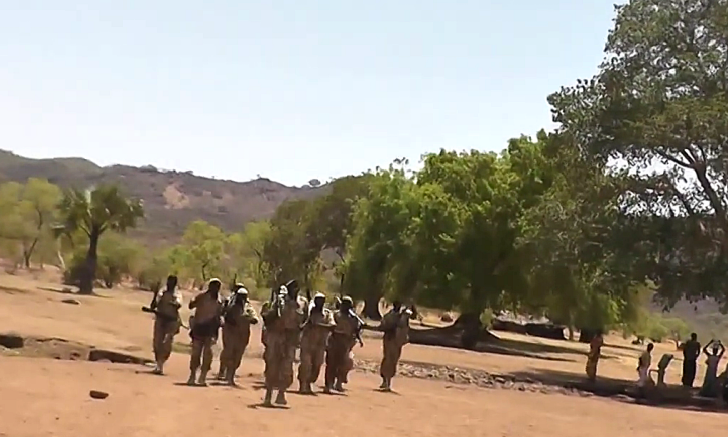
The abductions appear to be part of a surge of attacks on church leaders in the troubled region. Although, the SPLA-N-controlled area is a closed to media, word has leaked out that the conflict has already displaced hundreds of people, the majority of whom are women, children and the elderly.
On July 24 break-away SPLA-N militia shot and killed Episcopal Pastor Adel Idris Jongool in the Dabi administrative Unit of Heiban District. The attacks on Christians amid the armed conflict between SPLA-N, break-away groups and other forces follow the killing on June 19 of a Catholic priest and one of his guards in Holy Cross parish in Kauda, South Kordofan by the same break-away militants. Another guard also was shot, survived and received hospital treatment.
The Nuba Mountains, an SPLA-N stronghold long battling Khartoum, has remained largely outside the military conflict that broke out in Sudan in April 2023, but a new frontline emerged there after the SPLA-N joined forces with the paramilitary Rapid Support Forces (RSF) against the Sudanese Armed Forces (SAF). Armed factions in the Nuba Mountains have emerged that are fighting the SPLA-N, resulting in killing and displacement of civilians.
Both the RSF and the SAF are Islamist forces that have attacked displaced Christians on accusations of supporting the other’s combatants.
Sudan is 93 percent Muslim, with adherents of ethnic traditional religion 4.3 percent of the population, while Christians constitute 2.3 percent, according to Joshua Project.
The conflict between the RSF and the SAF, which had shared military rule in Sudan following an October 2021 coup, has terrorized civilians in Khartoum and elsewhere, killing tens of thousands and displacing more than 12 million people within and beyond Sudan’ borders, according to the U.N. Commissioner for Human Rights (UNCHR).
The SAF’s Gen. Abdelfattah al-Burhan and his then-vice president, RSF leader Mohamed Hamdan Dagalo, were in power when civilian parties in March 2023 agreed on a framework to re-establish a democratic transition the next month, but disagreements over military structure torpedoed final approval.
Burhan sought to place the RSF – a paramilitary outfit with roots in the Janjaweed militias that had helped former strongman Omar al-Bashir put down rebels – under the regular army’s control within two years, while Dagolo would accept integration within nothing fewer than 10 years.
Both military leaders have Islamist backgrounds while trying to portray themselves to the international community as pro-democracy advocates of religious freedom.
Sudan was ranked No. 4 among the 50 countries where it is most difficult to be a Christian in Open Doors’ 2026 World Watch List (WWL). Sudan had dropped out of the top 10 of the WWL list for the first time in six years when it first ranked No. 13 in 2021.
Following two years of advances in religious freedom in Sudan after the end of the Islamist dictatorship under Bashir in 2019, the specter of state-sponsored persecution returned with the military coup of Oct. 25, 2021. After Bashir was ousted from 30 years of power in April 2019, the transitional civilian-military government had managed to undo some sharia (Islamic law) provisions. It outlawed the labeling of any religious group “infidels” and thus effectively rescinded apostasy laws that made leaving Islam punishable by death.
With the Oct. 25, 2021 coup, Christians in Sudan feared the return of the most repressive and harsh aspects of Islamic law.
The U.S. State Department in 2019 removed Sudan from the list of Countries of Particular Concern (CPC) that engage in or tolerate “systematic, ongoing and egregious violations of religious freedom” and upgraded it to a watch list. Sudan had previously been designated as a CPC from 1999 to 2018.
In December 2020, the State Department removed Sudan from its Special Watch List.