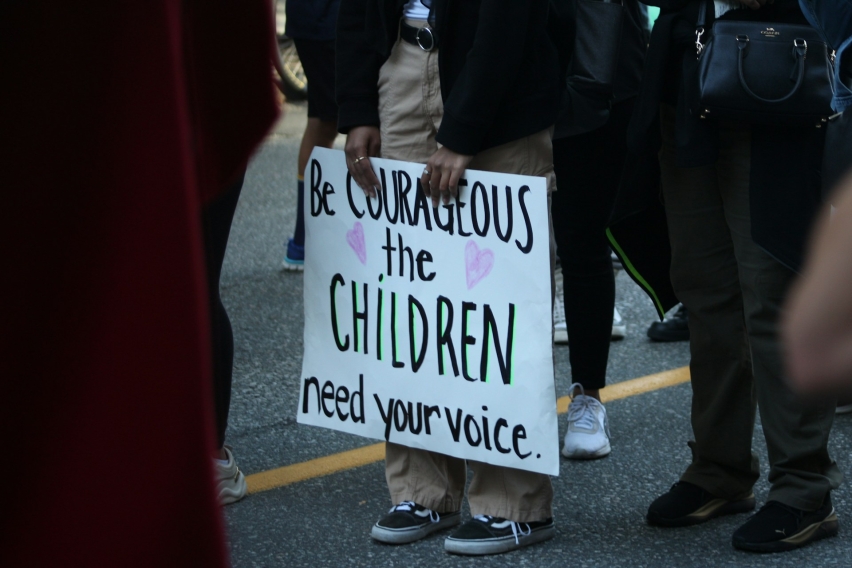
Opposition is mounting against a new puberty blockers trial for children in the U.K., with both evangelical groups and LGB advocacy organizations expressing opposition for different reasons.
Children as young as 10 will be subject to a “puberty blocker” experiment announced by King’s College London (KCL) on Nov. 22, 2025.
In its announcement for the “Pathways Trial” for puberty suppression—likely involving 226 young people over three years—and “Pathways Connect” for brain health—likely involving 250 participants—KCL stated that the two new research studies were launched “to provide better evidence to support the needs of young people with gender incongruence.”
The studies form part of the larger Puberty Suppression and Transitional Healthcare with Adaptive Youth Services (PATHWAYS) program.
“All young people attending NHS Children and Young People’s Gender Services receive a comprehensive package of assessment and support which can include a mix of pediatrics, psychological therapies, occupational therapy, communication interventions, family and school support,” said Professor Emily Simonoff, professor of child and adolescent psychiatry at the Institute of Psychiatry, Psychology & Neuroscience and chief investigator of the study.
“We are already evaluating young people’s experiences of these services in the world’s largest observational study of its kind, called PATHWAYS HORIZON,” she added.
The trial follows emergency measures taken by U.K. Health Secretary Wes Streeting in December 2024, banning puberty-suppressing hormones for children under 18 on an “indefinite” basis following medical advice, as previously reported by Christian Daily International.
At the time, the Department of Health and Social Care confirmed that both the sale and supply of puberty blockers via private prescriptions to treat gender dysphoria and/or gender incongruence for minors not already receiving them was no longer permitted.
However, National Health Service (NHS) patients already receiving the medications as treatment for gender incongruence or dysphoria are allowed to continue.
The ban followed consultation and safety advice from the independent Commission on Human Medicines and the Cass Review.
Legal challenge launched
A legal challenge against the trial has now been launched by advocates against the two primary regulatory bodies responsible for overseeing medical research in the U.K.: the Medicines and Healthcare products Regulatory Agency (MHRA) and the Health Research Authority (HRA).
The legal case, announced Friday (Feb. 6), includes Keira Bell, a prominent detransitioner who was the lead claimant in the 2020 judicial review against the Tavistock clinic, and James Esses, a psychotherapist and writer who founded the group Thoughtful Therapists.
Esses, a former criminal barrister, has campaigned for “exploratory” rather than “affirmation-only” therapy for children with gender dysphoria. He also launched a parliamentary petition to cancel the trial, which has received more than 140,000 signatures. The U.K. Parliament’s Petitions Committee has confirmed the petition will be debated on March 9, 2026.
Bayswater Support Group, which represents approximately 800 parents of children and young adults who identify as transgender or nonbinary, has also joined the legal challenge. The group has raised concerns that the trial fails to safeguard children’s rights and safety, particularly regarding future fertility risks and the “medicalization” of young people.
Advocacy groups raise ethical concerns
Sex Matters, a U.K.-based human rights charity that campaigns for “clarity on sex in law, policy, and language,” criticized the government’s response to the petition in an email to supporters on Feb. 6.
Maya Forstater, CEO and co-founder of the charity, said the government had defended what she described as an “unethical medical experiment on vulnerable children.”
“It also shifted responsibility onto the ethics committee that approved the trial, saying the U.K. has an ‘extremely high’ bar for clinical trials,” she said.
Forstater also criticized the ethical review process, citing a previous article she wrote for The Critic magazine.
“The minutes from the meetings are shocking. A small group of volunteers met by Zoom for a few hours. They barely discussed the underlying motive for stopping children’s physical, sexual, and mental development,” she wrote.
She further argued that the trial presents puberty blockers as a stand-alone treatment to improve short-term mental well-being, rather than as a first step toward hormones and irreversible medical interventions.
“No one has asked whether these children and their parents can give informed consent to starting this medical pathway when the researchers do not acknowledge that is what they are doing,” Forstater said. “There needs to be legal, political, and public scrutiny.”
Sex Matters is joining with gay rights group LGB Alliance and the Women’s Rights Network for a lobby day outside the Houses of Parliament in London at 1 p.m. on March 10 to express concerns about the trial.
Evangelical response
Meanwhile, Mark Gilmore, policy adviser at the U.K. Evangelical Alliance, addressed the issue in a Jan. 21 article titled, “Caution Is Not Cruelty: What Is Compassion in the Puberty Blockers Debate?”
“While presented as a way to strengthen the evidence base, the trial raises serious ethical concerns, asking children to bear potentially lifelong consequences and prioritizing medical intervention over alternative forms of care,” Gilmore wrote.
“As Christians, we cannot afford to separate truth and grace in our response.”
Gilmore emphasized that compassion must remain centered on the child.
“Children who struggle with their gender identity are not problems to be solved; they are gifts to be loved,” he wrote. “The welfare of the children we are discussing should be our focus — not winning arguments.”
He clarified that his critique was not opposition to all pediatric drug trials, particularly in cases of life-threatening illness.
“Gender dysphoria, however, is neither terminal nor life-threatening in itself,” Gilmore wrote. “Any ethical trial involving children must carefully weigh risk, the child’s capacity to consent, and whether the existing evidence base justifies exposing children to harm.”
Gilmore argued that the trial fails on several ethical grounds, including physical risks, the impossibility of meaningful consent, and flaws in scientific design. He contended that puberty blockers often lead to irreversible harm, including permanent infertility, and function as a “medical pathway with no off-ramp,” citing detransitioners such as Keira Bell.
He also criticized the trial’s methodology for lacking a true control group and for failing to adequately compare medical intervention with nonmedical psychological support.
“Christian compassion does not mean avoiding hard questions,” Gilmore wrote. “It means asking them with humility, resisting caricature, and keeping the welfare of the child firmly in view.”
“The Cass Review has reopened an essential question: what genuinely helps children with gender dysphoria to flourish? Our task is to protect children, tell the truth about the evidence, and offer compassion that is real rather than performative.”
He concluded by citing Matthew 18:6: “If anyone causes one of these little ones who believe in me to stumble, it would be better for them to have a large millstone hung around their neck.”
“They remind us that justice and compassion are not opposites,” Gilmore wrote. “Especially when it comes to children, they must belong together.”