“When a foreigner resides among you in your land, do not mistreat them” (Leviticus 19:33).
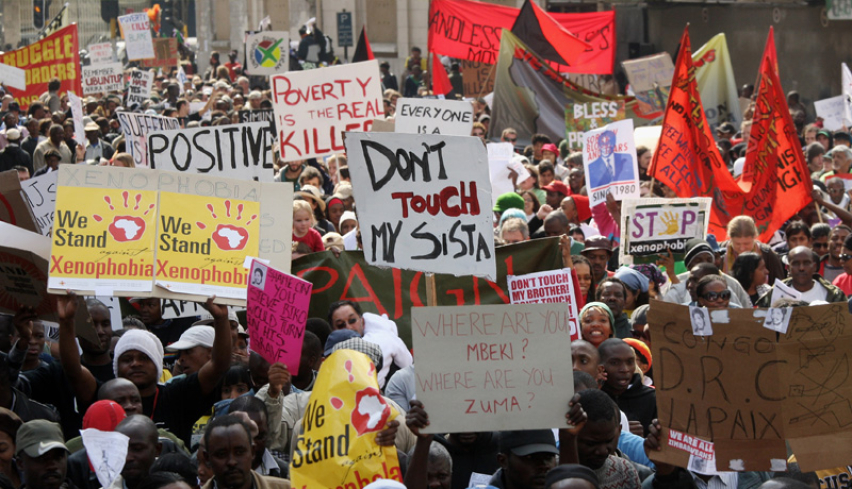
This scriptural injunction speaks with clarity and urgency into the life of any society that hosts strangers within its borders. In South Africa today, these ancient words confront a present crisis: the persistent reality of xenophobia.
A tension between economic pressure, governance challenges, and moral responsibility.
Episodes of violence, exclusion, and suspicion directed at foreign nationals reveal a tension between economic pressure, governance challenges, and moral responsibility. Politicians capitalizing and leveraging the issue for votes.
For Christians, the question is not merely political or economic, but deeply spiritual. What does it mean to treat others in a Christ-like manner in such a context?
The current reality: a nation under strain
Migration... becomes a flashpoint.
South Africa’s socio-economic challenges are well documented: high unemployment, inequality, crime, corruption, and limited resources place enormous strain on communities. Many citizens experience daily hardship, struggling for access to jobs, housing, and basic services. Into this fragile environment, migration (both documented and undocumented) becomes a flashpoint.
Foreign nationals are often perceived as competitors for scarce resources, leading to resentment and, at times, violent response from actors on both sides of the issue. At the time of writing, one of the protest groups, March and March, gave undocumented migrants to leave South Africa by 30 June. Sadly, one of its leaders, Andile Mvuyelwa Somgxada, was shot outside his home on July 4 and subsequently died.
Anger, when directed at vulnerable outsiders, erodes the moral fabric of society.
Compounding the issue are concerns about porous borders and administrative inefficiencies in government systems. Many citizens feel that immigration policies are inconsistently enforced, contributing to frustration and mistrust. Yet the resulting anger, when directed at vulnerable outsiders, erodes the moral fabric of society. Violence against foreigners cannot be justified as a solution; rather, it deepens division and fuels cycles of fear.
uBhuntu, “I am because we are”.
This is where the African philosophy of uBhuntu, “I am because we are”, is both challenged and needed. Xenophobia, the fear and hatred with deep seated prejudice against foreigners, contradicts this foundational value, which emphasizes shared humanity, dignity, and interdependence.
A biblical vision of hospitality
Scripture consistently calls God’s people to extend compassion to the stranger. Beyond Leviticus, we read: “Do not forget to show hospitality to strangers” (Hebrews 13:2), and “The foreigner residing among you must be treated as your native-born. Love them as yourself” (Leviticus 19:34). Jesus Himself embodies this ethic, crossing social and cultural boundaries, welcoming those marginalized by society.
Christ was once a refugee.
The gospel narrative reminds us that Christ was once a refugee (Matthew 2:13–15), and that our ultimate identity as believers is as “strangers and pilgrims on the earth” (Hebrews 11:13). This theological truth reshapes how we view others: not as threats, but as neighbors created in God’s image.
To imitate Christ, therefore, is to reject hatred and embrace reconciliation. It is to see beyond nationality or legal status and recognize God’s imprint on every person.
Legitimate concerns, faithful responses
Acknowledging Christ’s call to love does not deny the real concerns facing South Africans. Issues of border control, resource allocation, and law enforcement are legitimate and must be addressed responsibly. Governments bear the mandate to maintain order and justice (Romans 13:1–4), and effective immigration systems are part of that duty.
The Christian response... must reflect justice and mercy.
However, the Christian response insists that the means of addressing these concerns must reflect justice and mercy. Violence, scapegoating, and discrimination are inconsistent with both the gospel and constitutional values. Faithfulness requires holding two truths in tension: the need for good governance and the call to radical compassion.
The role of the Church
The Church has a unique and prophetic role in this crisis. As a community formed by the Spirit, it must model the kingdom of God—a place where divisions are overcome in Christ (Galatians 3:28).
- Teaching and Formation
Churches must intentionally teach biblical perspectives on hospitality, dignity, and justice. Preaching and discipleship should challenge prejudices and cultivate Christ-like attitudes toward foreigners. - Practical Care
Congregations can serve as places of refuge and support, offering assistance to migrants through food programs, legal aid partnerships, and community integration initiatives. - Peacemaking
The church is called to be a reconciler. By facilitating dialogue between local and migrant communities, it can help reduce fear and build trust. - Advocacy
While remaining non-partisan, churches can advocate for policies that uphold human dignity and fairness, holding authorities accountable to just governance.
The responsibility of government
Government plays a crucial role in addressing the structural roots of xenophobia. Effective immigration management, clear policies, and efficient documentation systems can reduce uncertainty and tension. Strengthening border control and improving administrative capacity are necessary steps.
Leadership that affirms human dignity can shape national attitudes.
At the same time, government must ensure that law enforcement protects all people within its borders, regardless of nationality. Swift action against xenophobic violence and public messaging that promotes unity are essential. Leadership that affirms human dignity can shape national attitudes.
Collaboration with faith-based organizations and civil society can also enhance community-level responses, ensuring that solutions are both practical and humane.
Society at large: reclaiming uBhuntu
Education and storytelling that highlight the positive contributions of migrants can help counter these narratives.
The broader society (families, schools, media, and businesses) must also participate in reshaping the narrative. Xenophobia often thrives on misinformation and stereotypes. Education and storytelling that highlights the positive contributions of migrants can help counter these narratives.
Communities can take small but meaningful steps: fostering relationships across cultural lines, addressing grievances through dialogue, and rejecting rhetoric that dehumanizes others. Reclaiming uBhuntu requires intentional effort to see one another as interconnected.
A shared path forward
Efforts must converge around shared values.
Addressing xenophobia in South Africa requires collaboration across sectors. The church, government, and society each have distinct roles, but their efforts must converge around shared values: justice, dignity, and compassion.
- Joint initiatives could include community forums, awareness campaigns, and service projects that bring citizens and migrants together.
- Policy and practice must align, ensuring that laws are both effective and humane.
- Spiritual renewal is equally vital, as hearts transformed by Christ are the foundation of lasting change.
Conclusion: becoming a people of welcome
In a world marked by division, the church is called to be a sign of God’s inclusive love. Leviticus 19:33 is not merely an ancient command, it is a living word that challenges us today. To follow Christ is to resist fear, reject violence, and embody compassion.
The nation can move toward a future where strangers are welcomed.
South Africa’s journey toward justice and unity is not simple, but it is possible. By drawing on both biblical truth and the rich heritage of uBhuntu, the nation can move toward a future where strangers are welcomed, not feared; where differences are celebrated, not punished; and where the dignity of every person is upheld.
May the church lead the way, bearing witness to a kingdom in which all are seen, all are valued, and all are loved.
Ndaba Mazabani is an Associate Pastor of Rosebank Union Church and is a Council member of The Gospel Coalition Africa. He is the past Chair of the International Council of the World Evangelical Alliance and is currently a PhD candidate with the Zinzendorf School of Doctoral Studies at Olivet University, California. Ndaba is married to Maggie and they are blessed with grown children.