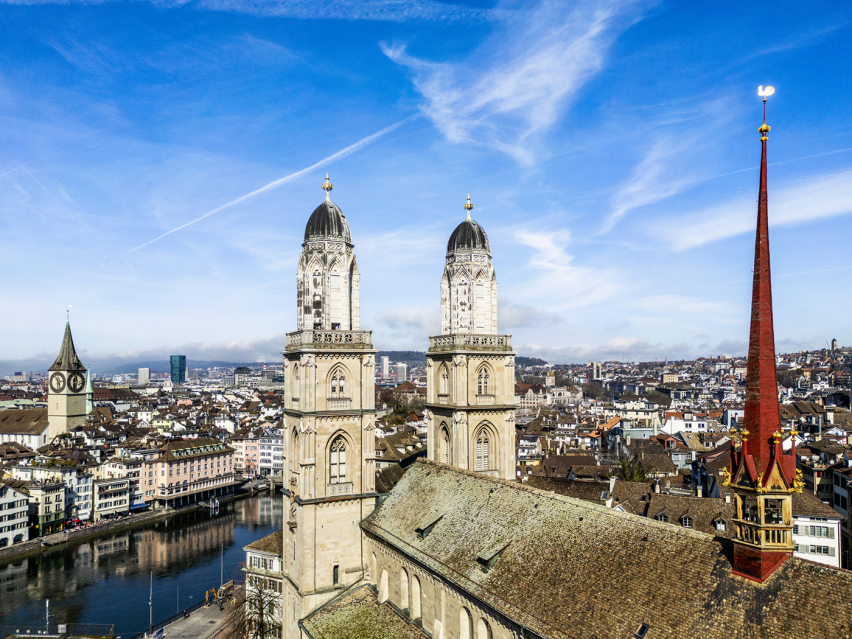
Members of the Evangelical Reformed Church of the Canton of Zurich vote Sept. 27 on whether to write environmental obligations into the Church Ordinance, the constitutional text of the cantonal church. The proposal sets a target of net-zero emissions from church properties by the end of 2035 and would require every parish to adopt an environmental management system known as the "Grüner Güggel," according to campaign statements from both sides published by the Swiss evangelical news portal Livenet.ch.
All church members aged 16 and over may take part. The dispute is less about whether the Zurich church should act on the environment, since care for creation is already anchored in the Church Ordinance, than about who decides how and by when: the cantonal bodies, or the parishes that own the buildings and pay for their upkeep.
The ballot grew out of the Creation Initiative, submitted in 2023 and described by the initiative committee as the first successful popular initiative within a Reformed cantonal church in Switzerland. The Church Council and the Church Synod responded with a counterproposal. The initiative committee withdrew its own text in favor of that counterproposal and is now campaigning for it. The Synod approved the new articles in January.
What the proposal would require
Under the amendment, the cantonal church and its parishes would have to record and reduce their environmental impact systematically and bring building-related CO2 emissions to net zero by the end of 2035. Ecological themes would also feature more strongly in education, spiritual life and parish activity.
The initiative committee says the text sets binding targets rather than prescribing individual measures. It lists energy-efficiency refurbishment of church buildings, the replacement of fossil-fuel heating systems, more sustainable catering at events and the promotion of ecologically valuable green spaces as examples of what parishes might choose.
"The church has been talking about responsibility for creation for years. Now it can show that it also puts its words into action," Tobias Adam, president of the initiative committee, said in remarks published by Livenet.ch. A yes vote, he said, would mean the church was assuming responsibility toward present and future generations.
The pro campaign runs under the slogan "Don't crow. Act.," a play on the rooster that gives the certification scheme its name.
The rooster on the steeple
Much of the argument turns on the "Grüner Güggel," or Green Rooster, a certification mark administered by the Bern-based association oeku – Kirchen für die Umwelt and modeled on the European EMAS environmental management standard. Güggel is Swiss German for rooster.
The name refers to the weather vane that stands on many Reformed steeples in Switzerland. The rooster has long been understood as a symbol of spiritual alertness and repentance, recalling the biblical account of Peter's denial of Christ, and it historically distinguished Protestant houses of worship from Catholic churches, which more commonly display a cross.
"The environmental label of the Grüner Güggel has stood for years for lived responsibility for creation in many parishes," said Maarit Franzki, co-head of the pro campaign. The September vote, she said, would anchor that commitment across the whole church.
Opposition from within the Synod
A committee of synod members campaigning against the proposal wants certification to remain voluntary. On its website, güggelzwang-nein.ch, the committee argues that the label demands considerable work from parish boards and staff, requires recertification after four years and carries costs that fall on the parishes.
By the committee's count, 27 parishes — about a quarter of the canton's total — have been certified so far, despite several years of promotion by the Church Council under an earlier mandate from the Synod. Alternatives exist, including the EcoChurch scheme, and many parishes have pursued environmental measures for decades without any label, the committee says.
Its central objection is to what it calls a double compulsion: mandatory certification combined with the 2035 deadline, applied in the same way to large and small parishes alike. The committee also says the Synod adopted the articles in January after inadequate debate and with narrow majorities.
Subsidiarity and the limits of church law
The opponents' case rests heavily on subsidiarity, the Swiss principle that what must be done locally should as far as possible be decided locally. Parish boards already carry heavy burdens, the committee argues, and parishes know their own historic buildings best. Instead of new requirements, it wants the Church Council to negotiate better conditions for renovation work with heritage protection authorities and to do more to support and motivate parishes.
The committee further argues that a Reformed net-zero target for 2035, together with detailed provisions, would extend legal regulation into areas better left to local judgment. It points to the cantonal ballot of Sept. 28, 2025, when Zurich voters rejected a revision of the energy law by 59.5% to 40.5%. That revision would have written a net-zero date of 2040, or 2050 at the latest, into cantonal law; the Swiss federal target is 2050, and the canton's constitution has committed Zurich to net zero without a date since 2022.
Both committees present the question as one of Christian responsibility rather than policy alone. The initiative committee describes the earth as God's creation and human beings as sharing responsibility for its preservation, and says the church should act accordingly at a time of climate and biodiversity crises. The opposing committee frames environmental care around Christ as sustainer of creation, citing former Archbishop of Canterbury Rowan Williams' description of Christ as the heart of creation, and argues that such a commitment is best carried by vital local congregations.
Livenet.ch published the two campaign statements in succession ahead of the ballot. The initiative committee says it will hold events across the canton in the weeks before Sept. 27.
A cantonal church with a wide theological range
The Zurich church is part of Switzerland's Landeskirchen — the Reformed, Roman Catholic and Christian Catholic bodies recognized under cantonal public law, often described in English as state churches, though they govern themselves. It belongs to the Evangelical Reformed Church in Switzerland, the federation of 24 cantonal Reformed churches formerly known as the Swiss Protestant Church Federation, which is part of the World Council of Churches.
Swiss Reformed cantonal churches are generally regarded as theologically liberal, but the leaning varies from parish to parish. Some local Reformed parishes identify as evangelical and are members of the Swiss Evangelical Alliance alongside free churches and independent evangelical congregations.