For most of my ministry, I believed that the Church's greatest responsibility during moral crises rested with its shepherds. For more than thirty years, I have encouraged Christian leaders and organizations to speak courageously whenever human dignity was threatened.
Spiritual leaders are called not only to proclaim the gospel but also to help the Church distinguish truth from falsehood.
Spiritual leaders are called not only to proclaim the gospel but also to help the Church distinguish truth from falsehood, justice from injustice, and faithfulness from compromise. I still believe that. The Church desperately needs courageous shepherds.
Yet over the past few years another question has increasingly troubled me: what happens when the shepherds fail? When those entrusted with spiritual leadership remain silent, does the Church's moral responsibility simply disappear? Or does Christ entrust that responsibility to someone else as well?
The ongoing war in Gaza... why are so many Christian leaders... unable or unwilling to speak with moral clarity?
The ongoing war in Gaza brings those questions into sharp focus. As images of destroyed neighborhoods, grieving families, displaced communities, and immense human suffering filled television screens and social media, I found myself asking: why are so many Christian leaders seemingly unable or unwilling to speak with moral clarity?
Some fear political controversy or accusations of bias and antisemitism. Others worry about dividing their congregations. Many choose carefully balanced statements that acknowledge suffering without naming injustice or calling anyone to account. Church history reminds us that such hesitation is not new. Fear, institutional loyalty, political pressure, and the instinct for self-preservation have often silenced the Church's prophetic voice.
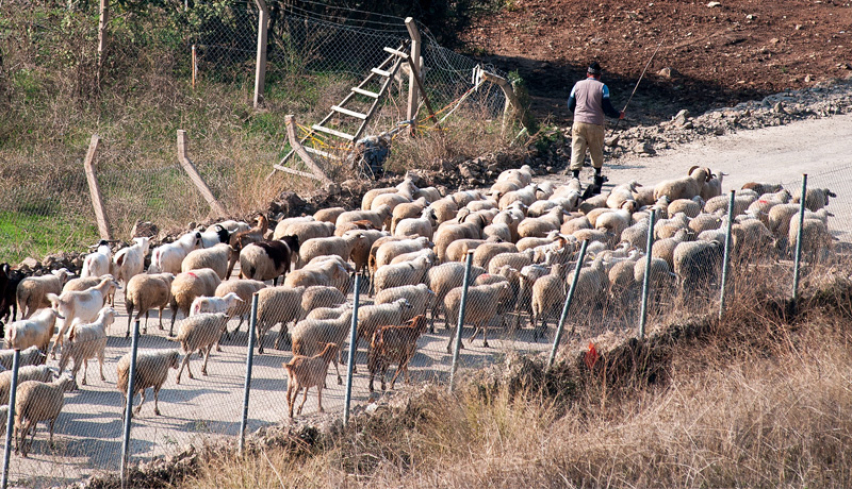
As I wrestle with these questions, I realize that I have been asking only half of what scripture asks. My attention has been fixed almost entirely on the shepherds. But what if the gospel is equally concerned with the sheep?
Jesus seeks his sheep
That realization sent me back to John's Gospel. Like many Christians, I had always read John 10 primarily as one of the New Testament's greatest portraits of pastoral leadership. Jesus reveals himself as the Good Shepherd who knows his sheep, protects them, and lays down his life for them. The passage has rightly shaped generations of pastors and church leaders.
John 10 is not only about the Shepherd; it is also about the sheep.
Yet reading the text again, I noticed something I had largely overlooked. John 10 is not only about the Shepherd; it is also about the sheep.
Jesus describes disciples who know the Shepherd's voice, distinguish it from competing voices, refuse to follow strangers, and walk after Christ even when other authorities demand their loyalty. The sheep are not passive recipients of leadership. They are discerning followers whose ultimate allegiance belongs to the Good Shepherd himself. Jesus is not simply defining faithful leadership; he is forming mature disciples.
Then I noticed something even more significant. John 10 does not begin in chapter 10. It grows directly out of the story of the man born blind in chapter 9. Before Jesus teaches about shepherds and sheep, he gives us a living example of what one of his sheep looks like.
The healed man recognizes the Shepherd's voice while the acknowledged religious leaders remain spiritually blind. He bears witness to the truth even when it costs him his place within the religious community. When he is cast out by the very leaders entrusted with God's people, Jesus goes looking for him. The Good Shepherd gathers the one whom false shepherds have rejected.
Where are the sheep?
John's Gospel therefore asks a deeper question than the one I had been asking for years. Instead of asking only, Where are the shepherds?, it also asks, Where are the sheep?
When spiritual leaders fail to speak with moral clarity, the responsibility for faithful witness does not disappear. According to John 9 and 10, Christ entrusts that responsibility to every disciple who knows the voice of the Good Shepherd. The future moral witness of the Church depends not only on courageous shepherds but also on courageous sheep.
The man who could see
Religious leaders, confident in their spiritual authority, become increasingly blind to what is happening before them.
The story of the man born blind is more than an account of physical healing. It is a story about spiritual sight and blindness. The irony is unmistakable: the man who begins the chapter unable to see gradually recognizes God's work in Jesus, while the religious leaders, confident in their spiritual authority, become increasingly blind to what is happening before them.
The possibility that God might be acting outside the boundaries they have established becomes threatening.
The miracle itself is undeniable. A man blind from birth can now see. Yet instead of rejoicing in his restoration and asking what this extraordinary event might reveal about God, the Pharisees interrogate him repeatedly. Their concern shifts from discovering the truth to defending their interpretation and authority. The possibility that God might be acting outside the boundaries they have established becomes threatening rather than joyful.
The man's parents respond differently. They know that this is their son and that he was born blind, yet when questioned about how he received his sight, they withdraw: “He is of age; ask him.” John explains their hesitation directly: they fear the religious authorities, who have already decided that anyone acknowledging Jesus as the Messiah will be put out of the synagogue (John 9:22).
We should not dismiss their fear too easily. Exclusion from the synagogue could mean much more than losing access to a religious service. It threatened belonging, relationships, identity, and perhaps economic security. The parents know what has happened, but they calculate the possible cost of saying too much. Their silence is not caused by ignorance. It is caused by fear.
“Lord, I believe.”
Their son chooses another path. He has no position, authority, or theological education to protect him. Nor does he begin with a complete understanding of Jesus. His recognition develops gradually. Jesus is first “the man called Jesus,” then “a prophet,” and eventually someone who must be “from God.” Only after the authorities cast him out and Jesus seeks him does he make his fullest confession: “Lord, I believe.”
This progression matters. The man does not wait until he possesses perfect theological understanding before bearing witness to what he knows. When pressured to deny what has happened, he gives one of the simplest testimonies in Scripture: “One thing I do know, that though I was blind, now I see” (John 9:25). His courage does not arise from having every answer. It arises from refusing to deny the truth he has encountered.
John therefore placed three responses before us. The religious leaders protect their power. The parents protect themselves. The healed man protects the truth. All three face the same reality, but they respond according to different loyalties.
The cost for the healed man is real. The authorities finally cast him out. Yet what appears to be his defeat becomes the theological turning point of the story: “Jesus heard that they had cast him out, and having found him...” (John 9:35). Those entrusted with shepherding God's people reject him, but Jesus goes looking for him.
Before Jesus says, “I am the good shepherd,” he shows us what the Good Shepherd does.
Before Jesus says, “I am the good shepherd,” he shows us what the Good Shepherd does. And before John describes the sheep in chapter 10, he shows us what one of those sheep looks like: a disciple who recognizes the Shepherd's voice, refuses to deny the truth, and follows even when faithfulness carries a cost.
The responsibility of the sheep
Having presented the man born blind as a living embodiment of faithful discipleship, Jesus immediately turns to the image of the shepherd and the sheep. Too often we read John 10 as though it introduces an entirely new subject. It is Jesus' interpretation of everything that has just happened.
The religious authorities have demonstrated what false shepherding looks like. They intimidate rather than restore, exclude rather than gather, and protect their own authority rather than care for God's people. Jesus, by contrast, seeks the man they have rejected, restores him to fellowship, and only then declares, "I am the good shepherd."
If we focus only on the Shepherd, we overlook something equally important.
Christians rightly treasure this passage as a portrait of spiritual leadership. Jesus knows his sheep, protects them, and lays down his life for them. Yet if we focus only on the Shepherd, we overlook something equally important: Jesus also describes the character and responsibility of his sheep. John 9 prepares us to understand not only the Good Shepherd but also what faithful sheep look like.
Discipleship is far more than passive belief.
The man born blind becomes a living example of Christ's flock. His story reveals that discipleship is far more than passive belief. It is a way of life shaped by an ever-deepening relationship with the Shepherd.
- Sheep know the Shepherd.
Jesus says, "I know my sheep and my sheep know me" (John 10:14). Christian discipleship begins not with rules or institutions but with a relationship. The sheep recognize the Shepherd because they have come to know his character, his compassion, his truthfulness, his justice, and his self-giving love. - Sheep recognize the Shepherd's voice.
Jesus says that his sheep hear his voice because they already know him. Recognition is more than hearing words. Many voices claim to speak for God. The sheep recognize the voice that reflects the character of Jesus. - Sheep discern between voices.
Jesus adds, "They will never follow a stranger; in fact, they will run away from him because they do not recognize a stranger's voice" (John 10:5). Here Jesus assigns moral responsibility to every disciple. The sheep are expected to distinguish between the voice of the Shepherd and every competing voice, even when those voices come clothed in religious authority. - Sheep refuse false shepherds.
This is one of the most neglected dimensions of the passage. Jesus does not merely say that the sheep hear him; he says they refuse to follow strangers. Faithful discipleship sometimes requires saying no—to manipulation, to the misuse of scripture, to religious nationalism, to ideological agendas, or to leaders whose words and actions no longer reflect the character of Christ. Such refusal is not rebellion against authority. It is faithfulness to a higher authority. - Sheep follow the Shepherd.
Recognition and discernment do not end in themselves. They lead to obedient action. Jesus never calls people simply to admire his teaching but to walk in his way. Following Christ may require courage, sacrifice, and the willingness to stand apart from the crowd. The man born blind embodies this obedience. Though his understanding is still growing, he remains faithful to the truth he has received and follows where Jesus leads. - Sheep bear witness.
The healed man does more than believe privately. Again and again, he testifies to what Christ has done, even when questioned, threatened, and finally expelled from the synagogue. His witness grows as his understanding grows. John reminds us that disciples do not wait until they possess perfect theological certainty before speaking the truth. They bear faithful witness to the light they have received, trusting that deeper understanding will come as they continue to follow the Shepherd.
John 10 is far more than a chapter about leadership. It is a vision of mature discipleship.
Seen in this light, John 10 is far more than a chapter about leadership. It is a vision of mature discipleship. Jesus does not seek followers who surrender their conscience to religious authority.
He forms disciples who know him deeply, recognize his voice, discern competing voices, refuse false shepherds, follow faithfully, and bear courageous witness. The moral witness of the church therefore depends not only upon the faithfulness of its shepherds but also upon the maturity of its sheep.
Why good people remain silent
Why do so many sincere Christians remain silent when confronted with grave human suffering and injustice?
If Christ entrusts every disciple with the responsibility of recognizing and following his voice, another question naturally follows: why do so many sincere Christians remain silent when confronted with grave human suffering and injustice?
John's Gospel has already given us the answer. The parents of the man born blind were not dishonest people. They did not deny that their son had been healed, nor did they oppose Jesus. They simply refused to say more than they believed was safe.
Silence... not born from unbelief but from fear.
John tells us why: they were afraid. To acknowledge Jesus publicly meant the possibility of being expelled from the synagogue, losing their community, damaging family relationships, and perhaps sacrificing their livelihood. Their silence was not born from unbelief but from fear.
That same fear continues to shape Christian communities today. Most believers recognize more than they are willing to say publicly. They sense when something is wrong. They recognize manipulation. They see injustice unfolding before them. Yet another question quickly rises within them: What will this cost me? Will I lose friendships? Will I disappoint people I respect? Will speaking honestly threaten my place within my church or community?
Human beings are profoundly shaped by the communities to which they belong.
Human beings are profoundly shaped by the communities to which they belong. Acceptance brings security, while rejection threatens identity and belonging. Fear of exclusion helps explain why otherwise sincere people often remain silent when conscience tells them they should speak.
Churches are not immune to these pressures. Loyalty can easily be confused with unquestioning agreement, and unity can be mistaken for silence. Congregations sometimes create an atmosphere in which difficult questions are quietly discouraged, and conformity feels safer than faithfulness. Few churches intend to suppress conscience, yet many unintentionally make it costly to exercise it.
Voices that speak in religious language yet lead away from his compassion, truth, justice, and self-giving love.
John's Gospel points us toward another way. Christian conscience is not simply an inner feeling about right and wrong. It is formed through a growing relationship with the Good Shepherd. As believers learn to recognize Christ's voice, they also learn to recognize voices that speak in religious language yet lead away from his compassion, truth, justice, and self-giving love.
The healed man demonstrates this beautifully. He does not possess theological expertise or religious authority. He simply remains faithful to the truth he has encountered. His courage grows not from complete certainty but from trust in the one who opened his eyes.
That may be one of the Church's greatest needs today. We certainly need courageous shepherds. But we also need congregations whose consciences have been so deeply formed by Christ that they encourage faithful leaders, challenge those who lose their way, and refuse to surrender their moral responsibility to the pulpit.
Silence is not moral neutrality. It gives protection to power and leaves the wounded abandoned on the roadside.
The suffering in Gaza has exposed not only a crisis of Christian leadership but also a crisis of Christian discipleship. The question is no longer merely why so many shepherds have remained silent. The question is why so many sheep have accepted their silence. When neighborhoods are destroyed, families displaced, children buried, and an entire people subjected to immense suffering, silence is not moral neutrality. It gives protection to power and leaves the wounded abandoned on the roadside.
John chapters 9 and 10 leave the Church without an excuse. Sheep know the Shepherd's voice. They are commanded to discern other voices, refuse the stranger, and follow Christ even when faithfulness carries a cost. We cannot praise the Good Shepherd on Sunday while following the voices of fear, nationalism, institutional loyalty, or political convenience throughout the rest of the week.
When shepherds fail, the responsibility of the sheep (singular and plural) does not disappear. Christ still calls his people to see, to discern, to refuse, to follow, and to speak. “Our leaders failed us” cannot become the Church's final defense. The decisive question is whether, in the hour of suffering, we recognized the voice of the Good Shepherd—and whether we had the courage to follow.
Professor Dr. Salim J. Munayer is the founder of Musalaha, an organization dedicated to fostering reconciliation between Palestinians and Israelis and other divided communities in the Middle East. He served for several years as Academic Dean at Bethlehem Bible College and has authored several theological books focusing on theology, reconciliation, and justice. Professor Munayer currently serves as the MENA Region Team Lead for the Peace and Reconciliation Network (PRN) of the World Evangelical Alliance (WEA).